
- Puesto en BGG
- BGG #4795
- Puntuación BGG
- 7,5
18EU: Railroading in Europe From the 1830s to the 1930s
- 2–6 jugadores
- 300 min
- Complejidad 4,2/5
- 2001
2000
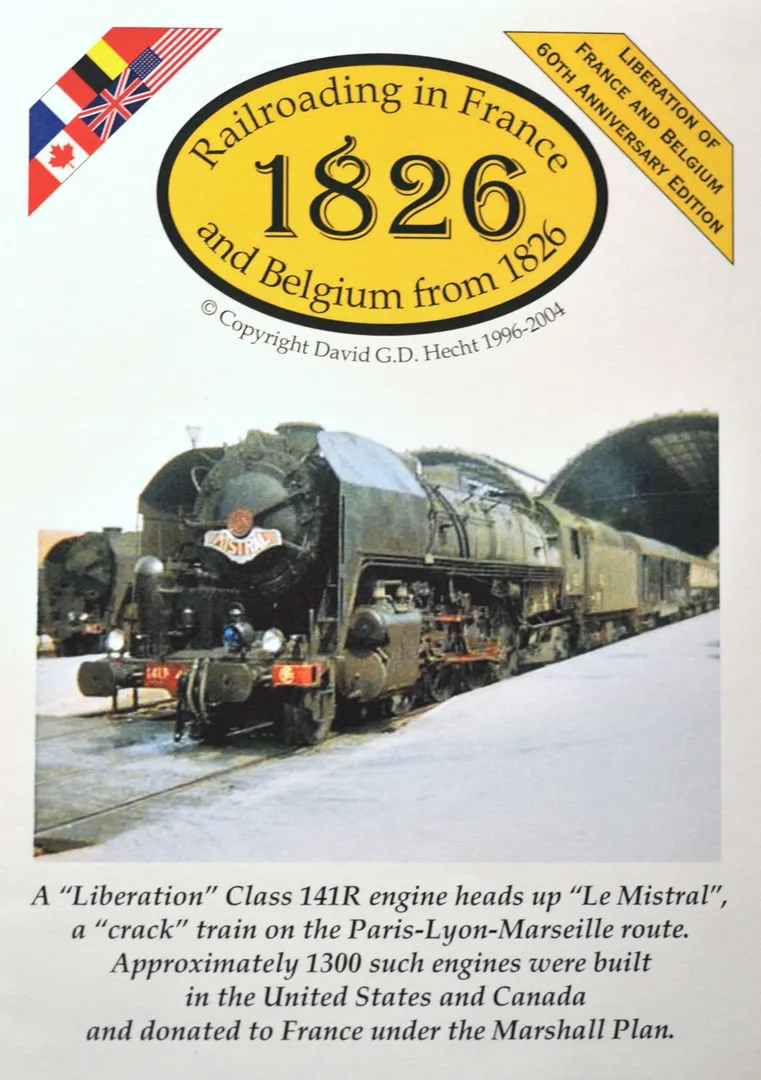
Ayuda con las reglas de 1826: Railroading in France and Belgium from 1826
Explicaciones claras de turnos, efectos de cartas y situaciones dudosas, con referencias a fuentes oficiales e historial de preguntas guardado.
Para 2 jugadores
¿Qué quieres saber?
Las respuestas salen del reglamento oficial, con la página para comprobarlo.
1826: Railroading in France and Belgium from 1826 es un juego de mesa publicado en 2000 para 2–6 jugadores, con partidas de 210 minutos y a partir de 14 años. Fue diseñado por David G. D. Hecht y sus mecánicas principales son Tile Placement, Network and Route Building y Stock Holding.
En inglés
1826 is an 18xx game set in France and Belgium and reflects the full period of Franco-Belgian railroading, from the origins to the present day. Both countries developed their railroad systems under close Government supervision and this is reflected in the game. The two major French nationalizations are covered, as are the post-war electrification and the introduction of high-speed rail (the TGV). 1826 is a moderately complex game, designed for experienced players who are looking for something different than the usual round of 1830, 1856 and 1870. Due to the nature of the French political environment, this is not a game for extensive stock market manipulations, nor is it primarily a game of financial management. 1826 is an operationally-centered game in which technology management--getting the right trains on the right companies--is key. Companies are incrementally funded, and can buy and sell their own stock. Companies start out as five-share companies and can convert to ten-share companies upon reaching their destination. The first four train classes, including the first-generation permanent trains, have a range in hexes (2, 4, 6 or 10) rather than cities: the last two train classes, which are permanent, have a range in cities. There are two merger corporations, one of which may form relatively early (when the green tiles become available) and the other somewhat later (its first opportunity to form is when brown tiles become available).
Según el catálogo, 1826: Railroading in France and Belgium from 1826 admite de 2 a 6 jugadores. Este intervalo corresponde al número de jugadores indicado por la editorial, así que el juego puede prepararse para cualquier grupo dentro de ese margen. La preparación, algunas reglas y la puntuación pueden variar según el número de jugadores; consulta la configuración exacta en el reglamento de tu edición.
La duración indicada para 1826: Railroading in France and Belgium from 1826 es de 210 minutos, la estimación de la editorial para una partida completa. El tiempo real depende del grupo, del número de jugadores y del conocimiento de las reglas: las primeras partidas suelen alargarse y los grupos con experiencia terminan antes. La preparación y la explicación de las reglas no están incluidas.
El catálogo indica 1826: Railroading in France and Belgium from 1826 a partir de 14 años. Es la recomendación de la editorial y refleja la lectura necesaria, la complejidad de las reglas y las piezas pequeñas, no solo el tema. Los más pequeños a menudo pueden jugar con ayuda de un adulto: comprueba la edad recomendada en tu edición y la experiencia de tu grupo.
1826: Railroading in France and Belgium from 1826 tiene una puntuación de complejidad de 3,9 sobre 5 según los jugadores de BoardGameGeek, lo que lo convierte en un juego exigente. La puntuación refleja cuánto conocimiento de reglas, planificación y toma de decisiones exige una partida típica. Los juegos exigentes requieren una explicación inicial más larga, así que conviene usar una guía de preparación.
1826: Railroading in France and Belgium from 1826 pertenece a estas categorías: Trains. Sus mecánicas principales son Tile Placement, Network and Route Building y Stock Holding. Las categorías describen el tema y la ambientación de un juego, mientras que las mecánicas describen lo que los jugadores hacen realmente en su turno. Cada mecánica lleva a una página del catálogo con juegos similares.
Los autores acreditados de 1826: Railroading in France and Belgium from 1826 son: David G. D. Hecht. Estos créditos proceden de los datos publicados del juego y nombran a las personas responsables de su diseño, no a ilustradores ni editoriales. Las páginas de autor de MeepleRules reúnen otros títulos de los mismos autores, algo útil cuando un juego te gusta y buscas otros parecidos.
El catálogo clasifica 1826: Railroading in France and Belgium from 1826 como juego base. Se juega por sí solo con los componentes de la caja y no requiere ningún otro título. Las expansiones, si existen, añaden contenido o reglas nuevas y aparecen por separado en el catálogo con un enlace a este juego base.