- Puesto en BGG
- BGG #1902
- Puntuación BGG
- 7,6
Amsterdam
2022
Ayuda con las reglas de Amsterdam
Explicaciones claras de turnos, efectos de cartas y situaciones dudosas, con referencias a fuentes oficiales e historial de preguntas guardado.
- 1–4 jugadores
- 60–120 min
- 12+
- Complejidad 3,4/5

Para 1 jugador
Asistente de reglas de Amsterdam
¿Qué quieres saber?
Las respuestas salen del reglamento oficial, con la página para comprobarlo.
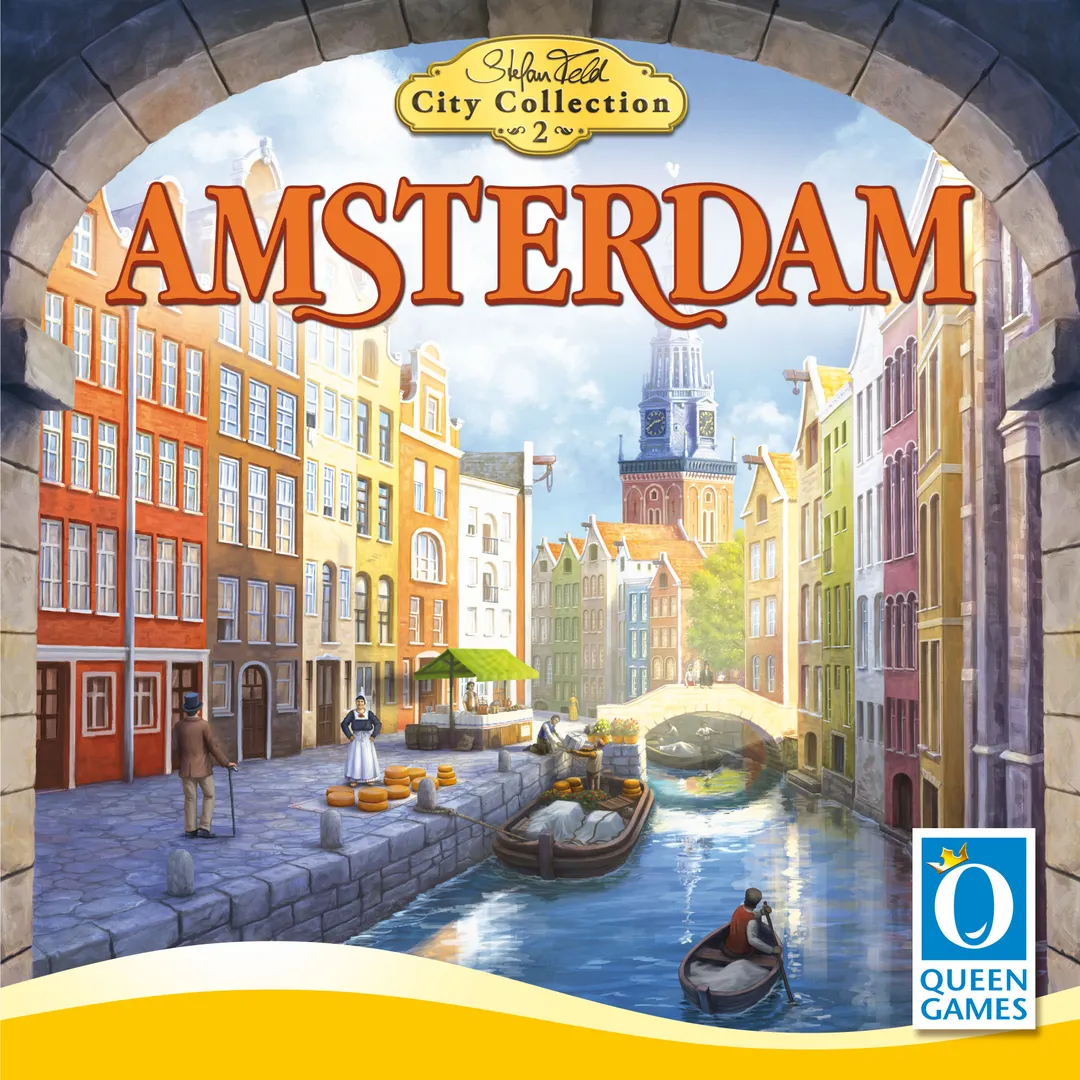
Amsterdam es un juego de mesa publicado en 2022 para 1–4 jugadores, con partidas de 60 a 120 minutos y a partir de 12 años. Fue diseñado por Stefan Feld y sus mecánicas principales son Hand Management, Set Collection y Dice Rolling.
Sobre el juego
En inglés
Amsterdam is a reimplementation of Macao with a new setting, improved card balance, and new gameplay elements. It challenges players to build combinations of abilities, as well as to correctly calculate the advantage of delayed gratification for actions. In the game, players are merchants in Amsterdam near the turn of the 20th century. At the start of the game, two district cards are placed on each of the twelve spaces on the designated board. At the beginning of a round, the next two district cards, as well as two building and two profession cards (each from a deck of 54 of each type) are drawn to form the offer of six cards. Each of these cards has a cost in colored action cubes and grants a new action, special ability, or way to score points. In turn order, each player takes a card from those on offer. Finally, a market card is revealed that allows players to exchange money for victory points on their turn. Next, the six colored dice are rolled. Each player decides which of the six dice they would like (players may choose the same die), then takes as many action cubes in that color as the number of pips. Players place their new action cubes on their rotatable windrose as many spaces in the future as the number on the dice. Finally, the wheel is spun, so that players gain access to all cubes that were located on the 1 space of their windrose. Action cubes are used to purchase cards that a player has taken, claim one of the nine types of goods around the city of Amsterdam, and ferry goods or workers through canals to warehouses. Players earn points for delivering their goods, as well as for bonuses on cards they purchase, and the player with the most points at the end of the twelfth round wins.
Categorías
Mecánicas
Diseñadores
Editoriales
- Queen Games
- White Goblin Games
- Evrikus
Preguntas y respuestas
Según el catálogo, Amsterdam admite de 1 a 4 jugadores. Este intervalo corresponde al número de jugadores indicado por la editorial, así que el juego puede prepararse para cualquier grupo dentro de ese margen. La preparación, algunas reglas y la puntuación pueden variar según el número de jugadores; consulta la configuración exacta en el reglamento de tu edición.
La duración indicada para Amsterdam es de 60 a 120 minutos, la estimación de la editorial para una partida completa. El tiempo real depende del grupo, del número de jugadores y del conocimiento de las reglas: las primeras partidas suelen alargarse y los grupos con experiencia terminan antes. La preparación y la explicación de las reglas no están incluidas.
El catálogo indica Amsterdam a partir de 12 años. Es la recomendación de la editorial y refleja la lectura necesaria, la complejidad de las reglas y las piezas pequeñas, no solo el tema. Los más pequeños a menudo pueden jugar con ayuda de un adulto: comprueba la edad recomendada en tu edición y la experiencia de tu grupo.
Amsterdam tiene una puntuación de complejidad de 3,4 sobre 5 según los jugadores de BoardGameGeek, lo que lo convierte en un juego de complejidad media. La puntuación refleja cuánto conocimiento de reglas, planificación y toma de decisiones exige una partida típica. Los juegos exigentes requieren una explicación inicial más larga, así que conviene usar una guía de preparación.
Amsterdam pertenece a estas categorías: Economic y Renaissance. Sus mecánicas principales son Hand Management, Set Collection y Dice Rolling. Las categorías describen el tema y la ambientación de un juego, mientras que las mecánicas describen lo que los jugadores hacen realmente en su turno. Cada mecánica lleva a una página del catálogo con juegos similares.
Los autores acreditados de Amsterdam son: Stefan Feld. Estos créditos proceden de los datos publicados del juego y nombran a las personas responsables de su diseño, no a ilustradores ni editoriales. Las páginas de autor de MeepleRules reúnen otros títulos de los mismos autores, algo útil cuando un juego te gusta y buscas otros parecidos.
El catálogo clasifica Amsterdam como juego base. Se juega por sí solo con los componentes de la caja y no requiere ningún otro título. Las expansiones, si existen, añaden contenido o reglas nuevas y aparecen por separado en el catálogo con un enlace a este juego base.