
- Puesto en BGG
- BGG #9288
- Puntuación BGG
- 6,8
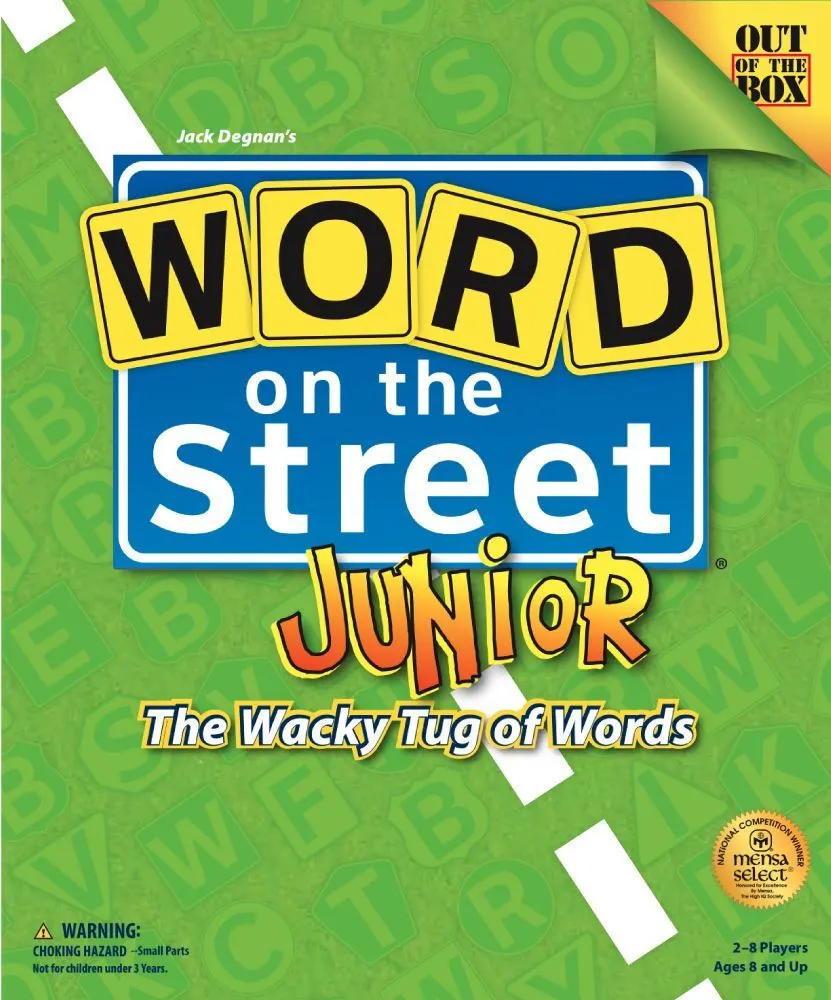
Word on the Street Junior
- 2–8 jugadores
- 30 min
- Complejidad 1,1/5
- 2010
1875
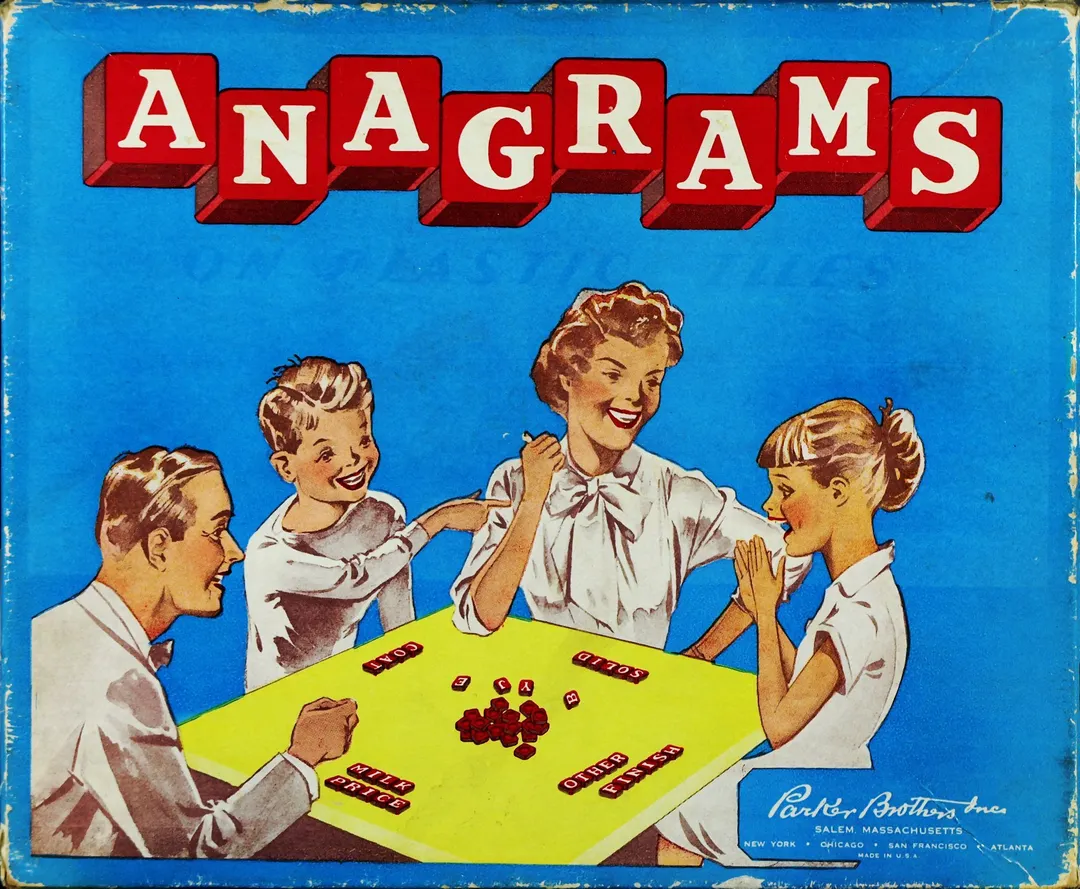
Ayuda con las reglas de Anagrams
Explicaciones claras de turnos, efectos de cartas y situaciones dudosas, con referencias a fuentes oficiales e historial de preguntas guardado.
Para 2 jugadores
¿Qué quieres saber?
Las respuestas salen del reglamento oficial, con la página para comprobarlo.
Anagrams es un juego de mesa publicado en 1875 para 2–6 jugadores, con partidas de 45 minutos y a partir de 8 años. Sus mecánicas principales son Spelling.

En inglés
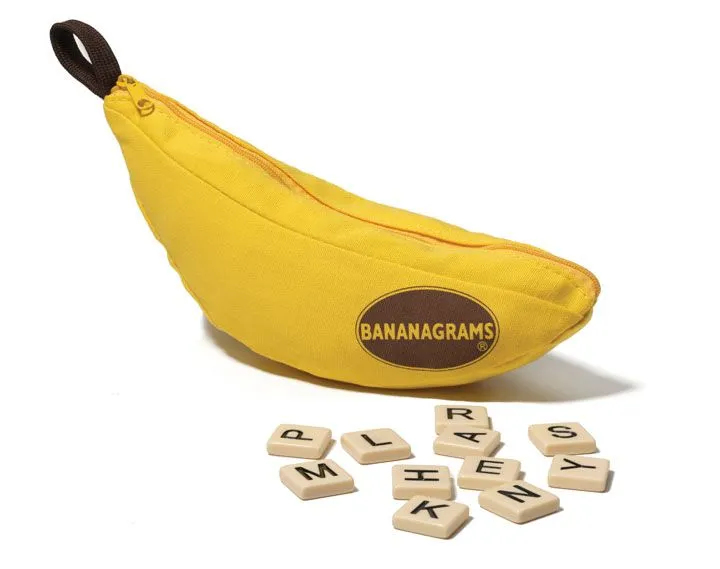
Anagrams is a game where players reveal letter tiles one at a time, claiming any word as soon as they can make it. Once a word is in front of someone, other players may steal it by making an anagram of it which introduces other letters from the pool. Reimplemented as Snatch and Scrabble Scoring Anagrams. Published during the same time frame as the 1877 Word Making and Taking. A version of this game using the word “anagram” in its title was published by Thomas Whittaker in New York on or before 1875 and was called “The Game of Anagrams”. With Parker Brothers and McLoughlin Brothers both releasing Anagrams games in 1890, this likely reflects the expiry of the 17 year patent period that existed at the time. Many editions of the game have been sold and exact rules vary, but one version runs as follows: The players shuffle the letters in the "pool" thoroughly. Each player, in turn, draws a letter tile from the pool and places it face up on the table. These letters are available to all players on their turn. Before starting play it should be decided that either 3-letter, 4-letter or 5-letter words are to be established as the basis of play. Then the first player draws a letter from the pool. Keeping it hidden, he tries to form one word of 2 or more letters with the letter in his hand and with at least one or more of those letters face up on the table. He may also form the word with only the face up letters and not use the letter in his hand. Whenever a player forms a word, his turn ends. If a player cannot form a word, or if he forms one but doesn't use the letter he has drawn from the pool, he must discard this letter at the end of his turn. The letter is discarded by putting it face up with the other turned up letters on the table. Then the next player moves. When a player forms a word, he places it in front of him facing it to the center of the table. This is done so the other players can easily see it. It gives them the chance to steal words. As the game continues and players gather words, they may steal the words from one another. This is done by taking all the letters of another player's word and adding one or more letters to it to completely change that word's meaning. The letters added to a word in "stealing" may be the one drawn by the player from the pool or one or more of those face up. Adding S to make a word plural (or ED or ING) does not change the meaning of a word and cannot be used to "steal" a word. Any letters at all, however, can be used in "stealing" a word if the new word formed is entirely changed in meaning. Players should make their own words harder to steal by adding letters to them and making them more complex. This counts as a complete turn and is as important as forming new words. When all of the tiles have been drawn from the pool, players, continue in turn to try to form words using the face up letters. The game ends when there are no more face up letters, or when no player is able to move using the remaining face up letters. Each player counts the number of tiles in all of the words he has formed in front of him. The winner is the person who has first obtained eight (8) words. The game is not over until ALL players have had an EQUAL number of turns. If at the end of an equal number of turns there is more than one player with eight (8) words, count the number of tiles in those 8 words. The player with the most tiles wins. If the number of tiles in the 8 words is equal, then the game ends in a tie.
Según el catálogo, Anagrams admite de 2 a 6 jugadores. Este intervalo corresponde al número de jugadores indicado por la editorial, así que el juego puede prepararse para cualquier grupo dentro de ese margen. La preparación, algunas reglas y la puntuación pueden variar según el número de jugadores; consulta la configuración exacta en el reglamento de tu edición.
La duración indicada para Anagrams es de 45 minutos, la estimación de la editorial para una partida completa. El tiempo real depende del grupo, del número de jugadores y del conocimiento de las reglas: las primeras partidas suelen alargarse y los grupos con experiencia terminan antes. La preparación y la explicación de las reglas no están incluidas.
El catálogo indica Anagrams a partir de 8 años. Es la recomendación de la editorial y refleja la lectura necesaria, la complejidad de las reglas y las piezas pequeñas, no solo el tema. Los más pequeños a menudo pueden jugar con ayuda de un adulto: comprueba la edad recomendada en tu edición y la experiencia de tu grupo.
Anagrams tiene una puntuación de complejidad de 2,0 sobre 5 según los jugadores de BoardGameGeek, lo que lo convierte en un juego algo ligero. La puntuación refleja cuánto conocimiento de reglas, planificación y toma de decisiones exige una partida típica. Los juegos exigentes requieren una explicación inicial más larga, así que conviene usar una guía de preparación.
Anagrams pertenece a estas categorías: Word Game y Children's Game. Sus mecánicas principales son Spelling. Las categorías describen el tema y la ambientación de un juego, mientras que las mecánicas describen lo que los jugadores hacen realmente en su turno. Cada mecánica lleva a una página del catálogo con juegos similares.
El catálogo clasifica Anagrams como juego base. Se juega por sí solo con los componentes de la caja y no requiere ningún otro título. Las expansiones, si existen, añaden contenido o reglas nuevas y aparecen por separado en el catálogo con un enlace a este juego base.