
- Puntuación BGG
- 6,6
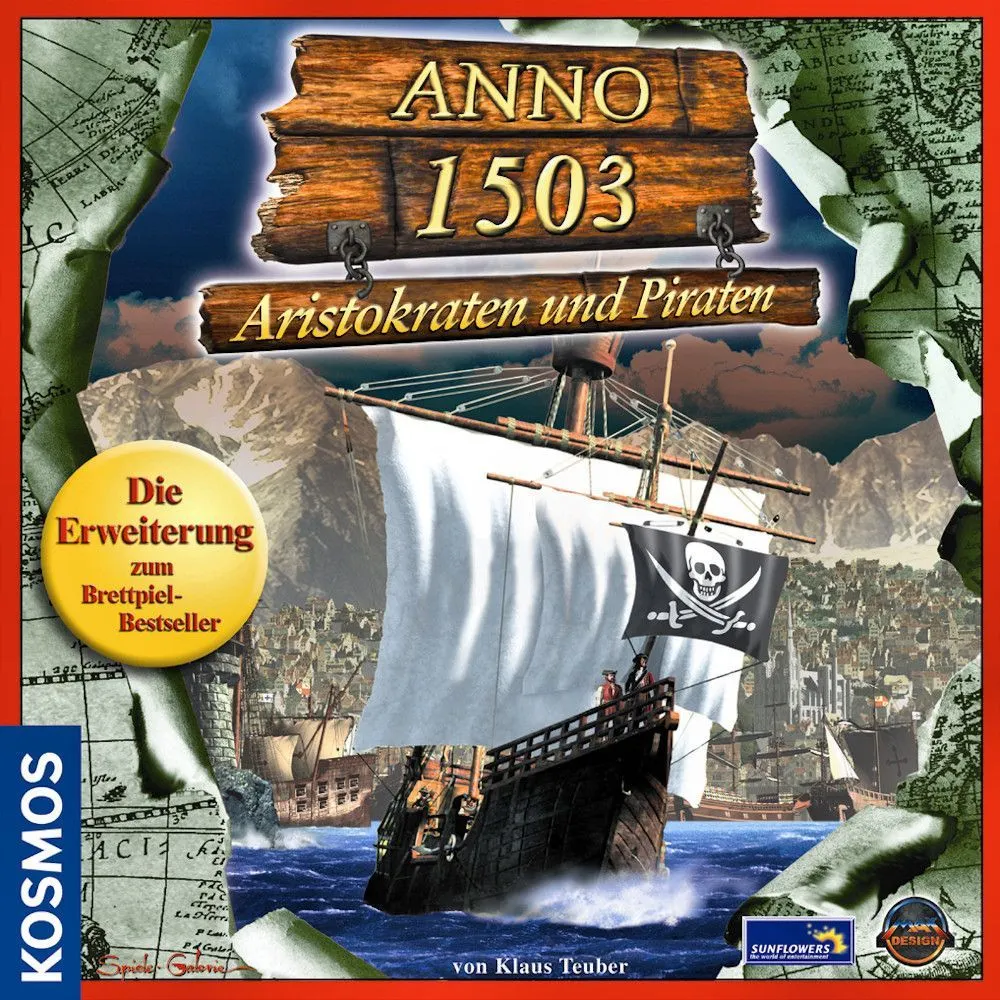
Anno 1503: Aristokraten und Piraten
- 2–4 jugadores
- 90 min
- Complejidad 2,5/5
- 2004
2003
Ayuda con las reglas de Anno 1503
Explicaciones claras de turnos, efectos de cartas y situaciones dudosas, con referencias a fuentes oficiales e historial de preguntas guardado.
Para 2 jugadores
¿Qué quieres saber?
Las respuestas salen del reglamento oficial, con la página para comprobarlo.
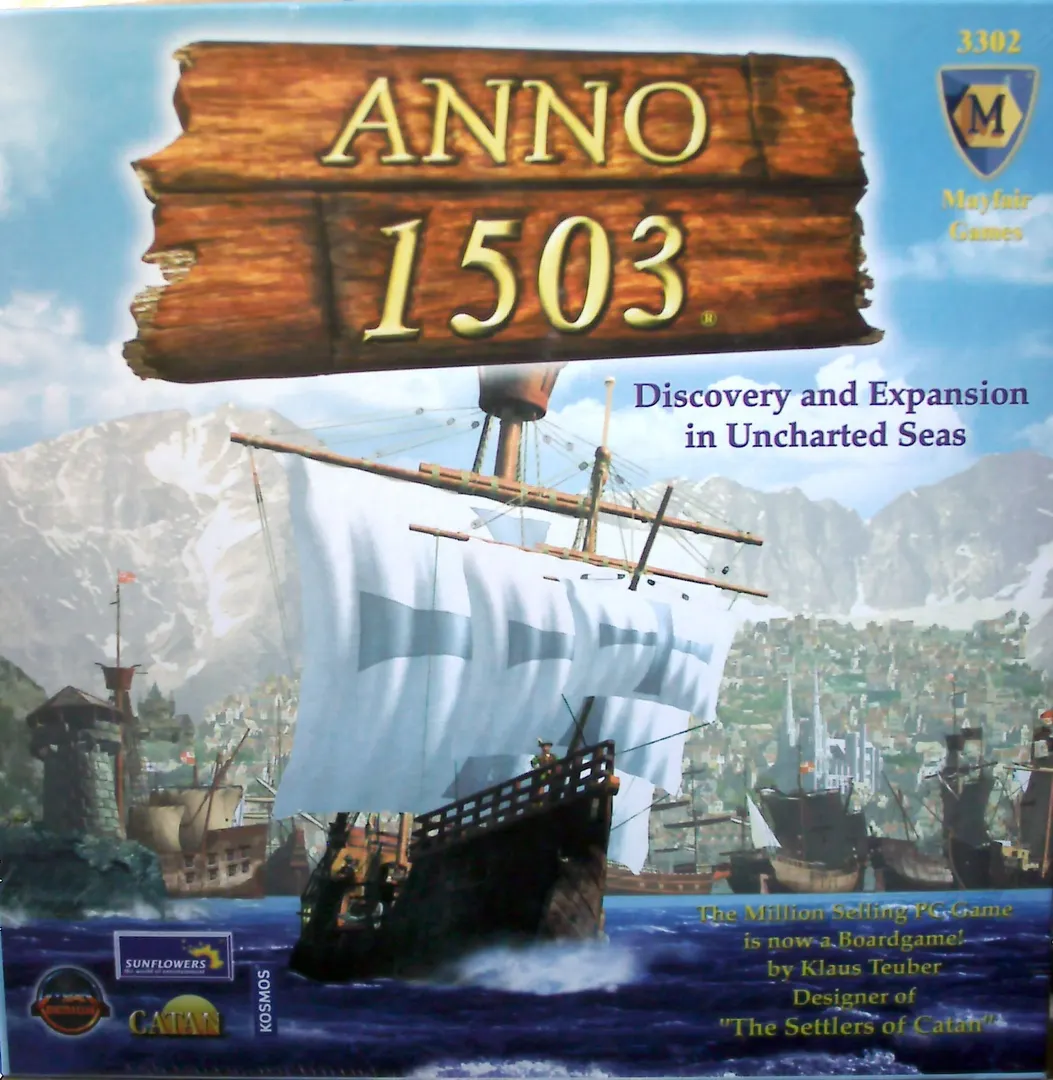
Anno 1503 es un juego de mesa publicado en 2003 para 2–4 jugadores, con partidas de 90 minutos y a partir de 10 años. Fue diseñado por Klaus Teuber y sus mecánicas principales son Tile Placement.

En inglés
A boardgame based on a computer game (instead of the other way around) and designed by Klaus Teuber, Anno 1503 views the era of colonization strictly from the home country perspective. Two to four players send ships to explore islands scattered about a 5 x 12 square ocean (the more players, the more islands). The settlement of the new lands is, however, strictly abstract. Each player's turn begins with the roll of one 6-sided die. A "6" is a random event (pirates, fire or good fortune - bad twice as often as lucky, and most likely to damage players who are doing well). On other results, each player gains a commodity from one of his five workshops. The player who rolled may then buy commodities from the bank, sell them to his colonists for gold (no trading among players), or use them in various combinations to recruit new colonists, promote existing ones, or build ships. After that, ships can sail for the unknown lands. Each island bears on its hidden side an outpost, a treasure or a trade agreement. After being discovered, these items are brought back to the home country (and the ship is removed from play, requiring the player to build a new one in order to keep searching). Outposts increase the productivity of workshops. Treasure yields either gold or free colonist promotions. Trade agreements reduce the gold needed to buy commodities from the bank. Besides being useful in these ways, outposts, gold and agreements are among the game's victory conditions. A player wins by being to first to attain three out of five objectives, namely, four outposts, 30 gold, three trade agreements, three colonists promoted to the top rank of "merchant" and the construction of four public buildings. The buildings (8 types, each bringing some advantage) cost nothing but don't become available until a player has recruited at least four colonists. After that, each new colonist adds a building (unless they've been preempted by other players; there aren't enough for everyone). Overall, the game falls squarely into the "simultaneous solitaire" category. Except in the race for islands, the players scarcely interact at all. They do, however, have a great many choices to make in the course of play.
Según el catálogo, Anno 1503 admite de 2 a 4 jugadores. Este intervalo corresponde al número de jugadores indicado por la editorial, así que el juego puede prepararse para cualquier grupo dentro de ese margen. La preparación, algunas reglas y la puntuación pueden variar según el número de jugadores; consulta la configuración exacta en el reglamento de tu edición.
La duración indicada para Anno 1503 es de 90 minutos, la estimación de la editorial para una partida completa. El tiempo real depende del grupo, del número de jugadores y del conocimiento de las reglas: las primeras partidas suelen alargarse y los grupos con experiencia terminan antes. La preparación y la explicación de las reglas no están incluidas.
El catálogo indica Anno 1503 a partir de 10 años. Es la recomendación de la editorial y refleja la lectura necesaria, la complejidad de las reglas y las piezas pequeñas, no solo el tema. Los más pequeños a menudo pueden jugar con ayuda de un adulto: comprueba la edad recomendada en tu edición y la experiencia de tu grupo.
Anno 1503 tiene una puntuación de complejidad de 2,4 sobre 5 según los jugadores de BoardGameGeek, lo que lo convierte en un juego algo ligero. La puntuación refleja cuánto conocimiento de reglas, planificación y toma de decisiones exige una partida típica. Los juegos exigentes requieren una explicación inicial más larga, así que conviene usar una guía de preparación.
Anno 1503 pertenece a estas categorías: Video Game Theme, Exploration y City Building. Sus mecánicas principales son Tile Placement. Las categorías describen el tema y la ambientación de un juego, mientras que las mecánicas describen lo que los jugadores hacen realmente en su turno. Cada mecánica lleva a una página del catálogo con juegos similares.
Los autores acreditados de Anno 1503 son: Klaus Teuber. Estos créditos proceden de los datos publicados del juego y nombran a las personas responsables de su diseño, no a ilustradores ni editoriales. Las páginas de autor de MeepleRules reúnen otros títulos de los mismos autores, algo útil cuando un juego te gusta y buscas otros parecidos.
El catálogo clasifica Anno 1503 como juego base. Se juega por sí solo con los componentes de la caja y no requiere ningún otro título. Las expansiones, si existen, añaden contenido o reglas nuevas y aparecen por separado en el catálogo con un enlace a este juego base.