
- Puesto en BGG
- BGG #3932
- Puntuación BGG
- 6,8
Billabong
- 2–4 jugadores
- 30 min
- Complejidad 1,9/5
- 1992
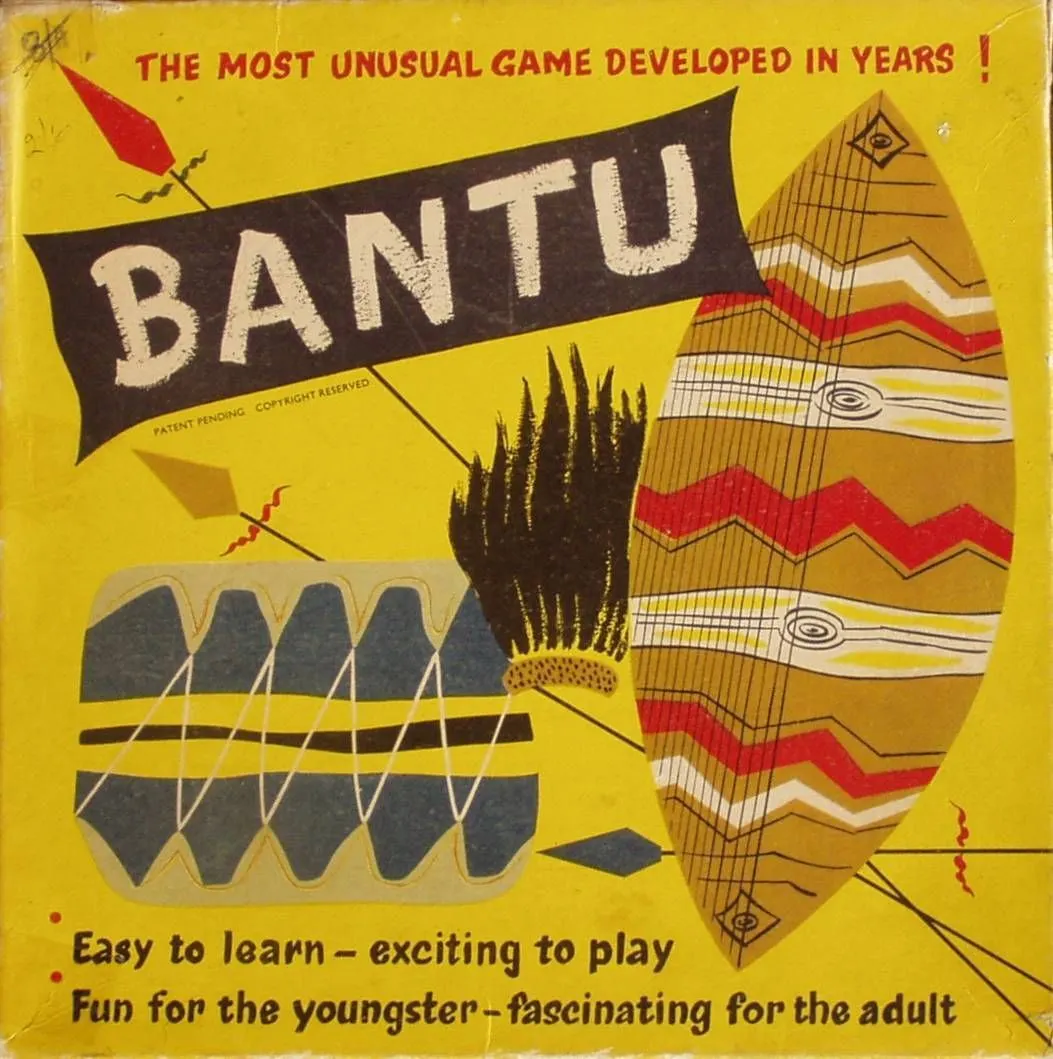
1955
Ayuda con las reglas de Bantu
Explicaciones claras de turnos, efectos de cartas y situaciones dudosas, con referencias a fuentes oficiales e historial de preguntas guardado.
¿Qué quieres saber?
Las respuestas salen del reglamento oficial, con la página para comprobarlo.
Bantu es un juego de mesa publicado en 1955 para 2–4 jugadores, con partidas de 30 minutos y a partir de 8 años.







En inglés
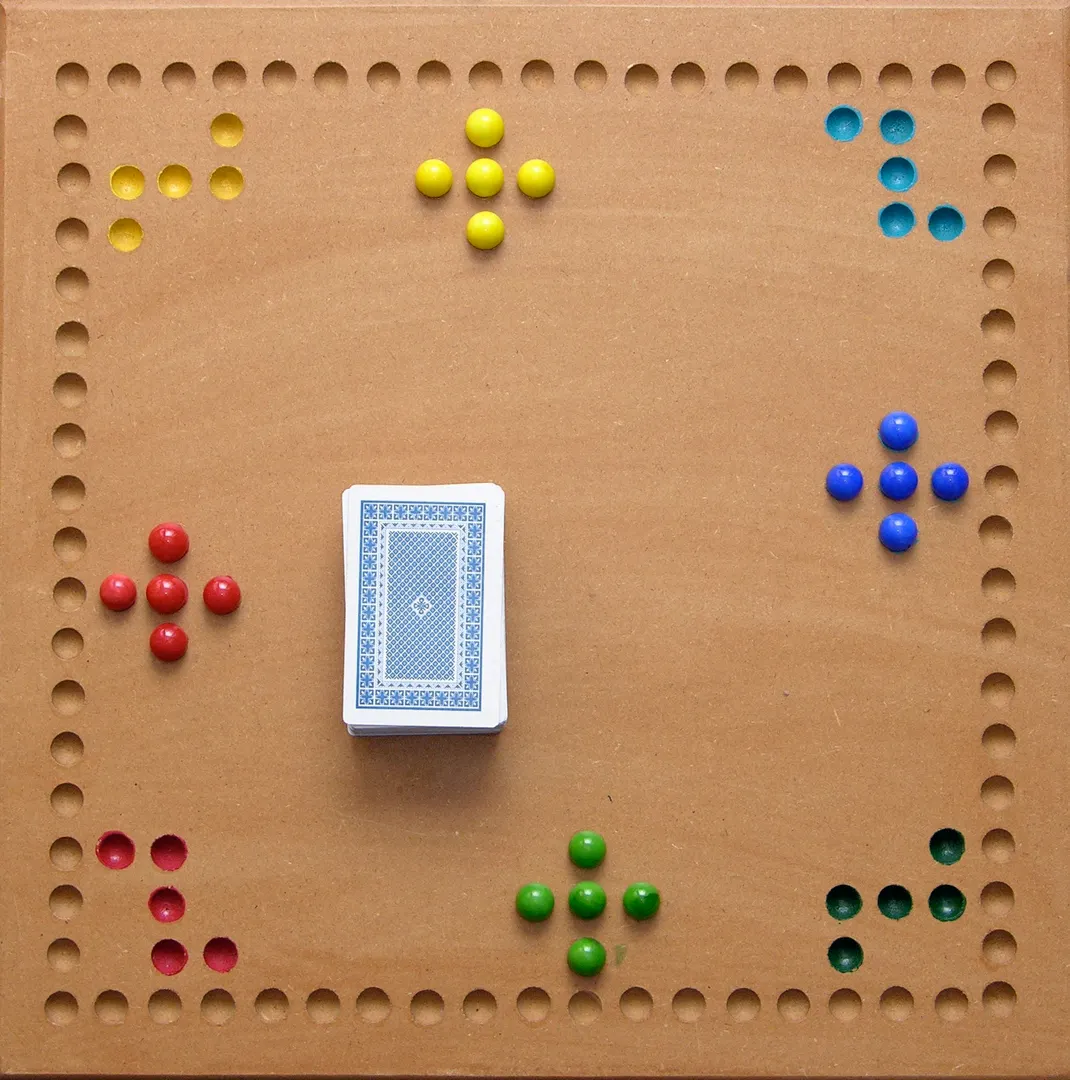
This is the earliest known racing game that does not use dice for the engine, or even contain any elements of luck (according to Parlett and others). A 2nd edition was never published. It was reviewed by Phil Orbanes in Games and Puzzles Magazine #68 under the heading of "Great Games that Never Made It." It has been modified slightly and released as a kit by Paul Jefferies, who renamed it Sack to fit his newly applied theme. In addition to Games and Puzzles #68 (reprinted in Games International (Issue 4 – April 1989)) and Parlett's The Oxford History of Board Games, Bantu has recently been discussed in Abstract Games Magazine. This is a racing game. The track is circular, with four lanes, with some interaction and crossing over between lanes. Each player (2-4) has four pawns numbered 1-4. This number indicates the distance the pawn may move per turn, and where it may be entered onto the board (the fastest pawn (4) must travel the full distance, but each successively slower pawn travels one fourth less distance than its predecessor, so that the (1) pawn travels only one quarter of the board). Pawns may not jump others nor may two pawns occupy the same space. Ending a turn on a space occupied by an opponent's pawn causes the opponent's pawn to be returned to its starting position. Pawns of any ownership that lie on spaces connected by a shaded background add their values together for determining movement. So a (red 1), (blue 4), (green 3) that all lie within the same shaded area would give the first pawn to move, 8 spaces. A player must use all movement without retracing his path on that turn. If the player can not use the entire movement then the pawn can not be moved. If none of his pawns may be moved the entire amount then the player forfeits that turn. First to bear all pawns off wins.
Según el catálogo, Bantu admite de 2 a 4 jugadores. Este intervalo corresponde al número de jugadores indicado por la editorial, así que el juego puede prepararse para cualquier grupo dentro de ese margen. La preparación, algunas reglas y la puntuación pueden variar según el número de jugadores; consulta la configuración exacta en el reglamento de tu edición.
La duración indicada para Bantu es de 30 minutos, la estimación de la editorial para una partida completa. El tiempo real depende del grupo, del número de jugadores y del conocimiento de las reglas: las primeras partidas suelen alargarse y los grupos con experiencia terminan antes. La preparación y la explicación de las reglas no están incluidas.
El catálogo indica Bantu a partir de 8 años. Es la recomendación de la editorial y refleja la lectura necesaria, la complejidad de las reglas y las piezas pequeñas, no solo el tema. Los más pequeños a menudo pueden jugar con ayuda de un adulto: comprueba la edad recomendada en tu edición y la experiencia de tu grupo.
Bantu tiene una puntuación de complejidad de 2,0 sobre 5 según los jugadores de BoardGameGeek, lo que lo convierte en un juego algo ligero. La puntuación refleja cuánto conocimiento de reglas, planificación y toma de decisiones exige una partida típica. Los juegos exigentes requieren una explicación inicial más larga, así que conviene usar una guía de preparación.
Bantu pertenece a estas categorías: Abstract Strategy y Racing. Las categorías describen el tema, la ambientación y el estilo de un juego, no sus reglas. Filtra el catálogo por la misma categoría para encontrar juegos similares si te gustó Bantu y buscas algo parecido para tu próxima noche de juegos.
El catálogo clasifica Bantu como juego base. Se juega por sí solo con los componentes de la caja y no requiere ningún otro título. Las expansiones, si existen, añaden contenido o reglas nuevas y aparecen por separado en el catálogo con un enlace a este juego base.