- Puntuación BGG
- 7,7
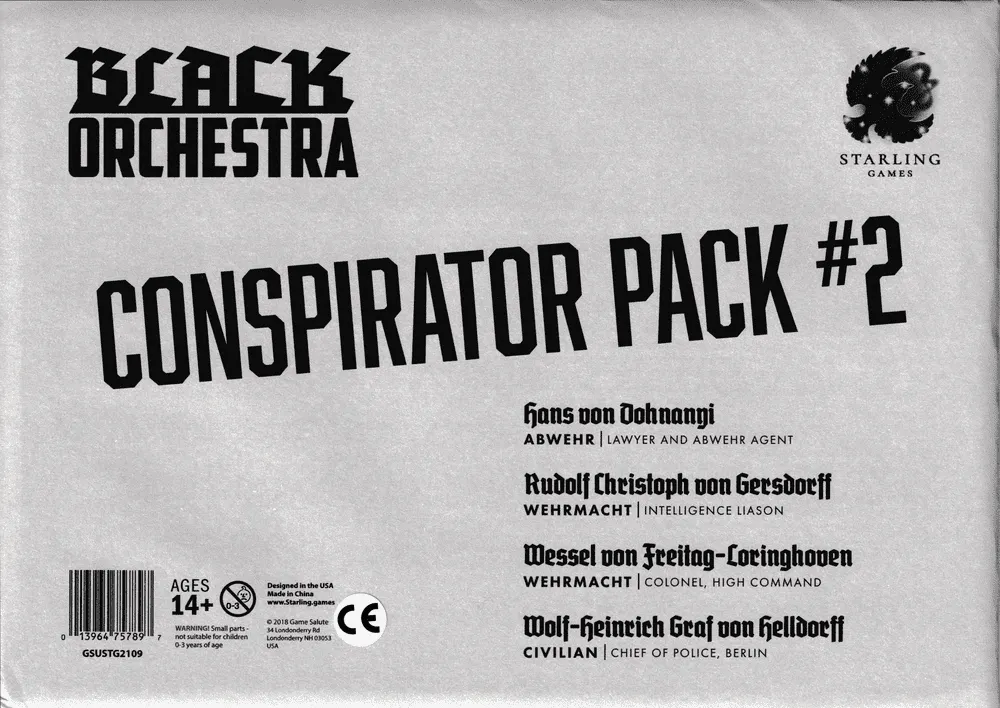
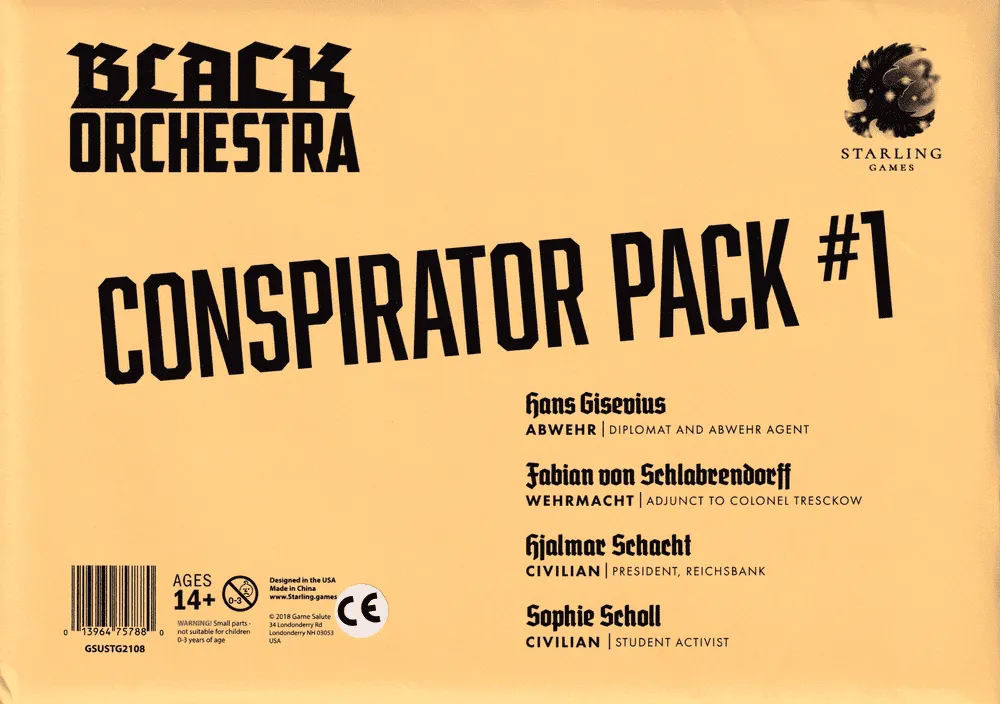
Black Orchestra: Conspirator Pack #1
- 1–5 jugadores
- 90 min
- Complejidad 2,0/5
- 2019
2016
Ayuda con las reglas de Black Orchestra
Explicaciones claras de turnos, efectos de cartas y situaciones dudosas, con referencias a fuentes oficiales e historial de preguntas guardado.
Para 1 jugador
¿Qué quieres saber?
Las respuestas salen del reglamento oficial, con la página para comprobarlo.
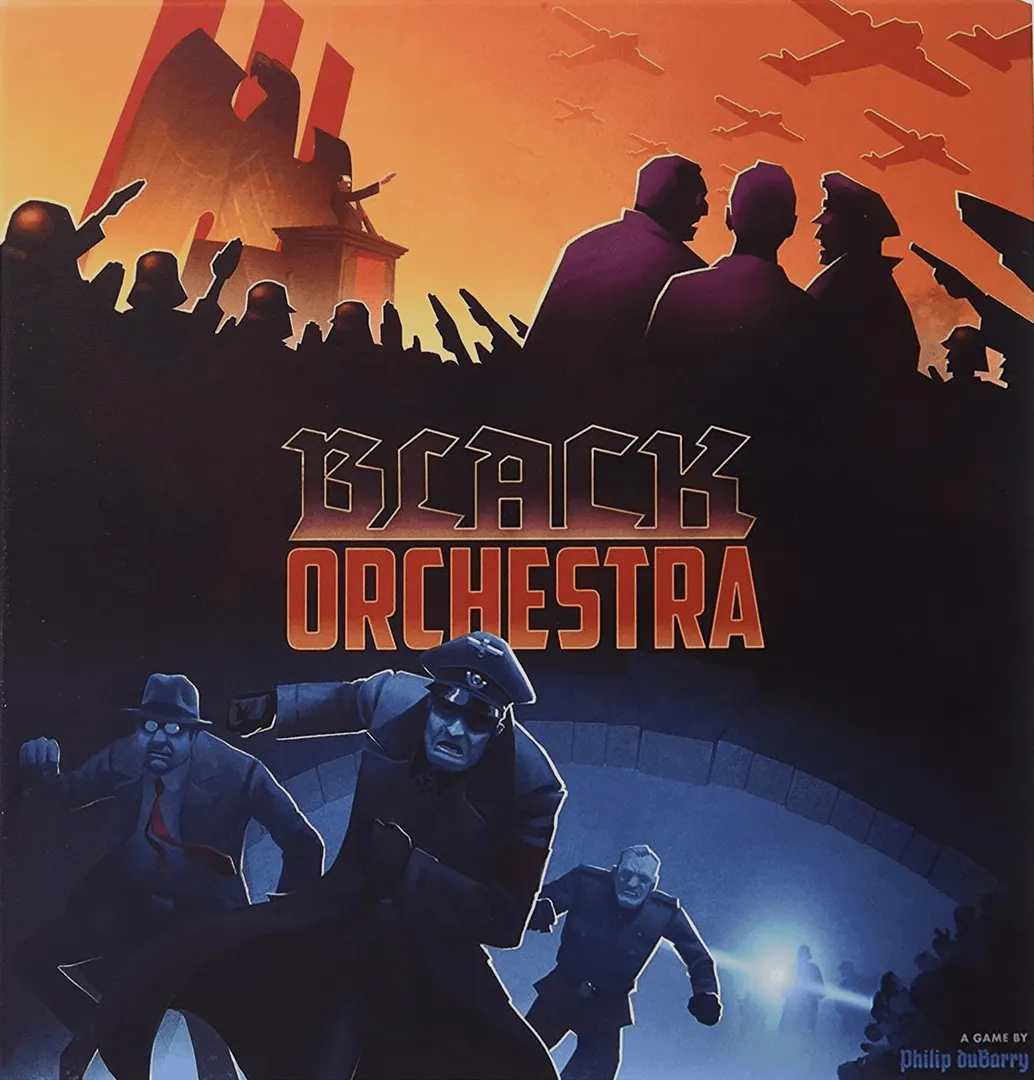
Black Orchestra es un juego de mesa publicado en 2016 para 1–5 jugadores, con partidas de 90 minutos y a partir de 14 años. Fue diseñado por Philip duBarry y sus mecánicas principales son Variable Player Powers, Hand Management y Set Collection.





En inglés
As Hitler's grasp on Germany tightens and his maniacal fervor is unmasked, men from the highest levels of the Reich begin to plot his assassination. As the clock ticks and Hitler's ambitions grow, these daring few must build their strength and prepare for the perfect moment to strike. The Gestapo hound their trail, calling these conspirators "Schwarze Kapelle", the Black Orchestra. Will this band of daring patriots save their country from utter ruin before it is too late? Black Orchestra begins with each player choosing a historic figure involved in the conspiracy against Hitler. In this dark and dangerous pursuit, motivation is perhaps your greatest weapon. If you can stay true to your convictions in the face of overwhelming threat and inspire your comrades, then you will be able to use your special ability, attempt plots, and even become zealous (necessary for some extremely daring plots). But every move you make may also increase the suspicion of the authorities. The Gestapo will make routine sweeps, and any players with high suspicion will be arrested and interrogated (possibly resulting in other players being arrested). If you are all arrested or if the Gestapo finds your secret papers, you lose. And the suspicion placed on each conspirator will increase the chances their plots are detected. On a turn, players may take three actions, such as moving, searching for an item, or drawing a card; or, at the cost of one action per die, roll the dice in an attempt to gain even more actions — at the risk of attracting the suspicion of the gestapo. This dice rolling "Conspire" action allows players to make bold moves when most needed. After the actions have been taken, an event card is drawn. The game is played over seven stages of World War 2, represented by seven stacks of event cards. These cards walk you through the events of WWII in a roughly (but not strictly) chronological order. New stages open up new areas of the board, cause Hitler and his deputies to interact with the Conspirators, and present various opportunities or threats. During the final stage, many board spaces become off-limits, as the Allies move closer to Germany. To win, players must collect a plot card and fulfill all necessary requirements listed (such as having Hitler be in a certain space and possessing certain items--detonator & fuse, etc.). The active player may then attempt the plot by rolling the indicated dice, including all additional modifiers and helpful Action cards. The total of number of "Target" symbols needed to kill Hitler is based on Hitler's military support, but a Conspirator's security level decides if any "Eagles" rolled will see them detected, and foil the plot regardless. Players must consider their ability to successfully complete a plot and the relative suspicion levels of the different Conspirators involved. Players will need to work together and agree on the wisest course of action, as well as have a little luck, to succeed. The phenomenon of one player dominating the game because of its cooperative nature is mitigated by the fact that there are no certainties, and often a player will need to make a bold or reckless move to keep the conspiracy alive. Cool heads often prevail, but play it too cool and you may miss your chance. The co-operative dynamic gets really interesting if a player is ever arrested, and fails to resist interrogation, then they will need to make a big decision all by themselves, without revealing their options to the group. No one player can guarantee success. It is hoped that players will have tense conversations similar to those had by the real conspirators and enjoy a truly unique historical experience.
Según el catálogo, Black Orchestra admite de 1 a 5 jugadores. Este intervalo corresponde al número de jugadores indicado por la editorial, así que el juego puede prepararse para cualquier grupo dentro de ese margen. La preparación, algunas reglas y la puntuación pueden variar según el número de jugadores; consulta la configuración exacta en el reglamento de tu edición.
La duración indicada para Black Orchestra es de 90 minutos, la estimación de la editorial para una partida completa. El tiempo real depende del grupo, del número de jugadores y del conocimiento de las reglas: las primeras partidas suelen alargarse y los grupos con experiencia terminan antes. La preparación y la explicación de las reglas no están incluidas.
El catálogo indica Black Orchestra a partir de 14 años. Es la recomendación de la editorial y refleja la lectura necesaria, la complejidad de las reglas y las piezas pequeñas, no solo el tema. Los más pequeños a menudo pueden jugar con ayuda de un adulto: comprueba la edad recomendada en tu edición y la experiencia de tu grupo.
Black Orchestra tiene una puntuación de complejidad de 2,4 sobre 5 según los jugadores de BoardGameGeek, lo que lo convierte en un juego algo ligero. La puntuación refleja cuánto conocimiento de reglas, planificación y toma de decisiones exige una partida típica. Los juegos exigentes requieren una explicación inicial más larga, así que conviene usar una guía de preparación.
Black Orchestra pertenece a estas categorías: World War II y Spies / Secret Agents. Sus mecánicas principales son Variable Player Powers, Hand Management y Set Collection. Las categorías describen el tema y la ambientación de un juego, mientras que las mecánicas describen lo que los jugadores hacen realmente en su turno. Cada mecánica lleva a una página del catálogo con juegos similares.
Los autores acreditados de Black Orchestra son: Philip duBarry. Estos créditos proceden de los datos publicados del juego y nombran a las personas responsables de su diseño, no a ilustradores ni editoriales. Las páginas de autor de MeepleRules reúnen otros títulos de los mismos autores, algo útil cuando un juego te gusta y buscas otros parecidos.
El catálogo clasifica Black Orchestra como juego base. Se juega por sí solo con los componentes de la caja y no requiere ningún otro título. Las expansiones, si existen, añaden contenido o reglas nuevas y aparecen por separado en el catálogo con un enlace a este juego base.