

- Puesto en BGG
- BGG #8797
- Puntuación BGG
- 7,8
Antietam 1862
- 1–2 jugadores
- 60–300 min
- Complejidad 2,5/5
- 2019
1983
Ayuda con las reglas de Bull Run: The First Major Battle of the American Civil War
Explicaciones claras de turnos, efectos de cartas y situaciones dudosas, con referencias a fuentes oficiales e historial de preguntas guardado.
Para 2 jugadores
¿Qué quieres saber?
Las respuestas salen del reglamento oficial, con la página para comprobarlo.
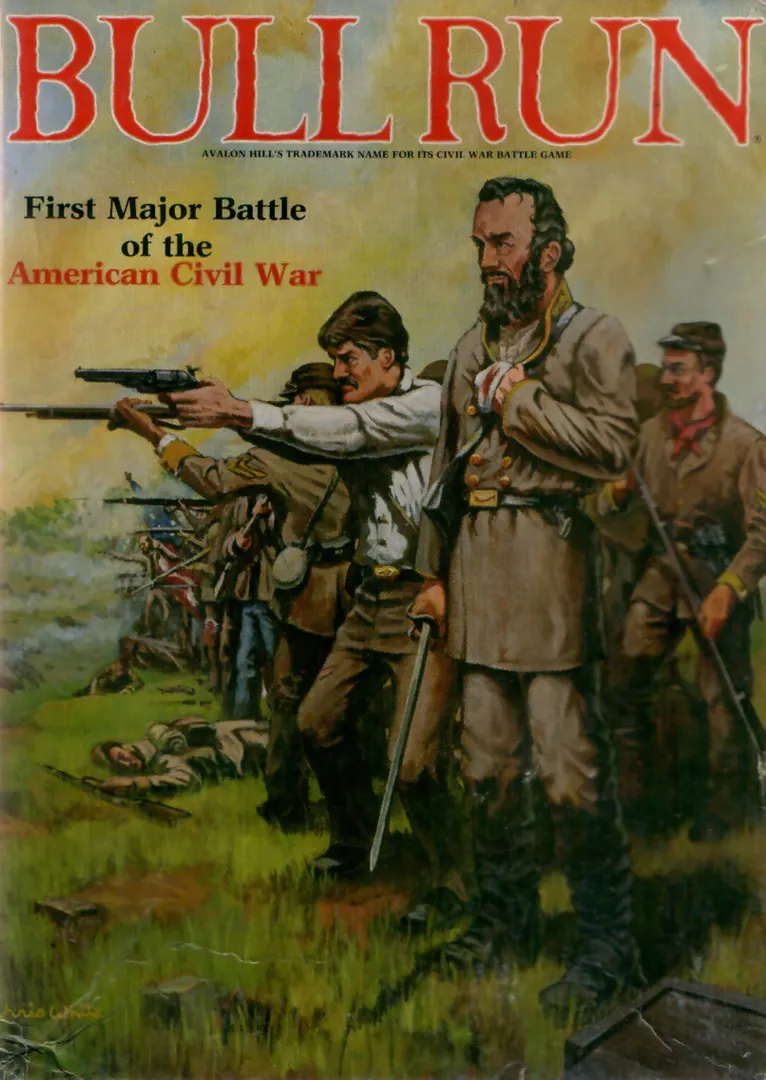
Bull Run: The First Major Battle of the American Civil War es un juego de mesa publicado en 1983 para 2 jugadores, con partidas de 240 minutos y a partir de 12 años. Fue diseñado por Richard Hamblen y sus mecánicas principales son Dice Rolling, Variable Set-up y Grid Movement.






En inglés
"Bull Run: The First Major Battle of the American Civil War" is a tactical combat wargame of the first battle of Bull Run. The game is played on a map of the area over which the battle was fought overlaid with a hexagonal grid. Units are infantry, cavalry, and artillery, with brigade, division, and army leaders. Each turn is 30 minutes, and each hex represents 1000 ft. Units are basically regiments and batteries. Some infantry regiments with their brigade leader are capable of forming brigades, increasing offensive power at the expense of movement. Batteries can be limbered for increased movement at the expense of firepower, or unlimbered with full firepower and limited movement. Combat is a modified version of the classic system adopted by the earlier Avalon Hill games. However, rules for leader command activation, infantry screening of artillery, and infantry forming brigades to prevent soak-off attacks, ranged artillery, rally of losses are give the game a unique flavour. The major terrain obstacle is Bull Run which provides the Confederate with defensive advantages and hinders Union movement. The game begins with the Union troops approaching partially hidden, unsuspecting Confederate forces. As the Union attack develops, additional Confederate leaders and combat units are activated and are rushed to stem the Union advance. The Union player wins if he is able to capture any of three objective hexes by the end of the game or takes Manassas at any time. The Confederate player wins if he takes Centreville at any time or prevents the Union player from holding any of objective hexes at the game end. The game consists of a 32" by 22" mapboard, 260 counters, various charts, a 12 page rulebook and 1 die. Magazine References: The GENERAL Index Article List: The GENERAL Vol.20,No.5 Series Replay - Bull Run: The First Major Battle of the American Civil War, Rex A. Martin, Paul O'Neil, Richard Hamblen Bull Run: The First Major Battle of the American Civil War – “West Point's Finest, The Commanders at Bull Run” (Historical) A. Blumberg & Richard Hamblen Bull Run: The First Major Battle of the American Civil War – “Rebel Yell, Opening placement for Confederate Players” (Strategy) Rex A. Martin Bull Run: The First Major Battle of the American Civil War – “First Blood, The Battle of First Bull Run” (Historical) Michael Craighead The Question Box - Bull Run: The First Major Battle of the American Civil War Contest #117 - Bull Run: The First Major Battle of the American Civil War The GENERAL Vol.20,No.6 Series Replay - Bull Run: The First Major Battle of the American Civil War, Rex A. Martin, Paul O'Neil, Richard Hamblen The GENERAL Vol.25,No.5 Bull Run: The First Major Battle of the American Civil War – “Risky Business -A designer's look at Bull Run: The First Major Battle of the American Civil War” (Designer notes) Richard Hamblen
Según el catálogo, Bull Run: The First Major Battle of the American Civil War admite 2 jugadores. Es el número de jugadores indicado por la editorial, así que el juego está diseñado exactamente para esa cantidad de participantes. Las variantes para otros tamaños de grupo, si existen, se describen en el reglamento de tu edición; consúltalo antes de preparar otra configuración.
La duración indicada para Bull Run: The First Major Battle of the American Civil War es de 240 minutos, la estimación de la editorial para una partida completa. El tiempo real depende del grupo, del número de jugadores y del conocimiento de las reglas: las primeras partidas suelen alargarse y los grupos con experiencia terminan antes. La preparación y la explicación de las reglas no están incluidas.
El catálogo indica Bull Run: The First Major Battle of the American Civil War a partir de 12 años. Es la recomendación de la editorial y refleja la lectura necesaria, la complejidad de las reglas y las piezas pequeñas, no solo el tema. Los más pequeños a menudo pueden jugar con ayuda de un adulto: comprueba la edad recomendada en tu edición y la experiencia de tu grupo.
Bull Run: The First Major Battle of the American Civil War tiene una puntuación de complejidad de 2,8 sobre 5 según los jugadores de BoardGameGeek, lo que lo convierte en un juego algo ligero. La puntuación refleja cuánto conocimiento de reglas, planificación y toma de decisiones exige una partida típica. Los juegos exigentes requieren una explicación inicial más larga, así que conviene usar una guía de preparación.
Bull Run: The First Major Battle of the American Civil War pertenece a estas categorías: Wargame, Civil War y Post-Napoleonic. Sus mecánicas principales son Dice Rolling, Variable Set-up y Grid Movement. Las categorías describen el tema y la ambientación de un juego, mientras que las mecánicas describen lo que los jugadores hacen realmente en su turno. Cada mecánica lleva a una página del catálogo con juegos similares.
Los autores acreditados de Bull Run: The First Major Battle of the American Civil War son: Richard Hamblen. Estos créditos proceden de los datos publicados del juego y nombran a las personas responsables de su diseño, no a ilustradores ni editoriales. Las páginas de autor de MeepleRules reúnen otros títulos de los mismos autores, algo útil cuando un juego te gusta y buscas otros parecidos.
El catálogo clasifica Bull Run: The First Major Battle of the American Civil War como juego base. Se juega por sí solo con los componentes de la caja y no requiere ningún otro título. Las expansiones, si existen, añaden contenido o reglas nuevas y aparecen por separado en el catálogo con un enlace a este juego base.