- Puntuación BGG
- 7,0
Ayuda con las reglas de Carcassonne: Die Katharer
Explicaciones claras de turnos, efectos de cartas y situaciones dudosas, con referencias a fuentes oficiales e historial de preguntas guardado.
- 2–6 jugadores
- 60 min
- 8+
- Complejidad 1,9/5

Asistente de reglas de Carcassonne: Die Katharer
¿Qué quieres saber?
Las respuestas salen del reglamento oficial, con la página para comprobarlo.
Carcassonne: Die Katharer es una expansión de Carcassonne publicada en 2004 para 2–6 jugadores, con partidas de 60 minutos y a partir de 8 años. Fue diseñado por Klaus-Jürgen Wrede y Christwart Conrad y sus mecánicas principales son Area Majority / Influence y Tile Placement.
Sobre el juego
En inglés
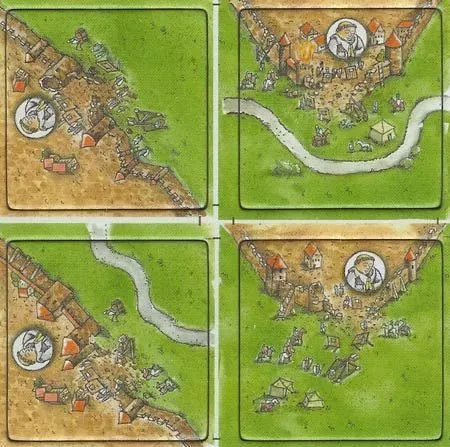
This is an 4 tile expansion for Carcassonne. The tiles allow you to lay siege on a city. A besieged city that is completed only yields 1 point per tile (2 if it includes a cathedral). Peasants supply the city as well as its besiegers, so every completed besieged city counts twice for them. Availability: The Siege tiles with the original art ('Die Katharer') are exclusive to German magazine Spielbox. They were included in issue 5/2004 (October/November) and the August 2005 'Der Carcassonne Almanach'. (Artist is Doris Matthäus.) The Siege has been re-released with new art by Rio Grande Games in October 2008 as part of the Mini Compilation Cult, Siege & Creativity. (Some have expressed concern with the new artwork as it is harder to see that a city is under siege.) A 6 tiles version of The Siege called 'Die Belagerer' (again with new art but similar to the Rio Grande edition) is part of the Carcassonne Müller Exklusiv-Edition released in 2013 and sold by the German trade company Müller. It's also available now through Cundco. Part of the Carcassonne series.
Diseñadores
Editoriales
- Hans im Glück
- W. Nostheide Verlag GmbH
Preguntas y respuestas
Según el catálogo, Carcassonne: Die Katharer admite de 2 a 6 jugadores. Este intervalo corresponde al número de jugadores indicado por la editorial, así que el juego puede prepararse para cualquier grupo dentro de ese margen. La preparación, algunas reglas y la puntuación pueden variar según el número de jugadores; consulta la configuración exacta en el reglamento de tu edición.
La duración indicada para Carcassonne: Die Katharer es de 60 minutos, la estimación de la editorial para una partida completa. El tiempo real depende del grupo, del número de jugadores y del conocimiento de las reglas: las primeras partidas suelen alargarse y los grupos con experiencia terminan antes. La preparación y la explicación de las reglas no están incluidas.
El catálogo indica Carcassonne: Die Katharer a partir de 8 años. Es la recomendación de la editorial y refleja la lectura necesaria, la complejidad de las reglas y las piezas pequeñas, no solo el tema. Los más pequeños a menudo pueden jugar con ayuda de un adulto: comprueba la edad recomendada en tu edición y la experiencia de tu grupo.
Carcassonne: Die Katharer tiene una puntuación de complejidad de 1,9 sobre 5 según los jugadores de BoardGameGeek, lo que lo convierte en un juego ligero. La puntuación refleja cuánto conocimiento de reglas, planificación y toma de decisiones exige una partida típica. Los juegos exigentes requieren una explicación inicial más larga, así que conviene usar una guía de preparación.
Carcassonne: Die Katharer pertenece a estas categorías: Medieval, City Building y Expansion for Base-game. Sus mecánicas principales son Area Majority / Influence y Tile Placement. Las categorías describen el tema y la ambientación de un juego, mientras que las mecánicas describen lo que los jugadores hacen realmente en su turno. Cada mecánica lleva a una página del catálogo con juegos similares.
Los autores acreditados de Carcassonne: Die Katharer son: Klaus-Jürgen Wrede y Christwart Conrad. Estos créditos proceden de los datos publicados del juego y nombran a las personas responsables de su diseño, no a ilustradores ni editoriales. Las páginas de autor de MeepleRules reúnen otros títulos de los mismos autores, algo útil cuando un juego te gusta y buscas otros parecidos.
El catálogo clasifica Carcassonne: Die Katharer como expansión de Carcassonne. Las expansiones añaden contenido, reglas o escenarios al juego base y normalmente no se pueden jugar solas, así que necesitas Carcassonne para usarla. Comprueba que tu edición de Carcassonne sea compatible, porque algunas expansiones se revisaron entre ediciones.