
- Puntuación BGG
- 10,0
Castle Dukes: Within The Walls
- 1–4 jugadores
- 60–90 min
- 2020
2017
Ayuda con las reglas de Castle Dukes
Explicaciones claras de turnos, efectos de cartas y situaciones dudosas, con referencias a fuentes oficiales e historial de preguntas guardado.
Para 1 jugador
¿Qué quieres saber?
Las respuestas salen del reglamento oficial, con la página para comprobarlo.
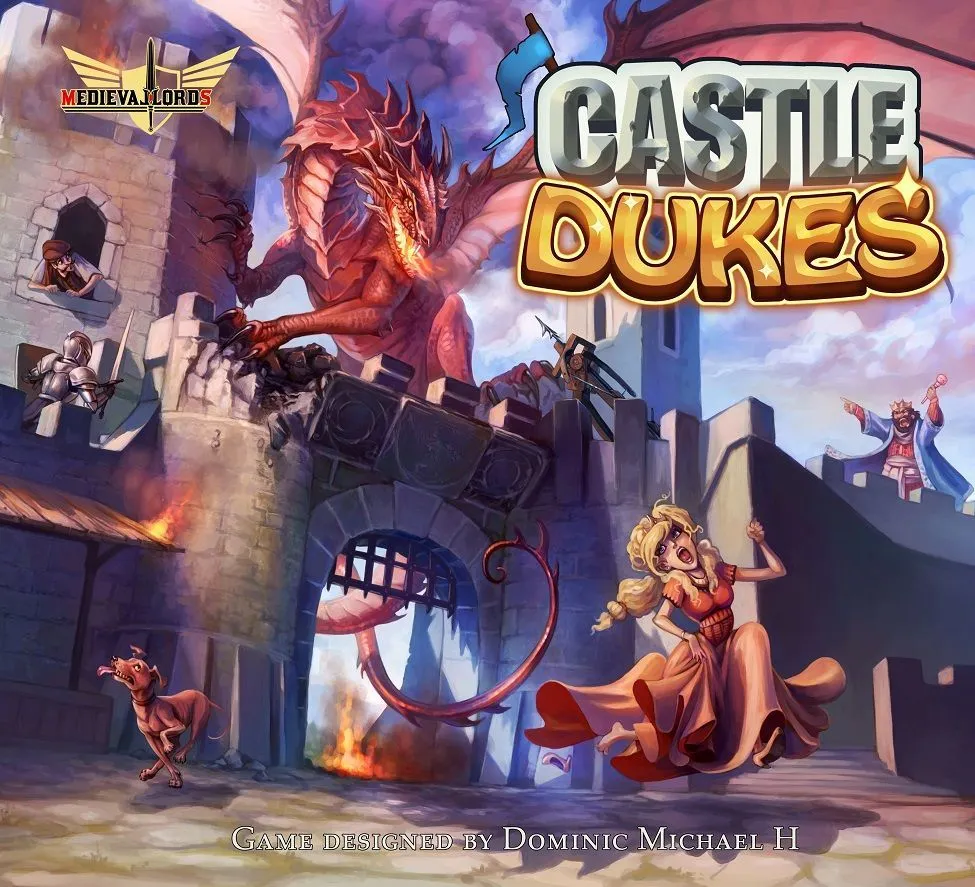
Castle Dukes es un juego de mesa publicado en 2017 para 1–4 jugadores, con partidas de 60 a 90 minutos y a partir de 12 años. Fue diseñado por Dominic Michael Huang y sus mecánicas principales son Tile Placement y Action Points.











En inglés
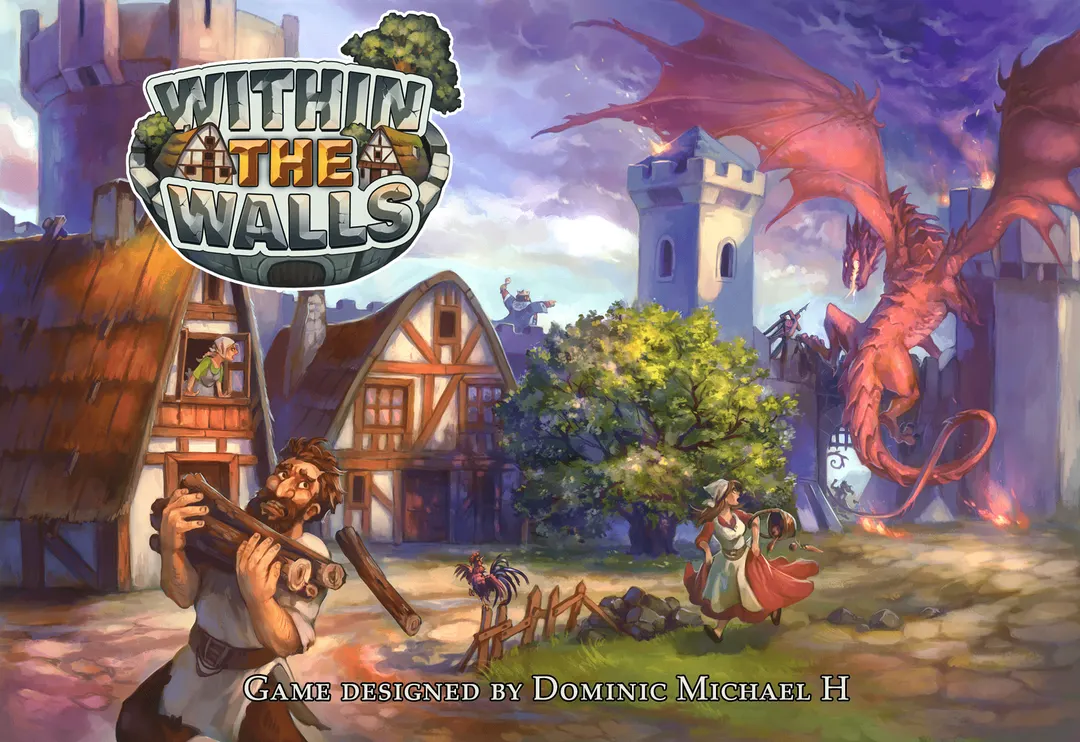
As a duke, you have decided to build the greatest castle in the land. You are not the only Duke in this land, though, and you are not the only one with this fantastic ambition. There are many ways to build your castle. You can even build it to lean towards one of several different styles, be it for Defence, for Comfort or even for Offence! The occasional royalty may pop by your land and if your castle does not suit his or her taste, they will leave to find better accommodations with your rival dukes! On top of that, the deadly dragon will appear once in awhile and raze the lands. If your castle is not well fortified against dragon attacks, it might just crumble! Score Victory Points (VP) by having the most number of important folks residing in your castle, as well as have the most magnificent castle of all and take home the title of Grand Duke! Castle Dukes is a very visually appealing game of Dexterity and Strategy - And it's 3D to boot! Each round, players start with 5 Coins. 6 Room cards are revealed from the stack and placed in positions 1 through 6 (from bottom to top), each room costing a higher amount of Coins to acquire than the last. The player with the First Player token gets first rights to the Room cards, passing the turn in clockwise direction until all players have had their chance to acquire rooms with their Coins. Rooms acquired leave a gap on their position and are not replaced with new cards during any player's turn. At the end of the whole turn after every player has had a chance at the rooms, any remaining room cards are then moved downwards to fill any gaps. Draw more Room cards from the Room Stack to fill all positions as needed. It is possible to choose not to acquire any Room card during a player's turn. Note: In the various positions 1 through 6, players also acquire additional castle components such as Tables and Coffers along with the Room cards, as depicted on the position on the main game board. Once done, all players then simultaneously acquire pillars, Floor Tiles, and Construction cards using their remaining Coins. They may then immediately build the newly acquired components, adding on layers to their castles until they gradually become beautiful fortresses of various shapes and heights. When all players are done with this next phase, a Guest card is revealed to show which Guests have dropped by for that turn. The princess always goes for the most comfortable castle, even if its flimsy. The king's life is very precious and he always seeks out the most defended castle. The knight looks for glory and always goes for the castle that best gives him the chance to slay a dragon. This is the end of a turn in Castle Dukes. The First Player token is now passed on to the right, and a new turn begins with each player having 5 Coins again. And yes, a dragon might appear now and then to attack all castles! Depending on your level of Defence or Offence, each castle will take varying amounts of damage. Beware! This is also a dexterity game! If at any point in the game your castle collapses, be it a small portion or even just one tiny component falling off, you will take a Crumble token which at the end of the game reduces your Victory Points by 2!
Según el catálogo, Castle Dukes admite de 1 a 4 jugadores. Este intervalo corresponde al número de jugadores indicado por la editorial, así que el juego puede prepararse para cualquier grupo dentro de ese margen. La preparación, algunas reglas y la puntuación pueden variar según el número de jugadores; consulta la configuración exacta en el reglamento de tu edición.
La duración indicada para Castle Dukes es de 60 a 90 minutos, la estimación de la editorial para una partida completa. El tiempo real depende del grupo, del número de jugadores y del conocimiento de las reglas: las primeras partidas suelen alargarse y los grupos con experiencia terminan antes. La preparación y la explicación de las reglas no están incluidas.
El catálogo indica Castle Dukes a partir de 12 años. Es la recomendación de la editorial y refleja la lectura necesaria, la complejidad de las reglas y las piezas pequeñas, no solo el tema. Los más pequeños a menudo pueden jugar con ayuda de un adulto: comprueba la edad recomendada en tu edición y la experiencia de tu grupo.
Castle Dukes tiene una puntuación de complejidad de 2,0 sobre 5 según los jugadores de BoardGameGeek, lo que lo convierte en un juego algo ligero. La puntuación refleja cuánto conocimiento de reglas, planificación y toma de decisiones exige una partida típica. Los juegos exigentes requieren una explicación inicial más larga, así que conviene usar una guía de preparación.
Castle Dukes pertenece a estas categorías: Action / Dexterity, Medieval y City Building. Sus mecánicas principales son Tile Placement y Action Points. Las categorías describen el tema y la ambientación de un juego, mientras que las mecánicas describen lo que los jugadores hacen realmente en su turno. Cada mecánica lleva a una página del catálogo con juegos similares.
Los autores acreditados de Castle Dukes son: Dominic Michael Huang. Estos créditos proceden de los datos publicados del juego y nombran a las personas responsables de su diseño, no a ilustradores ni editoriales. Las páginas de autor de MeepleRules reúnen otros títulos de los mismos autores, algo útil cuando un juego te gusta y buscas otros parecidos.
El catálogo clasifica Castle Dukes como juego base. Se juega por sí solo con los componentes de la caja y no requiere ningún otro título. Las expansiones, si existen, añaden contenido o reglas nuevas y aparecen por separado en el catálogo con un enlace a este juego base.