

- Puntuación BGG
- 5,9
Cheesonomics: Extra Sharp Expansion
- 2–5 jugadores
- 20 min
- 2014
2014
Ayuda con las reglas de Cheesonomics
Explicaciones claras de turnos, efectos de cartas y situaciones dudosas, con referencias a fuentes oficiales e historial de preguntas guardado.
Para 2 jugadores
¿Qué quieres saber?
Las respuestas salen del reglamento oficial, con la página para comprobarlo.
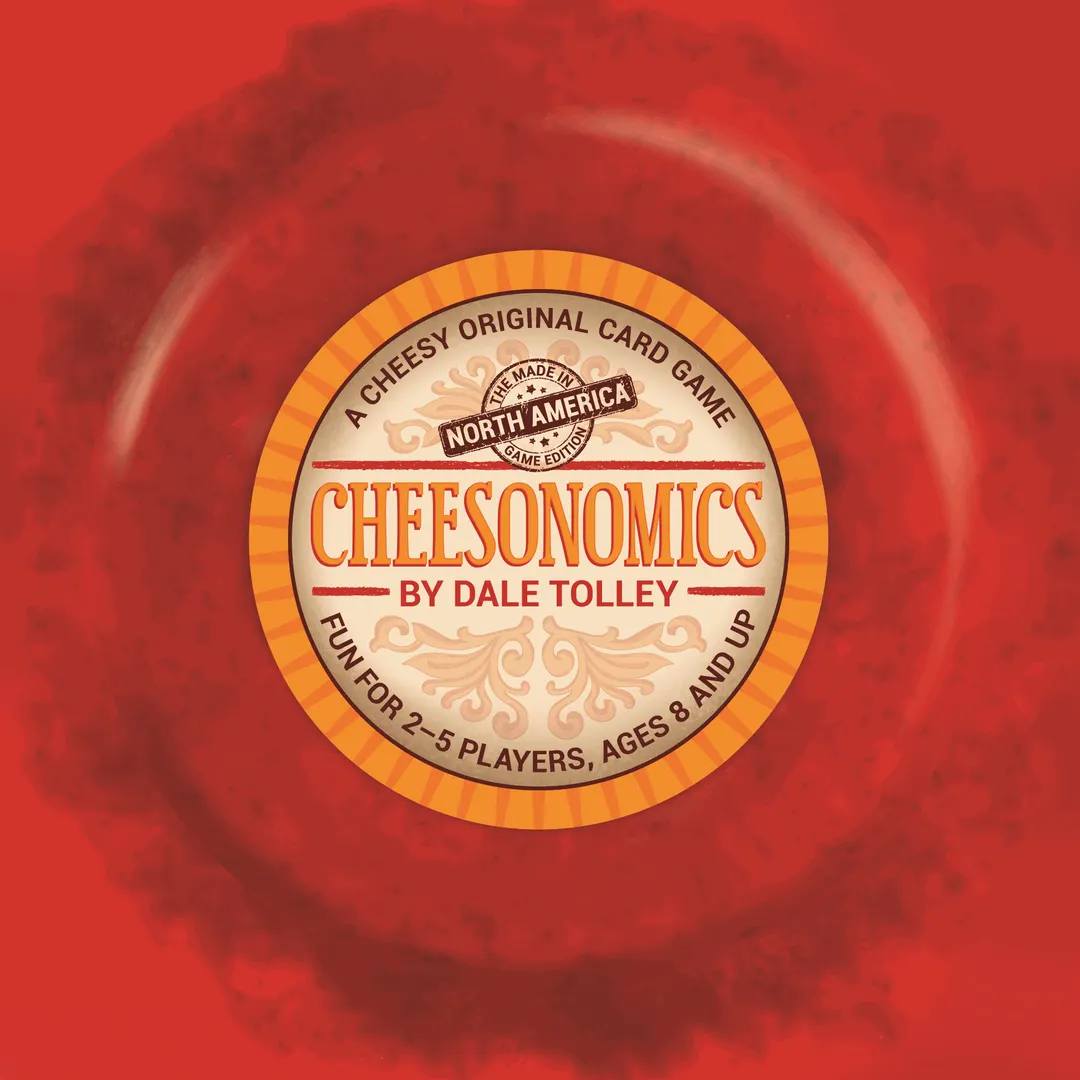
Cheesonomics es un juego de mesa publicado en 2014 para 2–5 jugadores, con partidas de 20 minutos y a partir de 8 años. Fue diseñado por Dale Tolley y sus mecánicas principales son Hand Management, Take That y Set Collection.


En inglés
Cheesonomics is a cheesy original card game for 2-5 players ages 8 and up that takes about 20-30 minutes to play. It is a strategic set collecting, memory-based, hand management card game based on controlling and manipulating the supply and demand of various types of cheese from cheese markets throughout North America or Europe. The European edition of Cheesonomics features cheese from France, Germany, Italy, The Netherlands and Scandinavia. The North American edition of Cheesonomics features cheese from Wisconsin, California, New York, Oregon and Canada. The overall goal of Cheesonomics is to manage your cheese supply, churn the right colors or animal types from your opponents' hands, produce the market's most demanded colors of cheese to milk the most profit, and earn the most curd cash by selling different colors of cheese at high market prices. Cheesonomics can be played at three different skill levels - mild, sharp and extra sharp - allowing gamers to adjust the game according to their own playing palate. Each game starts with three market wheels made up of 5 market wedges, and each player receives five cheese wedges and a cheese knife marked with either cheddar, edam, feta, gouda or parmesan. On each turn, the active player begins by retrieving his cheese knife from the serving tray - if it was placed there on a previous turn - and then chooses one of three different culinary actions: Churn Cheese, Produce Cheese or Sell Cheese. Churning cheese allows a player to collect cheese wedges from opponents. When churning, the active player asks for one color or animal type. The colors are red, orange, yellow, green or blue, and animals are cow, sheep, goat, yak, and reindeer. If an opponent has that type of cheese card, he must give the active player one card of that type. If he does not have that card type, the opponent must show his hand and give the active player one wedge of the active player's choice. The active player then protects his product by placing his cheese knife over that color or animal type on the provided serving tray. No other player can churn for that type of cheese until the knife is removed on that player's next turn. Instead of Churning, a player could Produce cheese. To do this, the active player simply plays all cheese wedges of one color or animal type from his hand face up onto the table into a cheese wheel. These wedges will be available for sale in future turns. The player then draws cheese wedges until he has five total wedges in his hand. Instead of Churning or Producing cheese, the active player could Sell Cheese. To sell, a player chooses up to three wedges of one color or animal type from previously-formed cheese and gains curd cash depending on the market, which is the sum of face-up, matching color market wedges. After selling cheese, the active player now "Mooves" the market, choosing one market wedge representing the color of the cheese sold in the transaction and flipping that wedge to the opposite side. The game ends when the cheese wedge draw pile is exhausted during a player's turn. The cheesemonger who has the most curd cash is the cheesy champion! Cheesonomics has even more to offer players who wish to try out the Sharp and Extra Sharp flavors of the game. In the Sharp game, players can now further manipulate the market. Whenever a Sell Cheese action is taken, that player now also chooses a wedge in the market to completely replace with one from his personal supply of market wedges. There are also certain cheese wedges with market symbols that may be activated during a Sell Cheese action that can allow a player to discard one of their market wedges and gain another or give a market wedge to one of the other players and take one of theirs. The Extra Sharp game is for the truly adventurous Cheeseheads! As an expansion to Cheesonomics, players can add in the Extra Sharp cheese wedge cards that introduce growth hormone, organic and smelly cheese wedges. Each of these new cheese wedge types have special rules that affect a Sell Cheese action, allowing players the choice to boost their production with growth hormones, earn more curds at game end with quality organic cheeses, or use pungent aromas to prevent players from flipping or removing market wedges.
Según el catálogo, Cheesonomics admite de 2 a 5 jugadores. Este intervalo corresponde al número de jugadores indicado por la editorial, así que el juego puede prepararse para cualquier grupo dentro de ese margen. La preparación, algunas reglas y la puntuación pueden variar según el número de jugadores; consulta la configuración exacta en el reglamento de tu edición.
La duración indicada para Cheesonomics es de 20 minutos, la estimación de la editorial para una partida completa. El tiempo real depende del grupo, del número de jugadores y del conocimiento de las reglas: las primeras partidas suelen alargarse y los grupos con experiencia terminan antes. La preparación y la explicación de las reglas no están incluidas.
El catálogo indica Cheesonomics a partir de 8 años. Es la recomendación de la editorial y refleja la lectura necesaria, la complejidad de las reglas y las piezas pequeñas, no solo el tema. Los más pequeños a menudo pueden jugar con ayuda de un adulto: comprueba la edad recomendada en tu edición y la experiencia de tu grupo.
Cheesonomics tiene una puntuación de complejidad de 1,7 sobre 5 según los jugadores de BoardGameGeek, lo que lo convierte en un juego ligero. La puntuación refleja cuánto conocimiento de reglas, planificación y toma de decisiones exige una partida típica. Los juegos exigentes requieren una explicación inicial más larga, así que conviene usar una guía de preparación.
Cheesonomics pertenece a estas categorías: Card Game, Economic y Memory. Sus mecánicas principales son Hand Management, Take That y Set Collection. Las categorías describen el tema y la ambientación de un juego, mientras que las mecánicas describen lo que los jugadores hacen realmente en su turno. Cada mecánica lleva a una página del catálogo con juegos similares.
Los autores acreditados de Cheesonomics son: Dale Tolley. Estos créditos proceden de los datos publicados del juego y nombran a las personas responsables de su diseño, no a ilustradores ni editoriales. Las páginas de autor de MeepleRules reúnen otros títulos de los mismos autores, algo útil cuando un juego te gusta y buscas otros parecidos.
El catálogo clasifica Cheesonomics como juego base. Se juega por sí solo con los componentes de la caja y no requiere ningún otro título. Las expansiones, si existen, añaden contenido o reglas nuevas y aparecen por separado en el catálogo con un enlace a este juego base.