
- Puesto en BGG
- BGG #1598
- Puntuación BGG
- 7,1
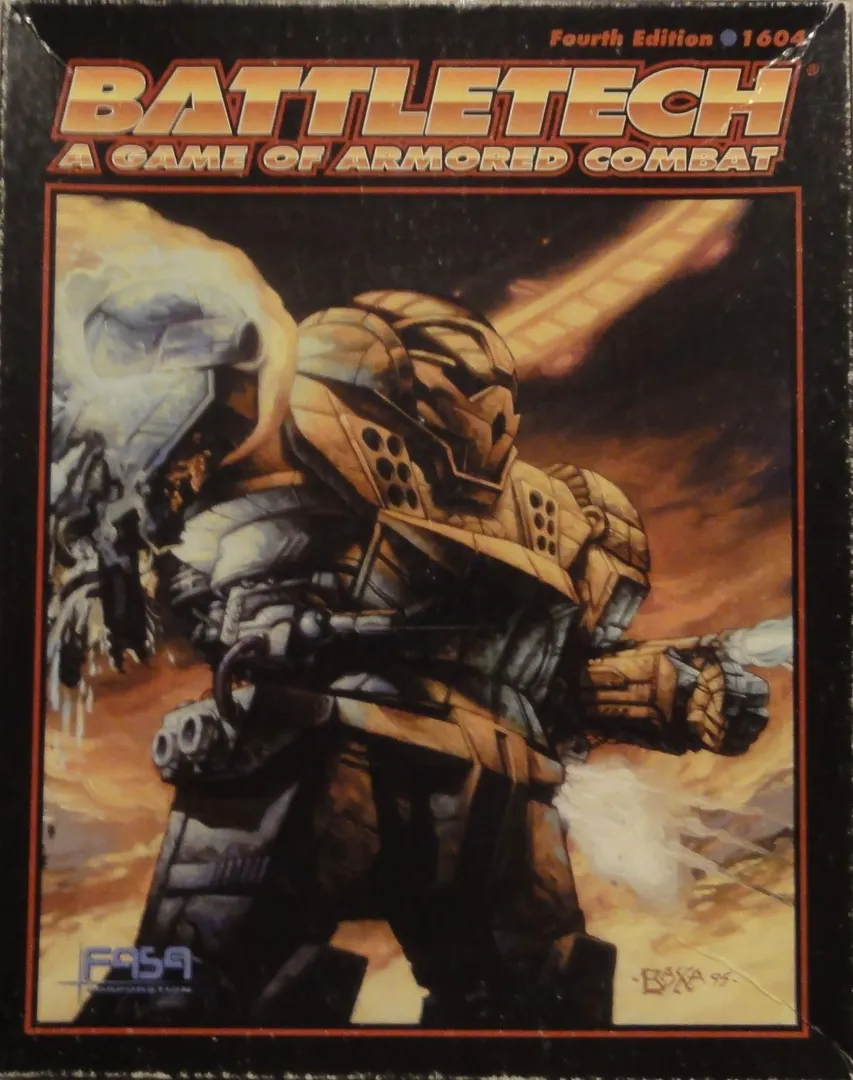
BattleTech
- 2–4 jugadores
- Complejidad 3,4/5
- 1984
1986
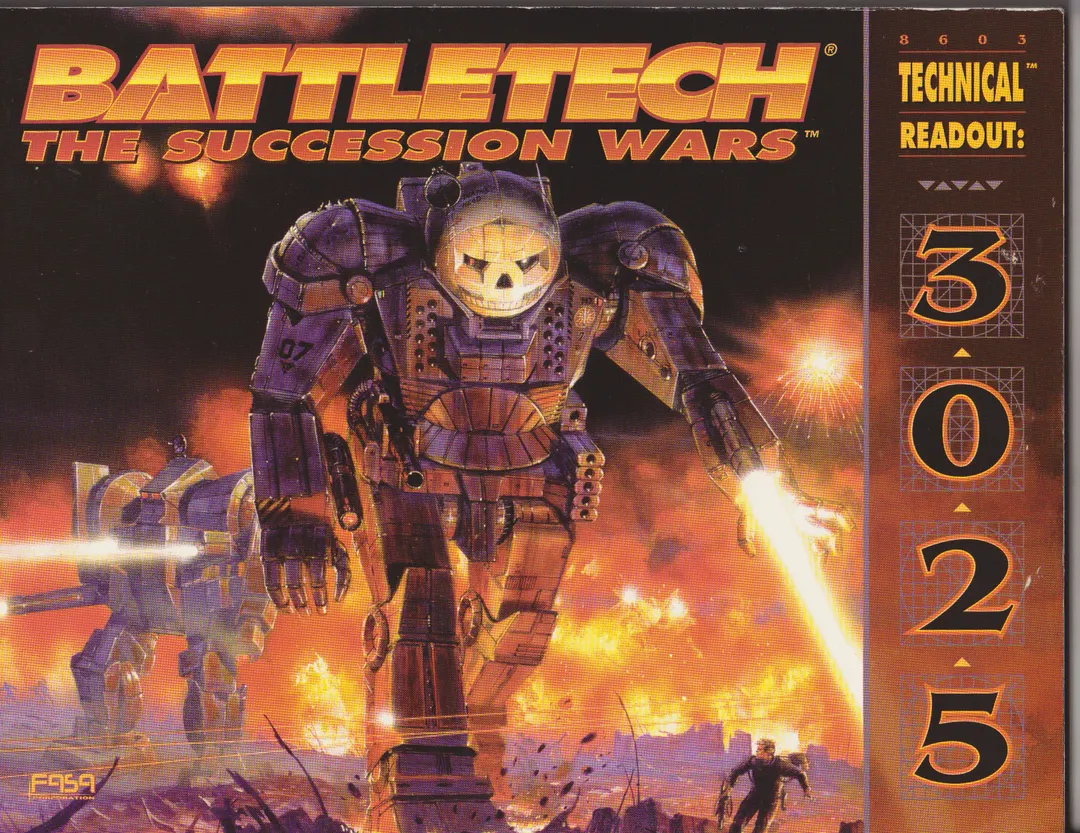
Ayuda con las reglas de Classic BattleTech: Technical Readout 3025
Explicaciones claras de turnos, efectos de cartas y situaciones dudosas, con referencias a fuentes oficiales e historial de preguntas guardado.
¿Qué quieres saber?
Las respuestas salen del reglamento oficial, con la página para comprobarlo.
Classic BattleTech: Technical Readout 3025 es una expansión de juego de mesa publicada en 1986 para 2–6 jugadores, con partidas de 120 minutos y a partir de 14 años. Fue diseñado por Anthony Pryor, Blaine Pardoe, Dale Kemper y Shaun Duncan y sus mecánicas principales son Variable Player Powers, Dice Rolling y Role Playing.



En inglés
Publisher Blurb: In the year 3025, war rages across all of known space. The Successor Lords vie for supremacy over the entire Inner Sphere, each commanding a vast army of troops. At the forefront of these forces are BattleMechs, 12-meter tall humanoid juggernauts bristling with enough firepower to level a city block. Centuries of war have taken their toll, and 'Mechs have become scarce and valuable. The presence of these behemoths on the battlefield often spells the difference between victory and defeat! This revised edition of the original Technical Readout: 3025 features the most popular and powerful BattleMechs of the Succession Wars, as well as a selection of support vehicles, aerospace craft and rare Star League-era 'Mechs. Each of these war machines is illustrated in detail, accompanied by a description of its history and capabilities and complete BattleTech game statistics. Fully compatible with the BattleTech boxed game.
Según el catálogo, Classic BattleTech: Technical Readout 3025 admite de 2 a 6 jugadores. Este intervalo corresponde al número de jugadores indicado por la editorial, así que el juego puede prepararse para cualquier grupo dentro de ese margen. La preparación, algunas reglas y la puntuación pueden variar según el número de jugadores; consulta la configuración exacta en el reglamento de tu edición.
La duración indicada para Classic BattleTech: Technical Readout 3025 es de 120 minutos, la estimación de la editorial para una partida completa. El tiempo real depende del grupo, del número de jugadores y del conocimiento de las reglas: las primeras partidas suelen alargarse y los grupos con experiencia terminan antes. La preparación y la explicación de las reglas no están incluidas.
El catálogo indica Classic BattleTech: Technical Readout 3025 a partir de 14 años. Es la recomendación de la editorial y refleja la lectura necesaria, la complejidad de las reglas y las piezas pequeñas, no solo el tema. Los más pequeños a menudo pueden jugar con ayuda de un adulto: comprueba la edad recomendada en tu edición y la experiencia de tu grupo.
Classic BattleTech: Technical Readout 3025 tiene una puntuación de complejidad de 3,0 sobre 5 según los jugadores de BoardGameGeek, lo que lo convierte en un juego de complejidad media. La puntuación refleja cuánto conocimiento de reglas, planificación y toma de decisiones exige una partida típica. Los juegos exigentes requieren una explicación inicial más larga, así que conviene usar una guía de preparación.
Classic BattleTech: Technical Readout 3025 pertenece a estas categorías: Fighting, Wargame y Miniatures. Sus mecánicas principales son Variable Player Powers, Dice Rolling y Role Playing. Las categorías describen el tema y la ambientación de un juego, mientras que las mecánicas describen lo que los jugadores hacen realmente en su turno. Cada mecánica lleva a una página del catálogo con juegos similares.
Los autores acreditados de Classic BattleTech: Technical Readout 3025 son: Anthony Pryor, Blaine Pardoe, Dale Kemper y Shaun Duncan. Estos créditos proceden de los datos publicados del juego y nombran a las personas responsables de su diseño, no a ilustradores ni editoriales. Las páginas de autor de MeepleRules reúnen otros títulos de los mismos autores, algo útil cuando un juego te gusta y buscas otros parecidos.
El catálogo clasifica Classic BattleTech: Technical Readout 3025 como expansión. Las expansiones añaden contenido, reglas o escenarios a un juego base existente y normalmente no se pueden jugar solas. Comprueba en la caja o en la descripción de la editorial qué juego base se necesita y asegúrate de que tu edición de ese juego sea compatible con esta expansión.