
- Puesto en BGG
- BGG #11.210
- Puntuación BGG
- 5,7
Cranium
- 4–99 jugadores
- 60 min
- Complejidad 1,4/5
- 1998
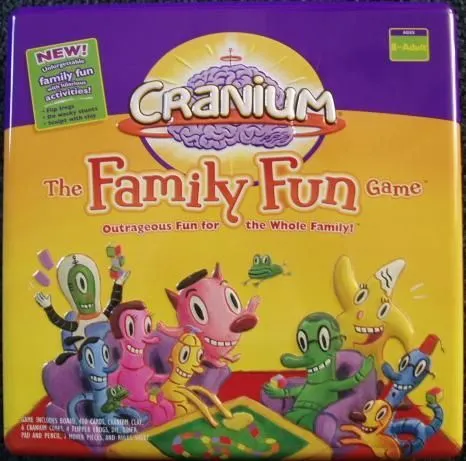
2005
Ayuda con las reglas de Cranium: The Family Fun Game
Explicaciones claras de turnos, efectos de cartas y situaciones dudosas, con referencias a fuentes oficiales e historial de preguntas guardado.
Para 4 jugadores
¿Qué quieres saber?
Las respuestas salen del reglamento oficial, con la página para comprobarlo.
Cranium: The Family Fun Game es un juego de mesa publicado en 2005 para 4–99 jugadores, con partidas de 45 minutos y a partir de 8 años. Fue diseñado por Richard Tait y Whit Alexander y sus mecánicas principales son Roll / Spin and Move, Paper-and-Pencil y Team-Based Game.

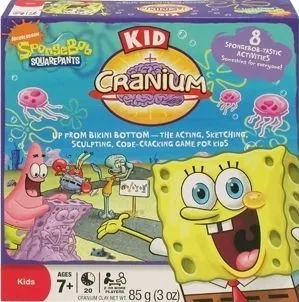
En inglés
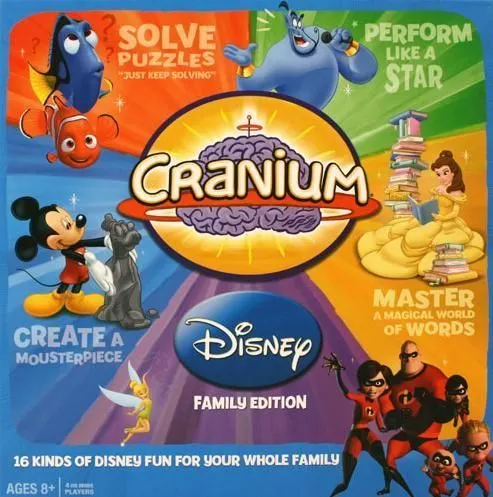
From the manufacturer: Cranium Family Fun gives families the best way to play together as a team in an unforgettably fun game that gives everyone a chance to shine. Packed with 16 hilarious activities, Cranium Family Fun gets you building, flipping, sketching, sculpting, guessing, and laughing out loud together every time you play! From the back of the box: Cranium Family Fun features a variety of hilarious activities that will have everyone laughing, high-fiving, and working and playing together! With colorful Cranium Cubes and fun Flipper Frogs, The Family Fun Game delivers the ultimate family game night! Can Mom flip a frog through a hoop you've sculpted out of clay? Can you pass the Cranium Cubes to Dad ... without using your hands? Can you work together to write down three of the top five most popular pizza toppings? In Cranium Family Fun, everyone will have a chance to shine as you perform wacky stunts, act, sketch, guess, sculpt with Cranium Clay, and more! And the short play time (about 40 minutes) makes it easy to squeeze in some laugh-out-loud family fun before dinner or after school. Object: Be the first team to cross the finish line and you win the game! The teams score points and move on the board by successfully completing their activities. How to play: 1. Divide players into at least two teams. Instruct each team to choose its game piece and place it on the Planet Cranium starting space. 2 Provide each team with paper and a pencil. Place the four card character boxes out on the board (Creative Cat, Star Performer, Word Worm, Date Head). Place the timer, the die and the Cranium Clay container on the table. 3 The first team must choose its character box and draw a card. Follow instructions on the card. The player whose birthday is closest is the first player to go on the team. 4 Roll the die and move the appropriate number of spaces only if your team has completed the character card activity successfully; otherwise, pass the play to the team on the left. Stop on any Planet Cranium spaces you pass over during your move forward. Advance forward to the next Planet Cranium if you roll purple. 5 Advance to the inner fast track if you successfully complete the task from the Planet Cranium card. Remain on the outer scenic track if you do not complete the task. 6 Pass the play to the team on the left after you have advanced your playing piece. 7 Halt the game when a Club Cranium card is drawn. All teams follow the instructions on the card to compete simultaneously against each other in a bonus round. The winning team receives a bonus roll. 8 The winning team rolls and moves. Continue play with the team whose turn it was before the bonus round. 9 Enter the Cranium Central at the end of the game board. When you roll, advance to the appropriate character box as indicated by the color rolled on the die. 10 Complete the activity in Cranium Central. Advance to the next character in clockwise motion. Wait for your next turn to complete that activity. 11 A team wins when it is the first to complete the four activities in Cranium Central.
Según el catálogo, Cranium: The Family Fun Game admite de 4 a 99 jugadores. Este intervalo corresponde al número de jugadores indicado por la editorial, así que el juego puede prepararse para cualquier grupo dentro de ese margen. La preparación, algunas reglas y la puntuación pueden variar según el número de jugadores; consulta la configuración exacta en el reglamento de tu edición.
La duración indicada para Cranium: The Family Fun Game es de 45 minutos, la estimación de la editorial para una partida completa. El tiempo real depende del grupo, del número de jugadores y del conocimiento de las reglas: las primeras partidas suelen alargarse y los grupos con experiencia terminan antes. La preparación y la explicación de las reglas no están incluidas.
El catálogo indica Cranium: The Family Fun Game a partir de 8 años. Es la recomendación de la editorial y refleja la lectura necesaria, la complejidad de las reglas y las piezas pequeñas, no solo el tema. Los más pequeños a menudo pueden jugar con ayuda de un adulto: comprueba la edad recomendada en tu edición y la experiencia de tu grupo.
Cranium: The Family Fun Game tiene una puntuación de complejidad de 1,4 sobre 5 según los jugadores de BoardGameGeek, lo que lo convierte en un juego ligero. La puntuación refleja cuánto conocimiento de reglas, planificación y toma de decisiones exige una partida típica. Los juegos exigentes requieren una explicación inicial más larga, así que conviene usar una guía de preparación.
Cranium: The Family Fun Game pertenece a estas categorías: Humor, Word Game y Party Game. Sus mecánicas principales son Roll / Spin and Move, Paper-and-Pencil y Team-Based Game. Las categorías describen el tema y la ambientación de un juego, mientras que las mecánicas describen lo que los jugadores hacen realmente en su turno. Cada mecánica lleva a una página del catálogo con juegos similares.
Los autores acreditados de Cranium: The Family Fun Game son: Richard Tait y Whit Alexander. Estos créditos proceden de los datos publicados del juego y nombran a las personas responsables de su diseño, no a ilustradores ni editoriales. Las páginas de autor de MeepleRules reúnen otros títulos de los mismos autores, algo útil cuando un juego te gusta y buscas otros parecidos.
El catálogo clasifica Cranium: The Family Fun Game como juego base. Se juega por sí solo con los componentes de la caja y no requiere ningún otro título. Las expansiones, si existen, añaden contenido o reglas nuevas y aparecen por separado en el catálogo con un enlace a este juego base.