
- Puesto en BGG
- BGG #6824
- Puntuación BGG
- 6,7
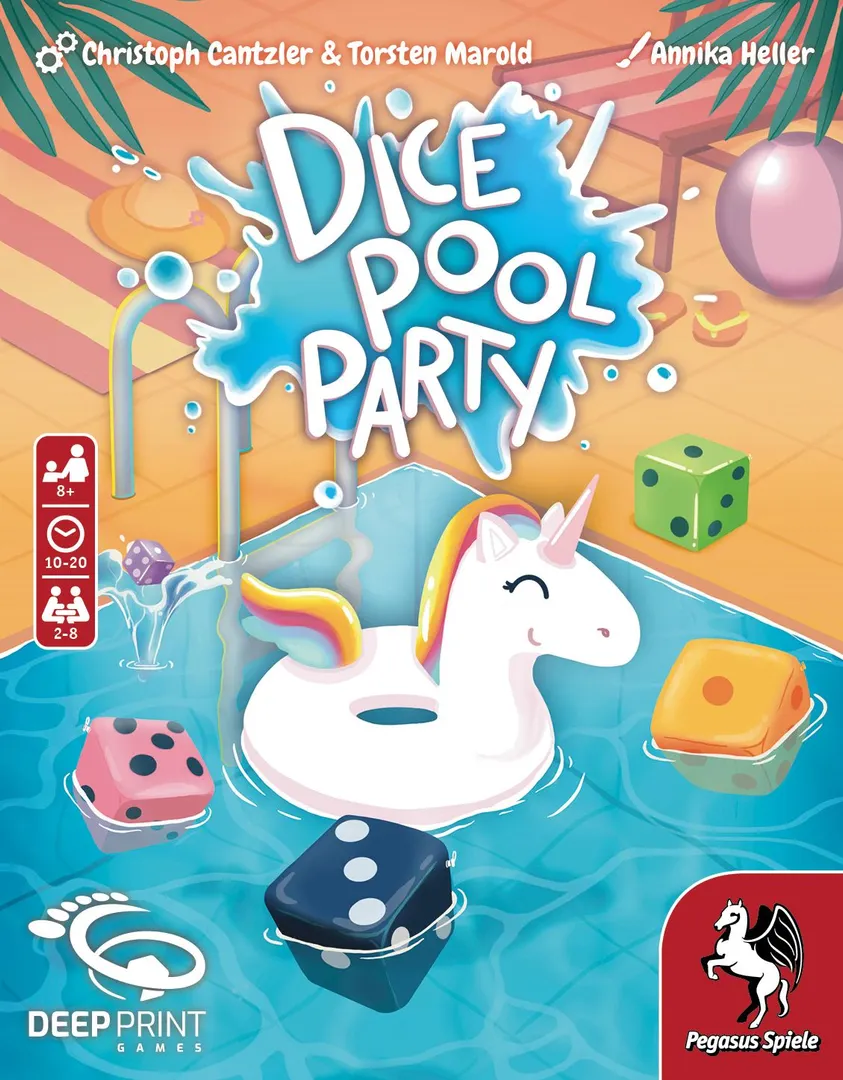
Dice Pool Party
- 2–8 jugadores
- 10–20 min
- Complejidad 1,1/5
- 2025
2022
Ayuda con las reglas de Dice Cup
Explicaciones claras de turnos, efectos de cartas y situaciones dudosas, con referencias a fuentes oficiales e historial de preguntas guardado.
Para 2 jugadores
¿Qué quieres saber?
Las respuestas salen del reglamento oficial, con la página para comprobarlo.
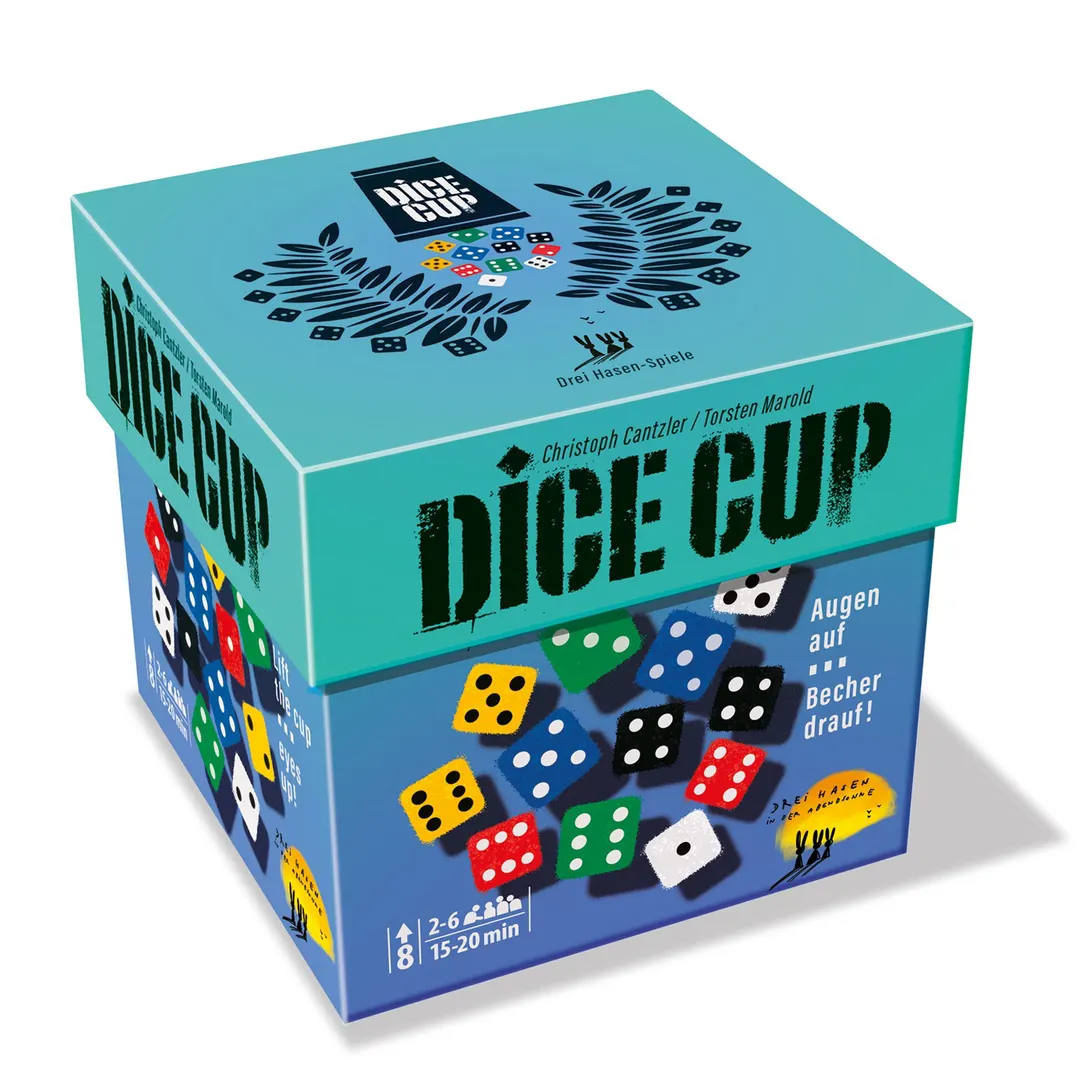
Dice Cup es un juego de mesa publicado en 2022 para 2–6 jugadores, con partidas de 15 a 20 minutos y a partir de 8 años. Fue diseñado por Christoph Cantzler y Torsten Marold y sus mecánicas principales son Dice Rolling, Simultaneous Action Selection y Memory.
%2Fpic129091.jpg@webp)

En inglés
GAME IDEA The game is played in 12 rounds in which the dice fall anew each time. All see the same result but everybody from another perspective. Each player always tries to find the best scoring category for him. But attention: Each category is available only once per game! So far so easy, if only the dice would not always disappear under the cup again so fast … Who has grasped the best result in the short term? And in which category would eventually have been more to achieve? GOAL OF THE GAME The player with the highest total score in the end wins the DICE CUP-Challenge! PREPARATION Put the dice in the cup. Each player gets a scoring sheet and a pen – and writes down his name on the up right line intended for it. Now a starting player is chosen and off we go! GAME PLAY The starting player starts rolling the dice but still everybody plays always simultaneously. Each round consists of 8 steps: Put all dice in the cup. Your hand above it and shake it well. Turn around the cup with the dice and overthrow it on the table so all dice are hidden underneath the cup. Lift up the cup for about 3 seconds (to measure the time, slowly say the following slogan: „Lift the cup – eyes up“). The dice must be clearly visible for everybody for the same amount of time. Then the cup is put over the dice again carefully so that they are not turned over accidentally. Now each player sets a cross in the little circle of the box in the category he wants to value. You can use your hand as a sight screen. Once the cross is set it may not be changed anymore. When everybody is ready the player lifts the cup again and puts it aside so the dice result is visible for all players again. Now everybody values his result and writes the points in the corresponding field (Example Kim see valuation). Pass the cup on in clockwise direction. The next round starts. Important: Sometimes the dice lie on top of each other. Then the dice roll must be repeated immediately! VALUATION AND EXAMPLES Who has chosen „count fours only“ in the upper part, multiplies the number of fours with 4 (of fives with 5, of sixes with 6). E.g. three time 4: 3 x 4 = 12 points Who has set a cross for a colour, e.g. „blue“, in the middle part, only counts the eyes of the two dice in this colour and notes down the sum. Scoring of Kim 5 + 6 = 11 points Who has chosen „double“, may note down 10 points for each „double“ of the same colour. E.g. one „double“ (red) = 10 points Who has marked „all ones, twos and threes“, adds all dice pips which show ones, twos and threes. E.g. 1 + 1 + 1 + 2 + 2 + 3 + 3 = 13 points Who has chosen „DICE CUP“, adds the pips of all dice and notes down the sum. E.g. 1 + 1 + 1 + 2 + 2 + 3 + 3 + 4 + 4 + 4 +5 + 6 = 36 points After each valuation the respective selected category * The dot next to the red square is used for better is of course dropped for the current game. END OF THE GAME The game ends after 12 played rounds. In the last round the cup can be left aside after the third playing step, and the last valuation (for the respective individual last category) is done at once. Afterwards every player adds the points of the three parts on his scoring sheet, transmits the sum into the fields provided for this purpose and calculates the total amount. The player with the highest total amount wins the DICE CUP-Challenge! VARIATIONS: The „Eyes up time“ may vary as the players like or by experience. Pro players can shorten the time to 2 seconds, for example. Beginners and younger players may extend it. All players always have the same length of time available … It is also much fun to play several games simultaneously. The players have two or more columns in each category to fill in and value. Have fun playing!
Según el catálogo, Dice Cup admite de 2 a 6 jugadores. Este intervalo corresponde al número de jugadores indicado por la editorial, así que el juego puede prepararse para cualquier grupo dentro de ese margen. La preparación, algunas reglas y la puntuación pueden variar según el número de jugadores; consulta la configuración exacta en el reglamento de tu edición.
La duración indicada para Dice Cup es de 15 a 20 minutos, la estimación de la editorial para una partida completa. El tiempo real depende del grupo, del número de jugadores y del conocimiento de las reglas: las primeras partidas suelen alargarse y los grupos con experiencia terminan antes. La preparación y la explicación de las reglas no están incluidas.
El catálogo indica Dice Cup a partir de 8 años. Es la recomendación de la editorial y refleja la lectura necesaria, la complejidad de las reglas y las piezas pequeñas, no solo el tema. Los más pequeños a menudo pueden jugar con ayuda de un adulto: comprueba la edad recomendada en tu edición y la experiencia de tu grupo.
Dice Cup tiene una puntuación de complejidad de 1,4 sobre 5 según los jugadores de BoardGameGeek, lo que lo convierte en un juego ligero. La puntuación refleja cuánto conocimiento de reglas, planificación y toma de decisiones exige una partida típica. Los juegos exigentes requieren una explicación inicial más larga, así que conviene usar una guía de preparación.
Dice Cup pertenece a estas categorías: Number, Dice y Memory. Sus mecánicas principales son Dice Rolling, Simultaneous Action Selection y Memory. Las categorías describen el tema y la ambientación de un juego, mientras que las mecánicas describen lo que los jugadores hacen realmente en su turno. Cada mecánica lleva a una página del catálogo con juegos similares.
Los autores acreditados de Dice Cup son: Christoph Cantzler y Torsten Marold. Estos créditos proceden de los datos publicados del juego y nombran a las personas responsables de su diseño, no a ilustradores ni editoriales. Las páginas de autor de MeepleRules reúnen otros títulos de los mismos autores, algo útil cuando un juego te gusta y buscas otros parecidos.
El catálogo clasifica Dice Cup como juego base. Se juega por sí solo con los componentes de la caja y no requiere ningún otro título. Las expansiones, si existen, añaden contenido o reglas nuevas y aparecen por separado en el catálogo con un enlace a este juego base.