- Puesto en BGG
- BGG #273
- Puntuación BGG
- 7,7
Magical Athlete
- 2–6 jugadores
- 30 min
- Complejidad 1,2/5
- 2025

Ayuda con las reglas de Four Twenty-one
Explicaciones claras de turnos, efectos de cartas y situaciones dudosas, con referencias a fuentes oficiales e historial de preguntas guardado.
¿Qué quieres saber?
Las respuestas salen del reglamento oficial, con la página para comprobarlo.
Four Twenty-one es un juego de mesa para 2–8 jugadores y con partidas de 5 minutos. Sus mecánicas principales son Dice Rolling.





En inglés
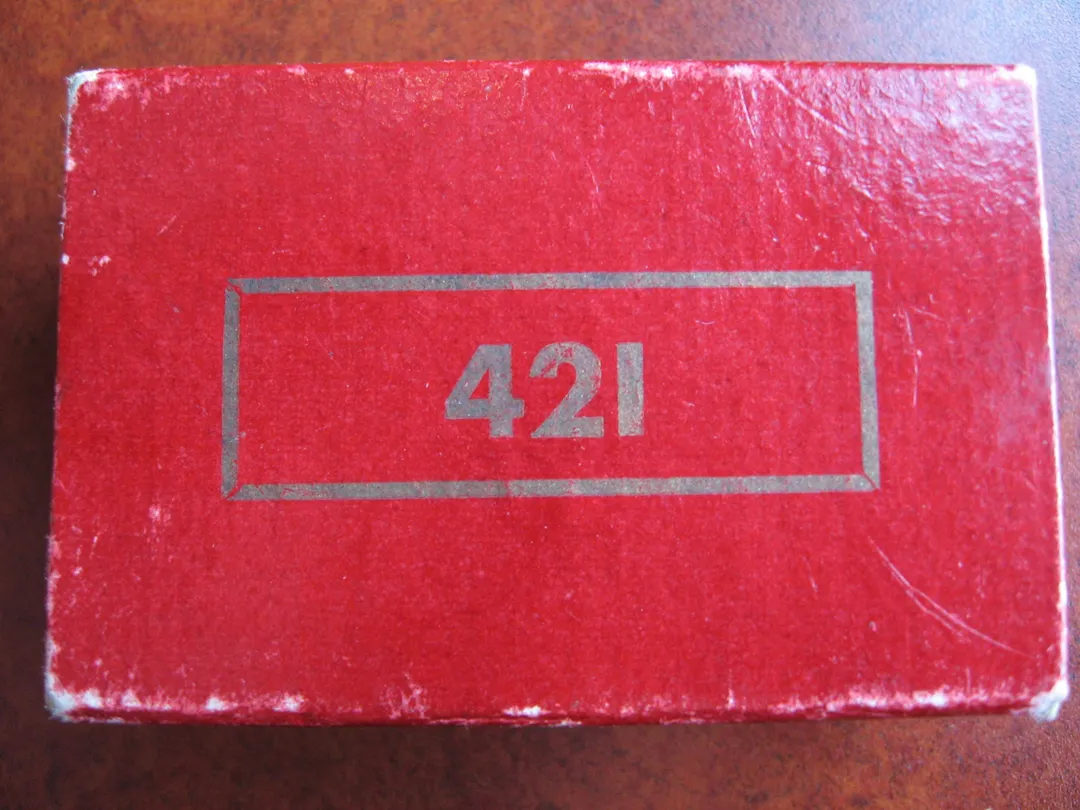
This game is popular in Europe. It is played with three dice and an number of tokens ("fiches", usually 11 or 21) and it is not uncommon to find special porcelain boxes, marked with the dice numbers 4-2-1. Play is in two phases. "Charge" and "Décharge" (discharge). Charge phase : all players roll the dice once and only once, each. The biggest hand takes as many tokens as the value in points of his or her hand. This process is repeated until all tokens have been distributed (with the last hand taking has many tokens as are available). If a player has all tokens at the end of the charge, the game is finished (and he or she pays a round of drinks). Discharge phase : The player with the biggest number of tokens has the first roll and then clockwise. The first player of a round of rolls decide for one or two rerolls. A reroll meaning rerolling one, two or all dice, to try to achieve the best hand. By electing to have rerolls, he or she allows the same number of rerolls to the other players. The one who rolls the biggest hand gives a number of tokens equal to the value of his hand (or all of his tokens if not enough) to the player who rolled the lowest hand. That player becomes first player. The game ends when one player has all tokens. He's the loser of the game and pays the next round. If at some point a player has no tokens, play continues without him/her ("saved"). Hands rank as follows (from biggest to smallest): 1. 421 2. 3 aces (1-1-1) 3. 2 aces-six (1-1-6) 4. 3 six (6-6-6) 5. 2 aces-five (1-1-5) 6. 3 fives (5-5-5) 7. 2 aces-four (1-1-4) 8. 3 fours (4-4-4) 9. 2 aces-three (1-1-3) 10. 3 threes (3-3-3) 11. 2 aces-two (1-1-2) 12. 3 two (2-2-2) 13. 6-5-4 14. 5-4-3 15. 4-3-2 16. 3-2-1 Others hands are by decreasing order of values the dice, from 665 to 221 (which is "nenette"). For info, the last value before 221 is 322. 1-1-x are called "fiches" x-x-x are called "baraques" 6-5-4 and the like are called "tierces" 421 is worth 11 points (sometimes 10 or 8 in variants) 111 is worth 7 points x-x-x is worth x points (except for 111, see above) 1-1-x is also worth x points (except, again, for 111) The difference is that for x, 1-1-x>x-x-x as explained in the order of hands above. Tierces are worth 2 and the rest is worth 1.
Según el catálogo, Four Twenty-one admite de 2 a 8 jugadores. Este intervalo corresponde al número de jugadores indicado por la editorial, así que el juego puede prepararse para cualquier grupo dentro de ese margen. La preparación, algunas reglas y la puntuación pueden variar según el número de jugadores; consulta la configuración exacta en el reglamento de tu edición.
La duración indicada para Four Twenty-one es de 5 minutos, la estimación de la editorial para una partida completa. El tiempo real depende del grupo, del número de jugadores y del conocimiento de las reglas: las primeras partidas suelen alargarse y los grupos con experiencia terminan antes. La preparación y la explicación de las reglas no están incluidas.
Four Twenty-one tiene una puntuación de complejidad de 1,0 sobre 5 según los jugadores de BoardGameGeek, lo que lo convierte en un juego ligero. La puntuación refleja cuánto conocimiento de reglas, planificación y toma de decisiones exige una partida típica. Los juegos exigentes requieren una explicación inicial más larga, así que conviene usar una guía de preparación.
Four Twenty-one pertenece a estas categorías: Party Game y Dice. Sus mecánicas principales son Dice Rolling. Las categorías describen el tema y la ambientación de un juego, mientras que las mecánicas describen lo que los jugadores hacen realmente en su turno. Cada mecánica lleva a una página del catálogo con juegos similares.
El catálogo clasifica Four Twenty-one como juego base. Se juega por sí solo con los componentes de la caja y no requiere ningún otro título. Las expansiones, si existen, añaden contenido o reglas nuevas y aparecen por separado en el catálogo con un enlace a este juego base.


