
- Puntuación BGG
- 7,7
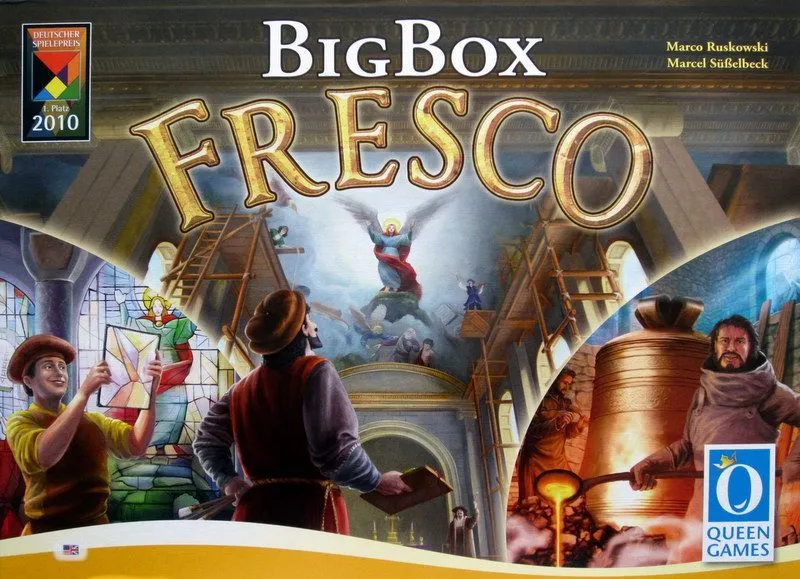
Fresco: Big Box
- 2–4 jugadores
- 60 min
- Complejidad 2,8/5
- 2014
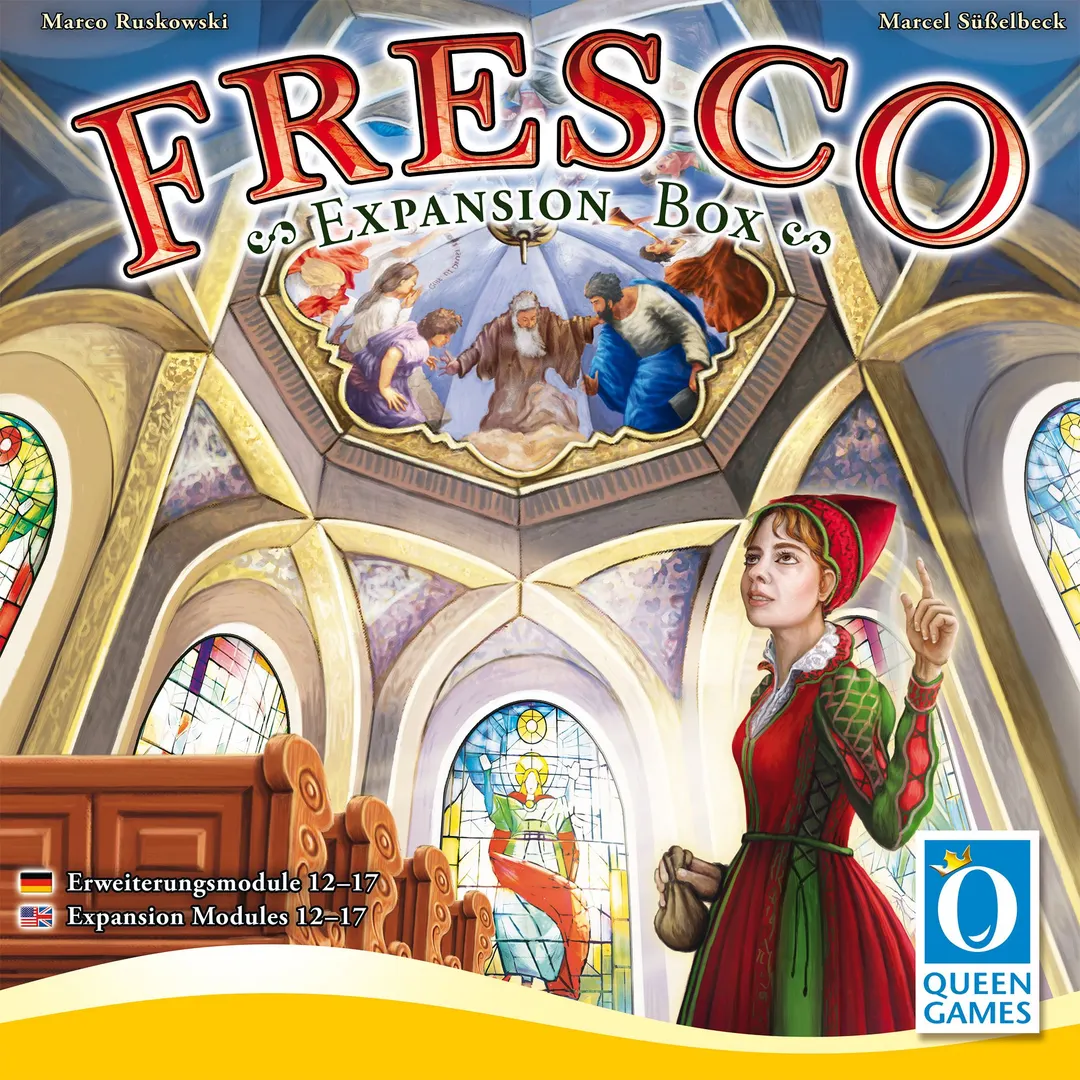
Ayuda con las reglas de Fresco: Expansion Box
Explicaciones claras de turnos, efectos de cartas y situaciones dudosas, con referencias a fuentes oficiales e historial de preguntas guardado.
¿Qué quieres saber?
Las respuestas salen del reglamento oficial, con la página para comprobarlo.
Fresco: Expansion Box es una expansión de Fresco publicada en 2020 para 2–4 jugadores, con partidas de 60 minutos y a partir de 10 años. Fue diseñado por Marco Ruskowski y Marcel Süßelbeck y sus mecánicas principales son Set Collection, Grid Movement y Action Queue.


En inglés
Includes expansion modules 12 - 17. 6 new expansion modules: The Ladies, The Catacombs, The Pews, The Dome, The Black Market, and The Guild Helps. Module 12: The Ladies In this module, players receive an extra player board that allows for special actions. Two tiles can be switched in the market, a fresco tile can be reserved in the Cathedral, more coins can be earned in the studio, colors can be exchanged in the workshop, and in the Theater the mood can be lifted even further. Module 13: The Catacombs This module changes the Hostel, Cathedral, and the Planning phase. The catacomb tiles are first placed face down in the cathedral and the fresco tiles are placed on top of them. Players can now purchase cartographer tiles in the hostel, which show locations in the cathedral that have to be painted in order to gain access to the catacomb tiles below. A catacomb tile can be sold for coins or kept till the end of the game, in which case the bishop awards extra victory points to the players. Module 14: The Pews This module changes the market action and the planning phase. The chapel board is placed next to the game board and every player takes six wooden planks and places them in front of their screen. New market tiles will allow the players to purchase these when they visit the market. In the planning phase players may place their assistants on the new action tiles to use their collected wood to build pews for the church and collect some extra points. Module 15: The Dome The dome tiles are shuffled and placed on the nine central fresco spaces, before the fresco tiles are placed on top. When a player finishes a fresco tile, they take the dome tile underneath and places it in front of them. A dome tile shows a combination of two colors that the player needs to gain the depicted victory points. However, these tiles can only be painted at the end of the game, after the fresco in the cathedral is finished. So good planning and timing will be needed in order to keep the necessary paint cubes to finish the dome at the end of the game. Module 16: The Black Market A poor painter canʼt be faulted for succumbing to a tempting offer from the dubious merchants of the black market. Their paints, stored in large barrels, are not expensive, but you never know which paint you will get... When you visit a market booth to buy paints, you may assign one of your apprentices to visit the Black Market instead. For this apprentice, a paint tile will be pulled at random from the draw bag, and the player must purchase this paint if possible. Since tiles are returned to the bag when a player visits a market booth or closes one down, players earlier in turn order will have a better guess what they might receive from the Black Market. Module 17: The Guild Helps Painters often are missing urgently needed supplies for their work, but thankfully the members of the Painters Guild stick together and are willing to exchange among themselves. A lucky painter may find what they need at the guild. Each round one random basic paint and one random blended paint are placed on the guild tile. Using one of the two actions received for sending an apprentice to blend paints, the player may exchange one of their paints for the same type of paint from the guild tile (basic for basic and blended for blended). A player may now make two exchanges, two blends, or do one of each.
Según el catálogo, Fresco: Expansion Box admite de 2 a 4 jugadores. Este intervalo corresponde al número de jugadores indicado por la editorial, así que el juego puede prepararse para cualquier grupo dentro de ese margen. La preparación, algunas reglas y la puntuación pueden variar según el número de jugadores; consulta la configuración exacta en el reglamento de tu edición.
La duración indicada para Fresco: Expansion Box es de 60 minutos, la estimación de la editorial para una partida completa. El tiempo real depende del grupo, del número de jugadores y del conocimiento de las reglas: las primeras partidas suelen alargarse y los grupos con experiencia terminan antes. La preparación y la explicación de las reglas no están incluidas.
El catálogo indica Fresco: Expansion Box a partir de 10 años. Es la recomendación de la editorial y refleja la lectura necesaria, la complejidad de las reglas y las piezas pequeñas, no solo el tema. Los más pequeños a menudo pueden jugar con ayuda de un adulto: comprueba la edad recomendada en tu edición y la experiencia de tu grupo.
Fresco: Expansion Box pertenece a estas categorías: Expansion for Base-game y Renaissance. Sus mecánicas principales son Set Collection, Grid Movement y Action Queue. Las categorías describen el tema y la ambientación de un juego, mientras que las mecánicas describen lo que los jugadores hacen realmente en su turno. Cada mecánica lleva a una página del catálogo con juegos similares.
Los autores acreditados de Fresco: Expansion Box son: Marco Ruskowski y Marcel Süßelbeck. Estos créditos proceden de los datos publicados del juego y nombran a las personas responsables de su diseño, no a ilustradores ni editoriales. Las páginas de autor de MeepleRules reúnen otros títulos de los mismos autores, algo útil cuando un juego te gusta y buscas otros parecidos.
El catálogo clasifica Fresco: Expansion Box como expansión de Fresco. Las expansiones añaden contenido, reglas o escenarios al juego base y normalmente no se pueden jugar solas, así que necesitas Fresco para usarla. Comprueba que tu edición de Fresco sea compatible, porque algunas expansiones se revisaron entre ediciones.