
- Puesto en BGG
- BGG #11.396
- Puntuación BGG
- 7,1
SOPAC: Naval Action in the South Pacific 1942–1943
- 2 jugadores
- 240 min
- Complejidad 3,1/5
- 1999
1999
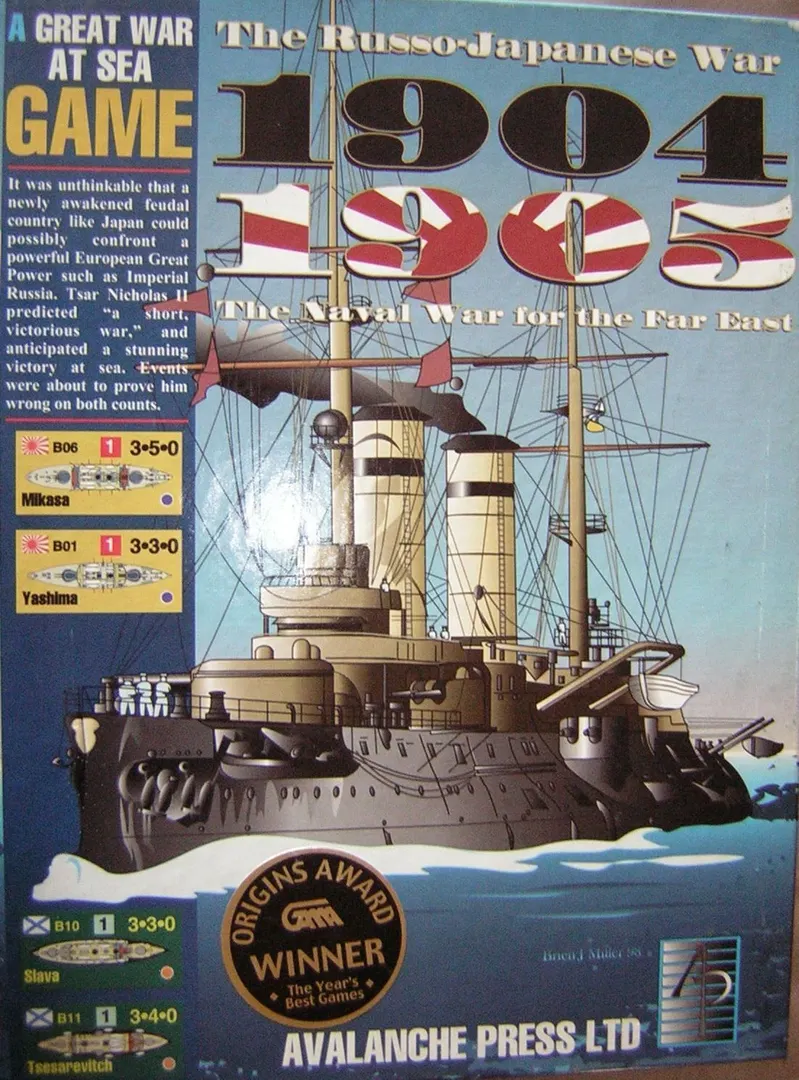
Ayuda con las reglas de Great War at Sea: 1904-1905, The Russo-Japanese War
Explicaciones claras de turnos, efectos de cartas y situaciones dudosas, con referencias a fuentes oficiales e historial de preguntas guardado.
Para 2 jugadores
¿Qué quieres saber?
Las respuestas salen del reglamento oficial, con la página para comprobarlo.
Great War at Sea: 1904-1905, The Russo-Japanese War es un juego de mesa publicado en 1999 para 2–4 jugadores, con partidas de 30 minutos y a partir de 12 años. Fue diseñado por Michael Bennighof, Brian L. Knipple y Joe Keller y sus mecánicas principales son Dice Rolling y Hexagon Grid.





En inglés
From the original company website entry: Japan entered the modern age in 1868, with a new young emperor determined to make his island nation a world power. After decades of steady progress, Japan began its own practice of colonialism, defeating China in 1894. As the Japanese began to infiltrate the semi-independent Kingdom of Korea, they ran into Russian agents doing the same. Despite Japanese offers to negotiate, the Russian Tsar Nicholas II was set on war. Great War at Sea: 1904-1905, The Russo-Japanese War covers the naval side of this turn-of-the-century conflict, which opened with a Japanese surprise attack on the Russian Pacific Fleet’s base at Port Arthur in northern China. There are 19 scenarios, or game situations, provided, including the climactic Battle of Tsushima. There’s also a campaign game, in which players can “game” the entire naval war. The Russian fleet is a mixed bag of modern battleships and ancient ironclads better suited for a museum. The Pacific Fleet that begins the game in the Far East has modern ships stationed at Port Arthur and a cruiser squadron in Vladivostok. Between them lies Korea, occupied by Japan. The Russian strategic situation is difficult. The Japanese have a better fleet; though not as large, their armored cruisers outclass their Russian counterparts and their torpedo boats are more numerous and more effective. They are also better-led after the death of the Russian Admiral Makarov. The map covers the Japanese home islands and the seas around them. As with other games in the series, it’s divided into zones approximately 31 nautical miles across. Fleets attempt to locate one another on this map. When contact is made, play moves to a tactical map where ships manuever and fight. There are special overlays for Port Arthur and Chemulpo, so players can use the actual terrain of these key coastal zones. The original 1999 game included: 210 Counters One 25"x30" strategic map One 25"x25" tactical map 16 page Rulebook 12 page Scenario book The game is being re-implemented in 2013 as Great War at Sea: Russo-Japanese War with a revised map, updated counters, new scenario book and new box.
Según el catálogo, Great War at Sea: 1904-1905, The Russo-Japanese War admite de 2 a 4 jugadores. Este intervalo corresponde al número de jugadores indicado por la editorial, así que el juego puede prepararse para cualquier grupo dentro de ese margen. La preparación, algunas reglas y la puntuación pueden variar según el número de jugadores; consulta la configuración exacta en el reglamento de tu edición.
La duración indicada para Great War at Sea: 1904-1905, The Russo-Japanese War es de 30 minutos, la estimación de la editorial para una partida completa. El tiempo real depende del grupo, del número de jugadores y del conocimiento de las reglas: las primeras partidas suelen alargarse y los grupos con experiencia terminan antes. La preparación y la explicación de las reglas no están incluidas.
El catálogo indica Great War at Sea: 1904-1905, The Russo-Japanese War a partir de 12 años. Es la recomendación de la editorial y refleja la lectura necesaria, la complejidad de las reglas y las piezas pequeñas, no solo el tema. Los más pequeños a menudo pueden jugar con ayuda de un adulto: comprueba la edad recomendada en tu edición y la experiencia de tu grupo.
Great War at Sea: 1904-1905, The Russo-Japanese War tiene una puntuación de complejidad de 2,5 sobre 5 según los jugadores de BoardGameGeek, lo que lo convierte en un juego algo ligero. La puntuación refleja cuánto conocimiento de reglas, planificación y toma de decisiones exige una partida típica. Los juegos exigentes requieren una explicación inicial más larga, así que conviene usar una guía de preparación.
Great War at Sea: 1904-1905, The Russo-Japanese War pertenece a estas categorías: Wargame, Nautical y Post-Napoleonic. Sus mecánicas principales son Dice Rolling y Hexagon Grid. Las categorías describen el tema y la ambientación de un juego, mientras que las mecánicas describen lo que los jugadores hacen realmente en su turno. Cada mecánica lleva a una página del catálogo con juegos similares.
Los autores acreditados de Great War at Sea: 1904-1905, The Russo-Japanese War son: Michael Bennighof, Brian L. Knipple y Joe Keller. Estos créditos proceden de los datos publicados del juego y nombran a las personas responsables de su diseño, no a ilustradores ni editoriales. Las páginas de autor de MeepleRules reúnen otros títulos de los mismos autores, algo útil cuando un juego te gusta y buscas otros parecidos.
El catálogo clasifica Great War at Sea: 1904-1905, The Russo-Japanese War como juego base. Se juega por sí solo con los componentes de la caja y no requiere ningún otro título. Las expansiones, si existen, añaden contenido o reglas nuevas y aparecen por separado en el catálogo con un enlace a este juego base.