
- Puntuación BGG
- 6,9
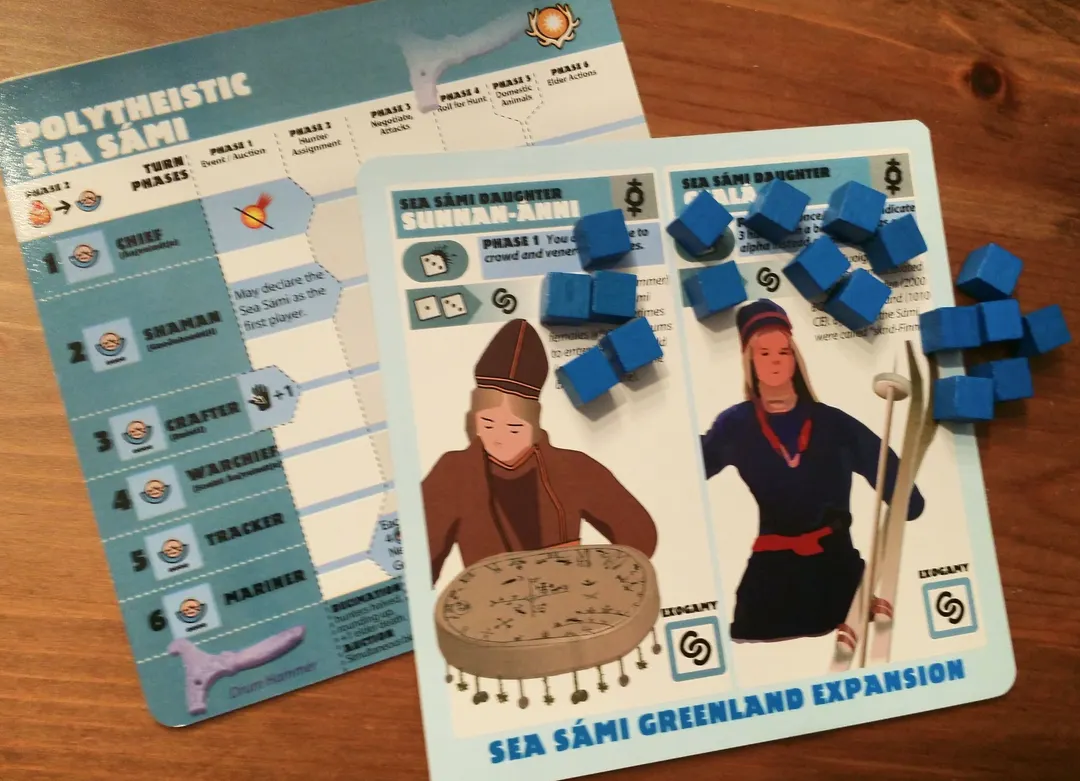
Greenland: Sea Sámi
- 1–4 jugadores
- 60–120 min
- Complejidad 2,7/5
- 2015
2014
Ayuda con las reglas de Greenland
Explicaciones claras de turnos, efectos de cartas y situaciones dudosas, con referencias a fuentes oficiales e historial de preguntas guardado.
Para 1 jugador
¿Qué quieres saber?
Las respuestas salen del reglamento oficial, con la página para comprobarlo.
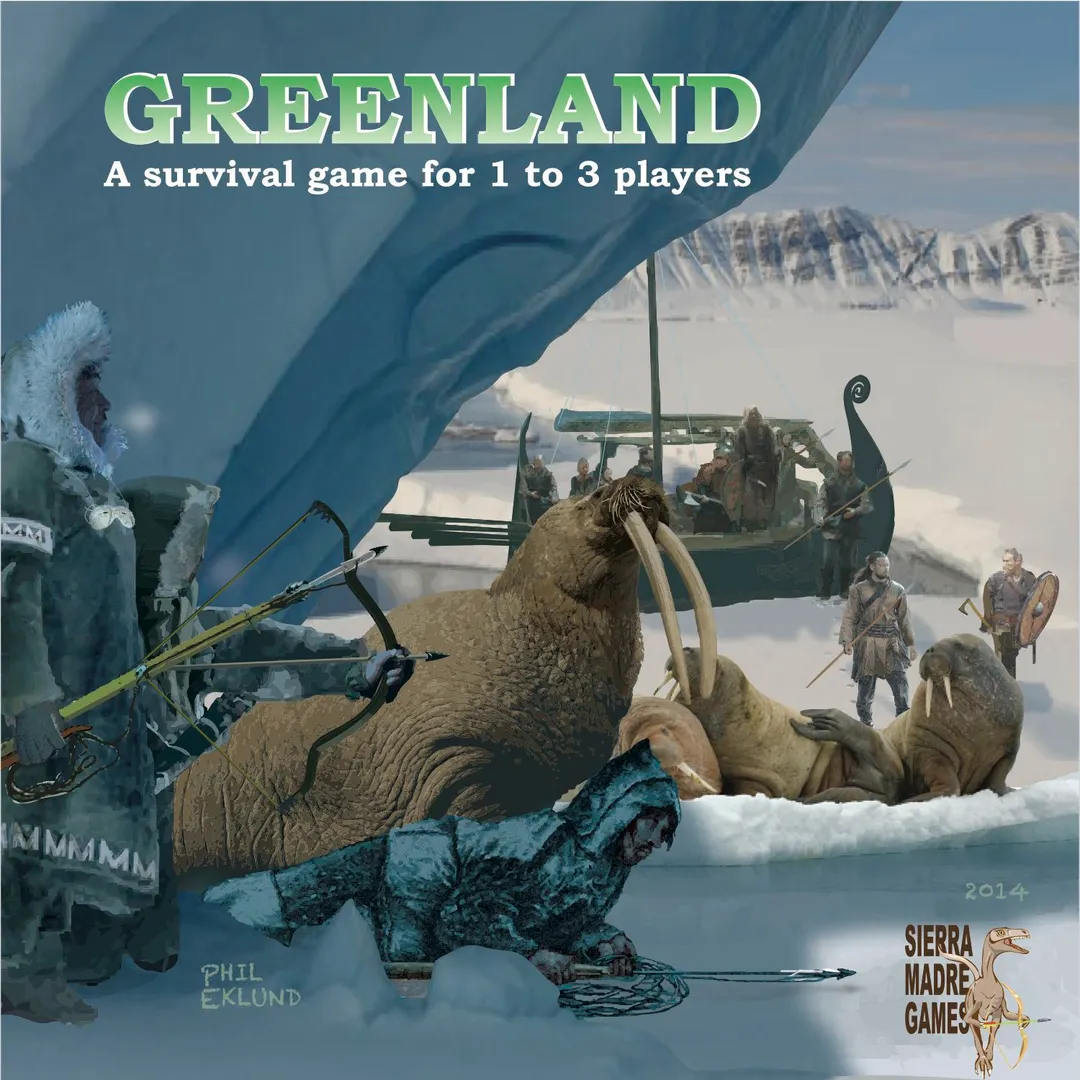
Greenland es un juego de mesa publicado en 2014 para 1–3 jugadores, con partidas de 60 a 120 minutos y a partir de 12 años. Fue diseñado por Phil Eklund y Philipp Klarmann y sus mecánicas principales son Auction / Bidding, Dice Rolling y Simulation.
En inglés
The three players in Greenland represent the Tunit (green), Norse (red), and Thule (yellow) tribes inhabiting Greenland from the 11th to the 15th centuries. As a tribe, you attempt to secure food, resources, and technology to increase the size of your tribe and support children, elders, and livestock while also wiping out competing species or gathering resources to collect victory points. You must work around the weather and the extinction of natural resources as well as negotiate deals to protect your wives while you decide between monotheism or polytheism. In this tableau-building game, you'll send your population out to hunt native species of Greenland — but some might not come back. (Historically, the climate turned frigid and all but the Thule (Inuit) died out.) In the game, play takes place over six phases; all players complete each phase in turn order, then the next phase starts. Each turn is one generation. In order: Resolve events: Examples include elder deaths, animal migrations, feuds, or global cooling. If a trade ship arrives, an auction is held for its wares. Assign hunters: Hunters are assigned to hunting grounds, resource gathering, colonizing the New World, raiding other tribes for wives or animals, or promotion to an elder. Negotiate: Players can bribe others to peacefully withdraw hunters, including marrying them to their daughters. Players with a War Chief Elder can use hunters to attack others on the same card. The New World turns hostile if there are too many colonists. Resolve hunting: Roll a die for each hunter and modify it for technologies and marriages. Success can result in gaining new hunters, resources, hand cards, wives, and/or technologies. Beware, as some animals can be confused by the prey-predator relationship and your hunters might not return. Some successes let your take cards from the central play area into your hand if within hand limit. Maintain livestock: Pay to keep the animals you've already domesticated. Take elder actions: Examples include invention, domestication, proselytization, and witch-burning. If you have no elders, you can convert to monotheism. Depending on each player's ending theistic worldview, he has a variable scoring based on successful hunts (polytheism) or resource gathering (monotheism).
Según el catálogo, Greenland admite de 1 a 3 jugadores. Este intervalo corresponde al número de jugadores indicado por la editorial, así que el juego puede prepararse para cualquier grupo dentro de ese margen. La preparación, algunas reglas y la puntuación pueden variar según el número de jugadores; consulta la configuración exacta en el reglamento de tu edición.
La duración indicada para Greenland es de 60 a 120 minutos, la estimación de la editorial para una partida completa. El tiempo real depende del grupo, del número de jugadores y del conocimiento de las reglas: las primeras partidas suelen alargarse y los grupos con experiencia terminan antes. La preparación y la explicación de las reglas no están incluidas.
El catálogo indica Greenland a partir de 12 años. Es la recomendación de la editorial y refleja la lectura necesaria, la complejidad de las reglas y las piezas pequeñas, no solo el tema. Los más pequeños a menudo pueden jugar con ayuda de un adulto: comprueba la edad recomendada en tu edición y la experiencia de tu grupo.
Greenland tiene una puntuación de complejidad de 3,3 sobre 5 según los jugadores de BoardGameGeek, lo que lo convierte en un juego de complejidad media. La puntuación refleja cuánto conocimiento de reglas, planificación y toma de decisiones exige una partida típica. Los juegos exigentes requieren una explicación inicial más larga, así que conviene usar una guía de preparación.
Greenland pertenece a estas categorías: Card Game, Economic y Medieval. Sus mecánicas principales son Auction / Bidding, Dice Rolling y Simulation. Las categorías describen el tema y la ambientación de un juego, mientras que las mecánicas describen lo que los jugadores hacen realmente en su turno. Cada mecánica lleva a una página del catálogo con juegos similares.
Los autores acreditados de Greenland son: Phil Eklund y Philipp Klarmann. Estos créditos proceden de los datos publicados del juego y nombran a las personas responsables de su diseño, no a ilustradores ni editoriales. Las páginas de autor de MeepleRules reúnen otros títulos de los mismos autores, algo útil cuando un juego te gusta y buscas otros parecidos.
El catálogo clasifica Greenland como juego base. Se juega por sí solo con los componentes de la caja y no requiere ningún otro título. Las expansiones, si existen, añaden contenido o reglas nuevas y aparecen por separado en el catálogo con un enlace a este juego base.