
- Puesto en BGG
- BGG #4625
- Puntuación BGG
- 7,1
Goblin Vaults
- 1–5 jugadores
- 30–45 min
- Complejidad 2,2/5
- 2023
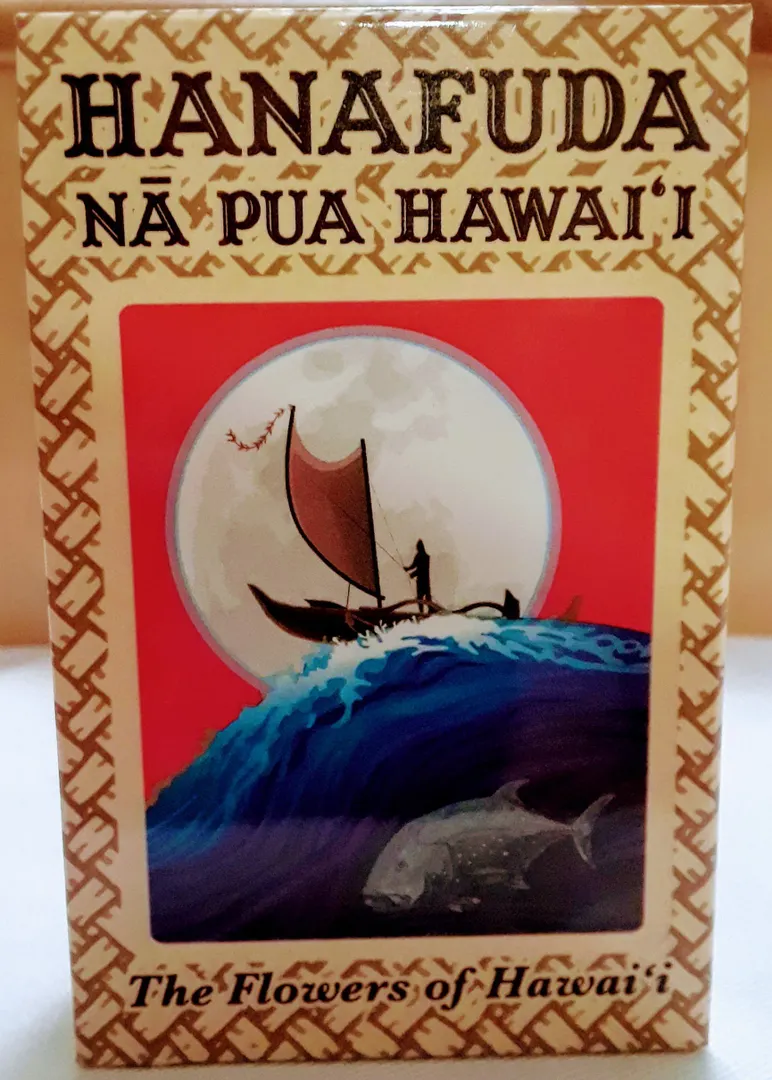
2010
Ayuda con las reglas de Hanafuda Nā Pua Hawai'i: The Flowers of Hawai'i
Explicaciones claras de turnos, efectos de cartas y situaciones dudosas, con referencias a fuentes oficiales e historial de preguntas guardado.
¿Qué quieres saber?
Las respuestas salen del reglamento oficial, con la página para comprobarlo.
Hanafuda Nā Pua Hawai'i: The Flowers of Hawai'i es un juego de mesa publicado en 2010 para 2–6 jugadores y a partir de 6 años. Fue diseñado por Jason Nakano y sus mecánicas principales son Hand Management, Set Collection y Trick-taking.






En inglés
A variant of the traditional Japanese card game 'Hanafuda', this deck of cards is specifically designed for the Hawaiian Style game known as 'Sakura'. Two to six people can play, either individually or as teams of two. The 48 cards are divided into twelve 'hiki' or suits, each corresponding to a specific month. The four cards in each hiki have 20, 10, 5, and zero points. The objective of the game is to accumulate the most points by matching cards. The highest possible score is 240 points. After shuffling and cutting the deck, the 'oya' (dealer) deals cards counter-clockwise to the players; the number of cards dealt differs depending on the number of players. The oya then plays a number of cards in the center of the table, known as the "field". The remainder of the deck is set nearby as a draw stack. Play begins with the oya and moves counter-clockwise. The player draws a card from her hand and places it in the field. If the played card matches the hiki (suit) of a card in the field, the player places her card on top of the matching card to show everyone the match. She then picks up both cards and places them face-up in a "points section" in front of her. She discards any cards with no value in the 'kasu' (rubbish) pile behind the draw stack. Next, the player draws one card from the draw stack. If it matches a card in the field, she must take the pair of cards. Otherwise, the card is left in the field. This ends that player's turn. It is possible that a player may capture as many as four cards per turn. The player to the right takes the next turn. Play continues in this fashion until all the cards have been used in each player's hand. Points are then totaled. Advanced play adds a wild card and also 'yaku' (bonus combinations) in special three-card combinations that are scored at the end of the game. Holding one or more yaku causes the other players to deduct points from their score, rather than adding points to the yaku-player's score.
Según el catálogo, Hanafuda Nā Pua Hawai'i: The Flowers of Hawai'i admite de 2 a 6 jugadores. Este intervalo corresponde al número de jugadores indicado por la editorial, así que el juego puede prepararse para cualquier grupo dentro de ese margen. La preparación, algunas reglas y la puntuación pueden variar según el número de jugadores; consulta la configuración exacta en el reglamento de tu edición.
El catálogo indica Hanafuda Nā Pua Hawai'i: The Flowers of Hawai'i a partir de 6 años. Es la recomendación de la editorial y refleja la lectura necesaria, la complejidad de las reglas y las piezas pequeñas, no solo el tema. Los más pequeños a menudo pueden jugar con ayuda de un adulto: comprueba la edad recomendada en tu edición y la experiencia de tu grupo.
Hanafuda Nā Pua Hawai'i: The Flowers of Hawai'i pertenece a estas categorías: Card Game. Sus mecánicas principales son Hand Management, Set Collection y Trick-taking. Las categorías describen el tema y la ambientación de un juego, mientras que las mecánicas describen lo que los jugadores hacen realmente en su turno. Cada mecánica lleva a una página del catálogo con juegos similares.
Los autores acreditados de Hanafuda Nā Pua Hawai'i: The Flowers of Hawai'i son: Jason Nakano. Estos créditos proceden de los datos publicados del juego y nombran a las personas responsables de su diseño, no a ilustradores ni editoriales. Las páginas de autor de MeepleRules reúnen otros títulos de los mismos autores, algo útil cuando un juego te gusta y buscas otros parecidos.
El catálogo clasifica Hanafuda Nā Pua Hawai'i: The Flowers of Hawai'i como juego base. Se juega por sí solo con los componentes de la caja y no requiere ningún otro título. Las expansiones, si existen, añaden contenido o reglas nuevas y aparecen por separado en el catálogo con un enlace a este juego base.
