- Puntuación BGG
- 7,2
Jamaica: Extra Treasures
- 2–6 jugadores
- Complejidad 1,7/5
- 2008
2007
Ayuda con las reglas de Jamaica
Explicaciones claras de turnos, efectos de cartas y situaciones dudosas, con referencias a fuentes oficiales e historial de preguntas guardado.
Para 2 jugadores
¿Qué quieres saber?
Las respuestas salen del reglamento oficial, con la página para comprobarlo.
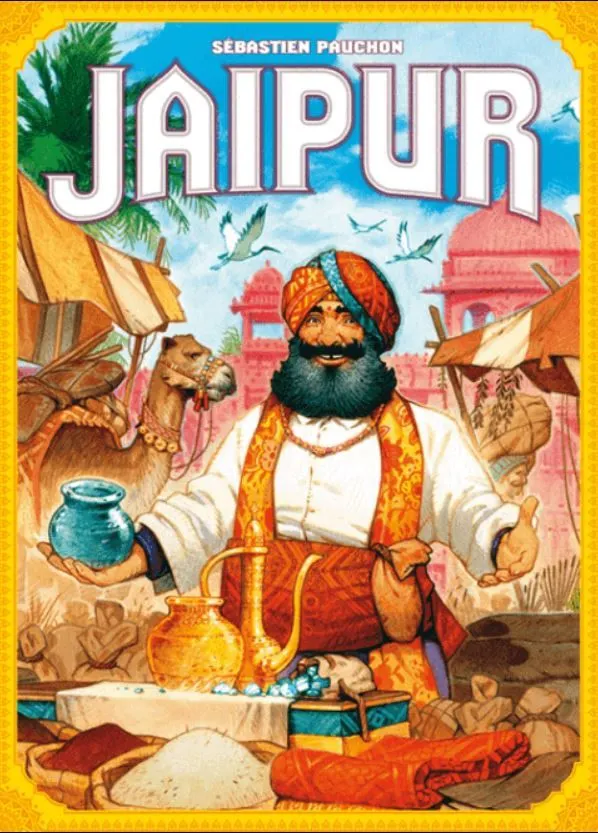
Jamaica es un juego de mesa publicado en 2007 para 2–6 jugadores, con partidas de 30 a 60 minutos y a partir de 8 años. Fue diseñado por Bruno Cathala, Sébastien Pauchon y Malcolm Braff y sus mecánicas principales son Hand Management, Take That y Race.


En inglés
After a long career in piracy, Captain Henry Morgan skillfully gets appointed to be Governor of Jamaica. He invites all of his former "colleagues" to join him in his retirement, to enjoy the fruits of their looting with impunity. Each year, in remembrance of the "good old days," Morgan organizes the Great Challenge, a race around the island, and at its end, the Captain with the most gold is declared Grand Winner. The game is played in rounds. Each player always has a hand of three cards, and a personal board depicting the five "holds" of their ship, into which goods can be loaded during the game. Each round, one player is designated as "captain," with the next clockwise player being captain in the following round, and so on. The captain rolls two standard D6 dice, examines her cards, then announces which die will correspond to the "day" and which to the "night." Each player then simultaneously selects a card from their hand and places it face down in front of them. Each card has two symbols on it, one on the left - corresponding to "day" - and one on the right ("night"). The symbols indicate either ship movement (forward or backward) or the loading of a type of good. After every player has selected a card, all cards are revealed simultaneously and then resolved clockwise one by one, starting with the captain's. When it is a player's turn to resolve her card, for first the left symbol on her card and then for the right symbol, the player will load a number of goods or move a number of spaces equal to the number of pips showing on the corresponding day or night die for that round. Thus the main decision each player makes during the game is which of their current three cards would best serve them on a particular turn, given the values of the day and night dice. When a player lands on a spot already occupied by another player, there is a battle. Battles are mainly resolved by rolling a "combat" die, but players may improve their chances by using "gunpowder" tokens from their holds, if they loaded any on previous turns. The winner of a battle may steal some goods or treasure from the loser. The game ends on the turn when at least one player's ship reaches the finish line, completing one circuit around the island of Jamaica. At that point, players are awarded different amounts of gold in accordance with how far away from the finish line they were when the race concluded. This gold is added to any gold a player gathered along the way by detouring from the race to search for valuable treasure, by stealing gold or treasure from other players, or just by loading gold as directed by the cards the player played during the race. The player with the most total gold acquired through all these means is then declared the winner.
Según el catálogo, Jamaica admite de 2 a 6 jugadores. Este intervalo corresponde al número de jugadores indicado por la editorial, así que el juego puede prepararse para cualquier grupo dentro de ese margen. La preparación, algunas reglas y la puntuación pueden variar según el número de jugadores; consulta la configuración exacta en el reglamento de tu edición.
La duración indicada para Jamaica es de 30 a 60 minutos, la estimación de la editorial para una partida completa. El tiempo real depende del grupo, del número de jugadores y del conocimiento de las reglas: las primeras partidas suelen alargarse y los grupos con experiencia terminan antes. La preparación y la explicación de las reglas no están incluidas.
El catálogo indica Jamaica a partir de 8 años. Es la recomendación de la editorial y refleja la lectura necesaria, la complejidad de las reglas y las piezas pequeñas, no solo el tema. Los más pequeños a menudo pueden jugar con ayuda de un adulto: comprueba la edad recomendada en tu edición y la experiencia de tu grupo.
Jamaica tiene una puntuación de complejidad de 1,7 sobre 5 según los jugadores de BoardGameGeek, lo que lo convierte en un juego ligero. La puntuación refleja cuánto conocimiento de reglas, planificación y toma de decisiones exige una partida típica. Los juegos exigentes requieren una explicación inicial más larga, así que conviene usar una guía de preparación.
Jamaica pertenece a estas categorías: Nautical, Racing y Pirates. Sus mecánicas principales son Hand Management, Take That y Race. Las categorías describen el tema y la ambientación de un juego, mientras que las mecánicas describen lo que los jugadores hacen realmente en su turno. Cada mecánica lleva a una página del catálogo con juegos similares.
Los autores acreditados de Jamaica son: Bruno Cathala, Sébastien Pauchon y Malcolm Braff. Estos créditos proceden de los datos publicados del juego y nombran a las personas responsables de su diseño, no a ilustradores ni editoriales. Las páginas de autor de MeepleRules reúnen otros títulos de los mismos autores, algo útil cuando un juego te gusta y buscas otros parecidos.
El catálogo clasifica Jamaica como juego base. Se juega por sí solo con los componentes de la caja y no requiere ningún otro título. Las expansiones, si existen, añaden contenido o reglas nuevas y aparecen por separado en el catálogo con un enlace a este juego base.