
- Puesto en BGG
- BGG #10.580
- Puntuación BGG
- 5,7
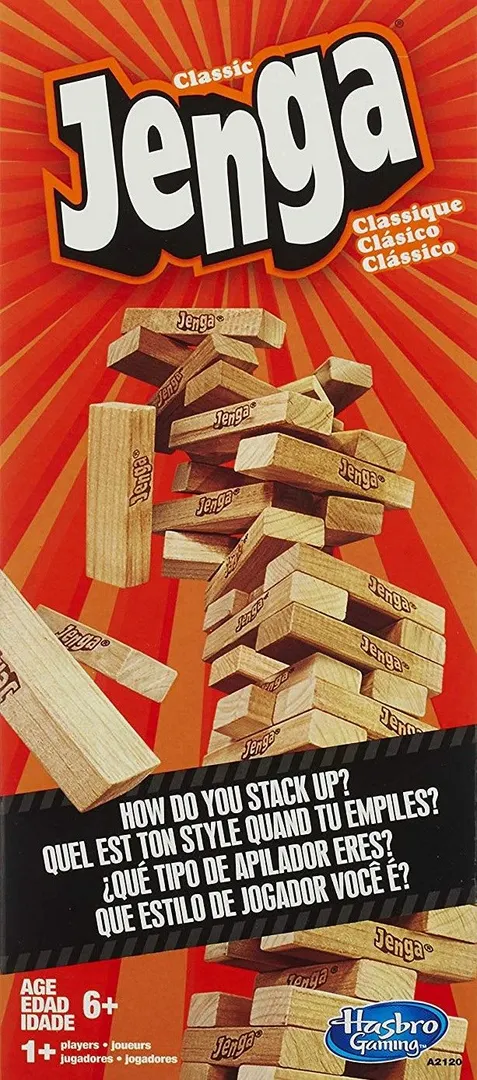
Jenga
- 1–8 jugadores
- 20 min
- Complejidad 1,1/5
- 1983

1991
Ayuda con las reglas de Knockout
Explicaciones claras de turnos, efectos de cartas y situaciones dudosas, con referencias a fuentes oficiales e historial de preguntas guardado.
¿Qué quieres saber?
Las respuestas salen del reglamento oficial, con la página para comprobarlo.
Knockout es un juego de mesa publicado en 1991 para 2–8 jugadores, con partidas de 30 minutos y a partir de 7 años. Sus mecánicas principales son Dice Rolling, Single Loser Game y Physical Removal.




En inglés
A wall made of rainbow-colored bricks. A vibrating motorized jackhammer. What could possibly go wrong? In Knockout, players take turns rolling the color die, selecting a matching brick, and carefully blasting it out with the buzzing Rammer Hammer. But there’s a twist—one of the bricks is the dreaded Knockout Block. If you knock it free, or if the whole wall comes tumbling down, you’re out! The remaining players rebuild the wall using the bricks you removed, and the last one standing wins. With no supporting frame and a steadily wobbling tower of rebalanced blocks, Knockout delivers satisfying tension and demolition glee. Knockout, Hold On Scooby-Doo!, Happy Feet Two: Hold on Erik, and Spider-Man: Spider Sense are all about removing bricks without toppling the structure—but each adds its own flavor. While the “Hold On” trio features perched characters and plastic frameworks, Knockout trades in cartoon mascots for pure demolition thrills with its unique battery-powered jackhammer and iconic “Knockout” brick that could spell your doom. Same tension. More vibration.
Según el catálogo, Knockout admite de 2 a 8 jugadores. Este intervalo corresponde al número de jugadores indicado por la editorial, así que el juego puede prepararse para cualquier grupo dentro de ese margen. La preparación, algunas reglas y la puntuación pueden variar según el número de jugadores; consulta la configuración exacta en el reglamento de tu edición.
La duración indicada para Knockout es de 30 minutos, la estimación de la editorial para una partida completa. El tiempo real depende del grupo, del número de jugadores y del conocimiento de las reglas: las primeras partidas suelen alargarse y los grupos con experiencia terminan antes. La preparación y la explicación de las reglas no están incluidas.
El catálogo indica Knockout a partir de 7 años. Es la recomendación de la editorial y refleja la lectura necesaria, la complejidad de las reglas y las piezas pequeñas, no solo el tema. Los más pequeños a menudo pueden jugar con ayuda de un adulto: comprueba la edad recomendada en tu edición y la experiencia de tu grupo.
Knockout tiene una puntuación de complejidad de 1,2 sobre 5 según los jugadores de BoardGameGeek, lo que lo convierte en un juego ligero. La puntuación refleja cuánto conocimiento de reglas, planificación y toma de decisiones exige una partida típica. Los juegos exigentes requieren una explicación inicial más larga, así que conviene usar una guía de preparación.
Knockout pertenece a estas categorías: Children's Game, Movies / TV / Radio theme y Action / Dexterity. Sus mecánicas principales son Dice Rolling, Single Loser Game y Physical Removal. Las categorías describen el tema y la ambientación de un juego, mientras que las mecánicas describen lo que los jugadores hacen realmente en su turno. Cada mecánica lleva a una página del catálogo con juegos similares.
El catálogo clasifica Knockout como juego base. Se juega por sí solo con los componentes de la caja y no requiere ningún otro título. Las expansiones, si existen, añaden contenido o reglas nuevas y aparecen por separado en el catálogo con un enlace a este juego base.