
- Puesto en BGG
- BGG #16.910
- Puntuación BGG
- 8,3
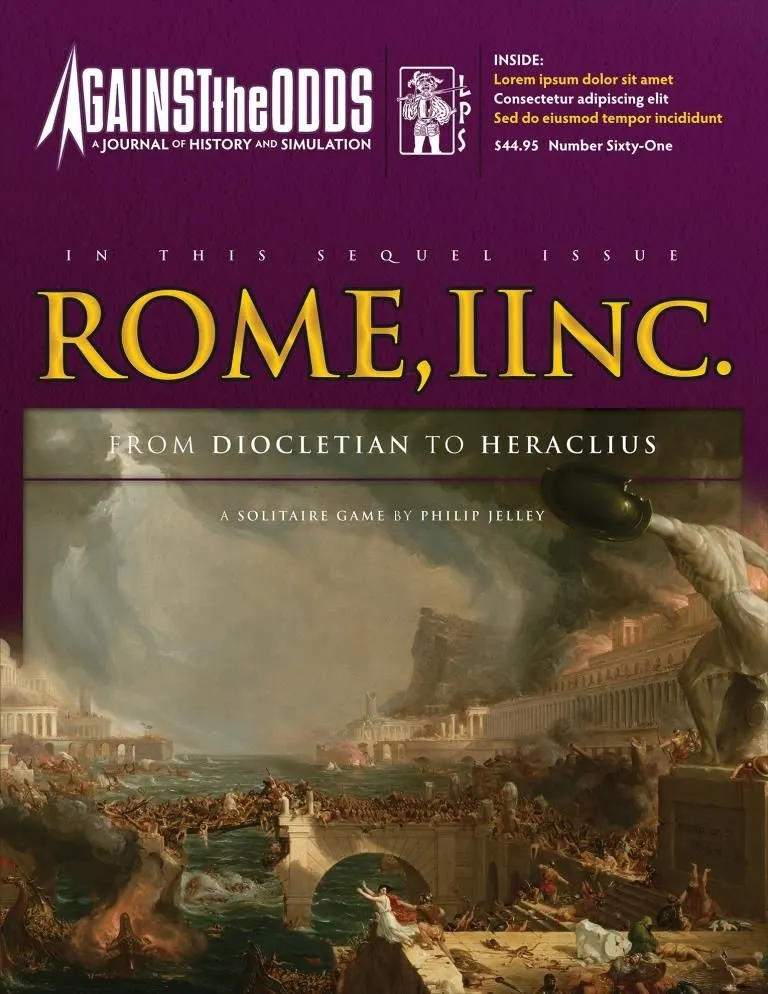
Rome, IInc.: From Diocletian to Heraclius
- 1–2 jugadores
- 180–960 min
- Complejidad 3,0/5
- 2024
2013
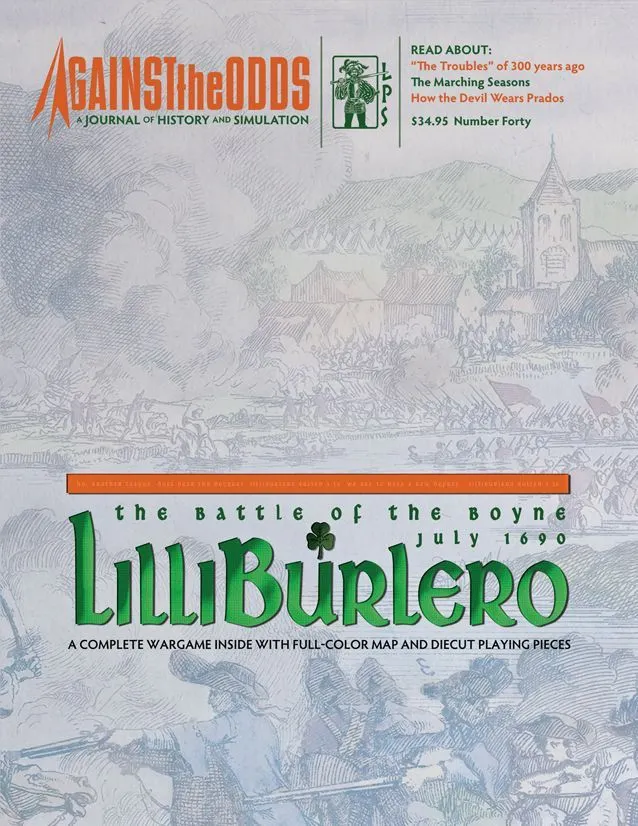
Ayuda con las reglas de Lilliburlero: The Battle of the Boyne, July 1690
Explicaciones claras de turnos, efectos de cartas y situaciones dudosas, con referencias a fuentes oficiales e historial de preguntas guardado.
Para 2 jugadores
¿Qué quieres saber?
Las respuestas salen del reglamento oficial, con la página para comprobarlo.
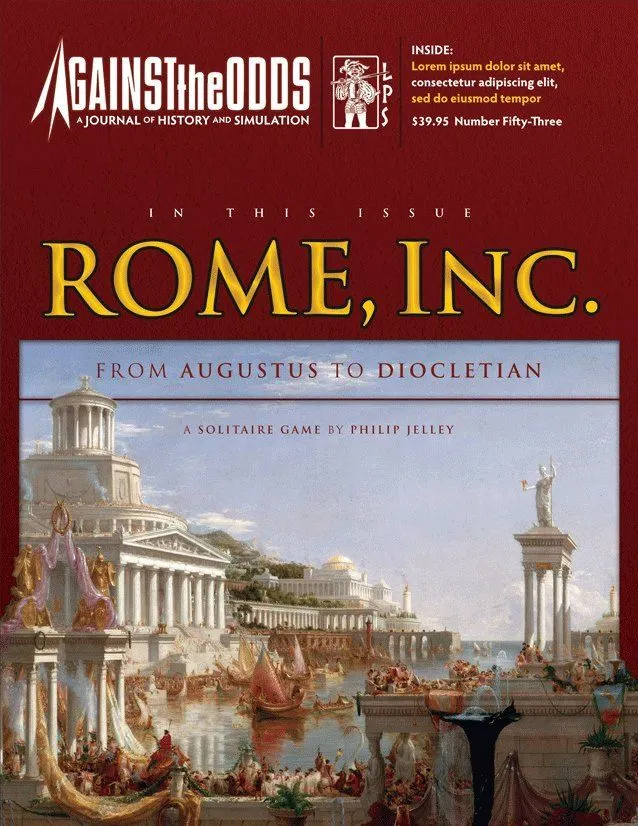
Lilliburlero: The Battle of the Boyne, July 1690 es un juego de mesa publicado en 2013 para 2 jugadores, con partidas de 180 minutos y a partir de 14 años. Fue diseñado por Philip Jelley y sus mecánicas principales son Dice Rolling y Area-Impulse.

En inglés
(from ATO website:) Americans hear it on the news and wonder. July 12 in Ireland has become a day of pride and anger, lawsuits and fisticuffs. Called “The Twelfth,” it commemorates the Battle of the Boyne, 1690, when William of Orange (hence today’s Protestant “Orangemen”) and his polyglot army ended the Jacobite hopes for James II to regain the throne and allow (at least) more religious freedom for Catholic Ireland. In one sense, The Boyne might be considered the last battle of the English Civil War—a conflict that had spilled into both Scotland and Ireland along the way. And it might be considered one of the last battles of the Protestant Reformation, since much support on both sides had to do with which religion other countries wished to prevail, which is evident when you find that William’s army included Danes, Dutch, English, Huguenots, Welsh and Protestant Irish. James’ army was mostly Catholic Irish but also included a brigade of crack French infantry and some of the best cavalry in Europe. The Boyne also represents a key transition point in military technology…the last of the matchlocks and pikes and first of the flintlocks, a final time when cavalry caracole competed with pressing home a charge So what’s with ‘Lillibulero’? It’s a song that was a popular tune before this time but became locked with the whole Irish campaign. Trust us, you have heard the tune. It used to be used by the BBC, various British army groups, and the movie Barry Lyndon, and has been featured in alternative lyrics versions for several wars since—including the ACW and WW2—and in Ulster folk tunes. It was “said to have sung James II out of three kingdoms,” and is still part of the Orange marches mentioned above. What about the game? Philip Jelley’s design brings us area movement for the broad area of eastern Ireland relevant to the battle, with units representing the various regiments, battalions, squadrons, and batteries that fought in the battle. Each turn represents roughly one hour of time, with weather, mist, and gunsmoke affecting command and control and unit activations. Scenarios are included for the full battle with historical deployments, the full battle with free-set-up, and for specific parts of the battle (for shorter playtime). Also included is a smaller battle “delaying action” that some people say is what James should have done, plus, there are optional rules for units who could have been involved or who had pressing reasons to NOT be involved (Even William might not be there!). You’ll have plenty of chances to try various ways of heading off “The Troubles” of three centuries ago, or of pressing William’s claims and making a truly “United Kingdom.” Map - One full color 22" x 34" mapsheet (plus a second half-sized map covering the battle of Aughrim) Counters - 176 full color 5/8" die-cut pieces Rules length - 12 pages Charts and tables - 2 pages Complexity - Low Solitaire suitability - Low Playing time - Up to 3 hours Design - Philip Jelley Development - Lembit Tohver Graphic Design - Mark Mahaffey
Según el catálogo, Lilliburlero: The Battle of the Boyne, July 1690 admite 2 jugadores. Es el número de jugadores indicado por la editorial, así que el juego está diseñado exactamente para esa cantidad de participantes. Las variantes para otros tamaños de grupo, si existen, se describen en el reglamento de tu edición; consúltalo antes de preparar otra configuración.
La duración indicada para Lilliburlero: The Battle of the Boyne, July 1690 es de 180 minutos, la estimación de la editorial para una partida completa. El tiempo real depende del grupo, del número de jugadores y del conocimiento de las reglas: las primeras partidas suelen alargarse y los grupos con experiencia terminan antes. La preparación y la explicación de las reglas no están incluidas.
El catálogo indica Lilliburlero: The Battle of the Boyne, July 1690 a partir de 14 años. Es la recomendación de la editorial y refleja la lectura necesaria, la complejidad de las reglas y las piezas pequeñas, no solo el tema. Los más pequeños a menudo pueden jugar con ayuda de un adulto: comprueba la edad recomendada en tu edición y la experiencia de tu grupo.
Lilliburlero: The Battle of the Boyne, July 1690 tiene una puntuación de complejidad de 3,0 sobre 5 según los jugadores de BoardGameGeek, lo que lo convierte en un juego de complejidad media. La puntuación refleja cuánto conocimiento de reglas, planificación y toma de decisiones exige una partida típica. Los juegos exigentes requieren una explicación inicial más larga, así que conviene usar una guía de preparación.
Lilliburlero: The Battle of the Boyne, July 1690 pertenece a estas categorías: Wargame, Civil War y Pike and Shot. Sus mecánicas principales son Dice Rolling y Area-Impulse. Las categorías describen el tema y la ambientación de un juego, mientras que las mecánicas describen lo que los jugadores hacen realmente en su turno. Cada mecánica lleva a una página del catálogo con juegos similares.
Los autores acreditados de Lilliburlero: The Battle of the Boyne, July 1690 son: Philip Jelley. Estos créditos proceden de los datos publicados del juego y nombran a las personas responsables de su diseño, no a ilustradores ni editoriales. Las páginas de autor de MeepleRules reúnen otros títulos de los mismos autores, algo útil cuando un juego te gusta y buscas otros parecidos.
El catálogo clasifica Lilliburlero: The Battle of the Boyne, July 1690 como juego base. Se juega por sí solo con los componentes de la caja y no requiere ningún otro título. Las expansiones, si existen, añaden contenido o reglas nuevas y aparecen por separado en el catálogo con un enlace a este juego base.