- Puntuación BGG
- 7,1
Living Planet: Arboria
- 2–4 jugadores
- 45–60 min
- 2018
2019
Ayuda con las reglas de Living Planet
Explicaciones claras de turnos, efectos de cartas y situaciones dudosas, con referencias a fuentes oficiales e historial de preguntas guardado.
Para 2 jugadores
¿Qué quieres saber?
Las respuestas salen del reglamento oficial, con la página para comprobarlo.
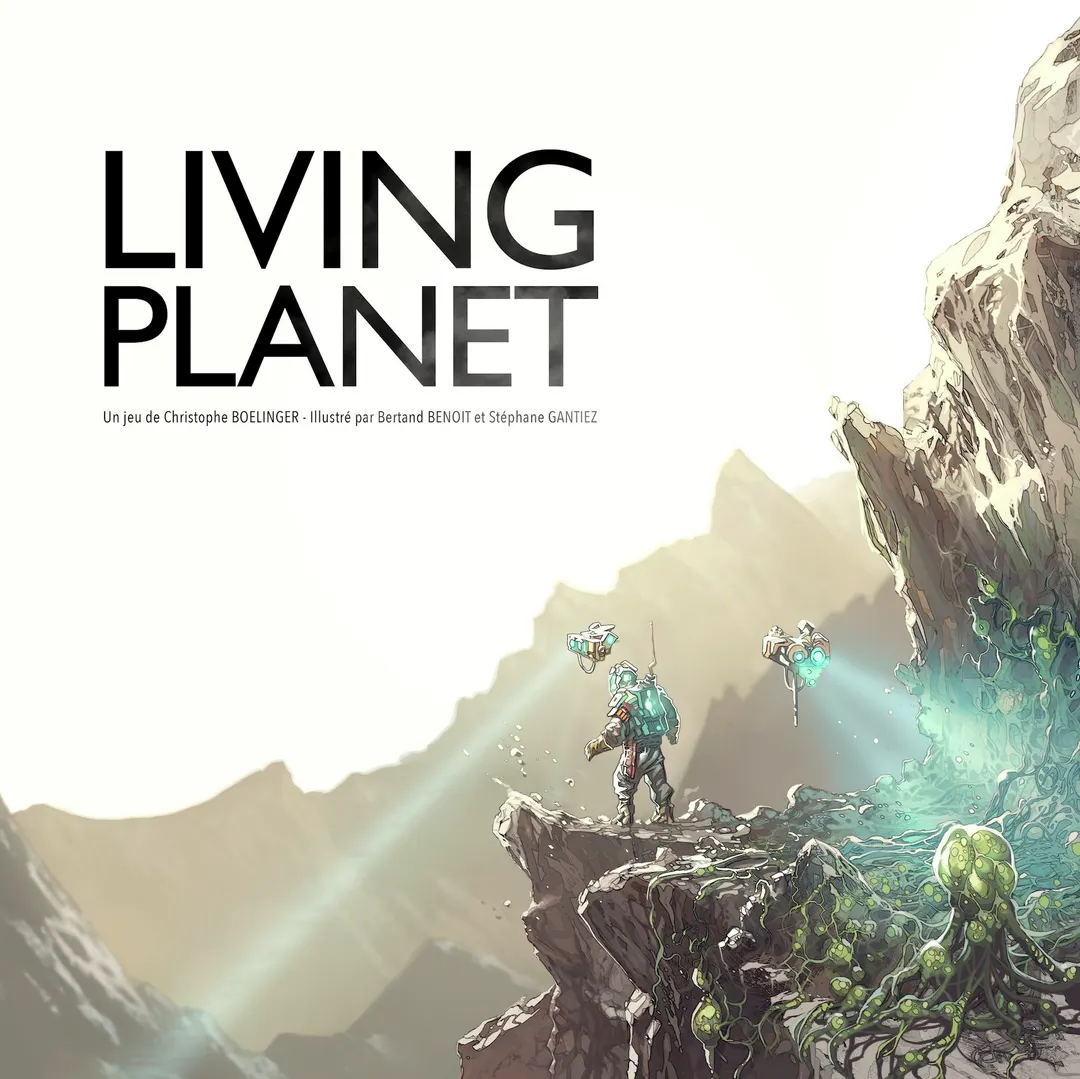
Living Planet es un juego de mesa publicado en 2019 para 2–4 jugadores, con partidas de 30 a 120 minutos y a partir de 14 años. Fue diseñado por Christophe Boelinger y sus mecánicas principales son Hand Management, Area Majority / Influence y Tile Placement.




En inglés
In Living Planet, each player represents one major Galactic Corporation exploiting the distant planet MYC.14.250. Each one of them is eager to industrialize the planet and generate as much profit as possible before the planet self-destructs. To do so, you'll have to explore the planet to grow the map. You'll manage your team to extract resources with factory buildings you've built, and trade resources at the stock market to make money. And above anything else, you'll have to handle cataclysms generated by the planet. But cataclysms don't happen randomly, players trigger them through their actions, using their card set. Confrontation between players will take place through the planet. Players will alternately take the leader role for each turn. Each turn follows a specific game turn sequence. Every player will have some actions to accomplish at a turn, in the order the Leader chooses, resolving the sequence : Resources production - Action (Explore, Move, Construct, Trade…) - Cataclysms. At the end of the game each player will earn victory points based on how much money they have and how many buildings and vehicles they control. —description from the publisher
Según el catálogo, Living Planet admite de 2 a 4 jugadores. Este intervalo corresponde al número de jugadores indicado por la editorial, así que el juego puede prepararse para cualquier grupo dentro de ese margen. La preparación, algunas reglas y la puntuación pueden variar según el número de jugadores; consulta la configuración exacta en el reglamento de tu edición.
La duración indicada para Living Planet es de 30 a 120 minutos, la estimación de la editorial para una partida completa. El tiempo real depende del grupo, del número de jugadores y del conocimiento de las reglas: las primeras partidas suelen alargarse y los grupos con experiencia terminan antes. La preparación y la explicación de las reglas no están incluidas.
El catálogo indica Living Planet a partir de 14 años. Es la recomendación de la editorial y refleja la lectura necesaria, la complejidad de las reglas y las piezas pequeñas, no solo el tema. Los más pequeños a menudo pueden jugar con ayuda de un adulto: comprueba la edad recomendada en tu edición y la experiencia de tu grupo.
Living Planet tiene una puntuación de complejidad de 3,7 sobre 5 según los jugadores de BoardGameGeek, lo que lo convierte en un juego de complejidad media. La puntuación refleja cuánto conocimiento de reglas, planificación y toma de decisiones exige una partida típica. Los juegos exigentes requieren una explicación inicial más larga, así que conviene usar una guía de preparación.
Living Planet pertenece a estas categorías: Economic, Science Fiction y Environmental. Sus mecánicas principales son Hand Management, Area Majority / Influence y Tile Placement. Las categorías describen el tema y la ambientación de un juego, mientras que las mecánicas describen lo que los jugadores hacen realmente en su turno. Cada mecánica lleva a una página del catálogo con juegos similares.
Los autores acreditados de Living Planet son: Christophe Boelinger. Estos créditos proceden de los datos publicados del juego y nombran a las personas responsables de su diseño, no a ilustradores ni editoriales. Las páginas de autor de MeepleRules reúnen otros títulos de los mismos autores, algo útil cuando un juego te gusta y buscas otros parecidos.
El catálogo clasifica Living Planet como juego base. Se juega por sí solo con los componentes de la caja y no requiere ningún otro título. Las expansiones, si existen, añaden contenido o reglas nuevas y aparecen por separado en el catálogo con un enlace a este juego base.