
- Puntuación BGG
- 6,4
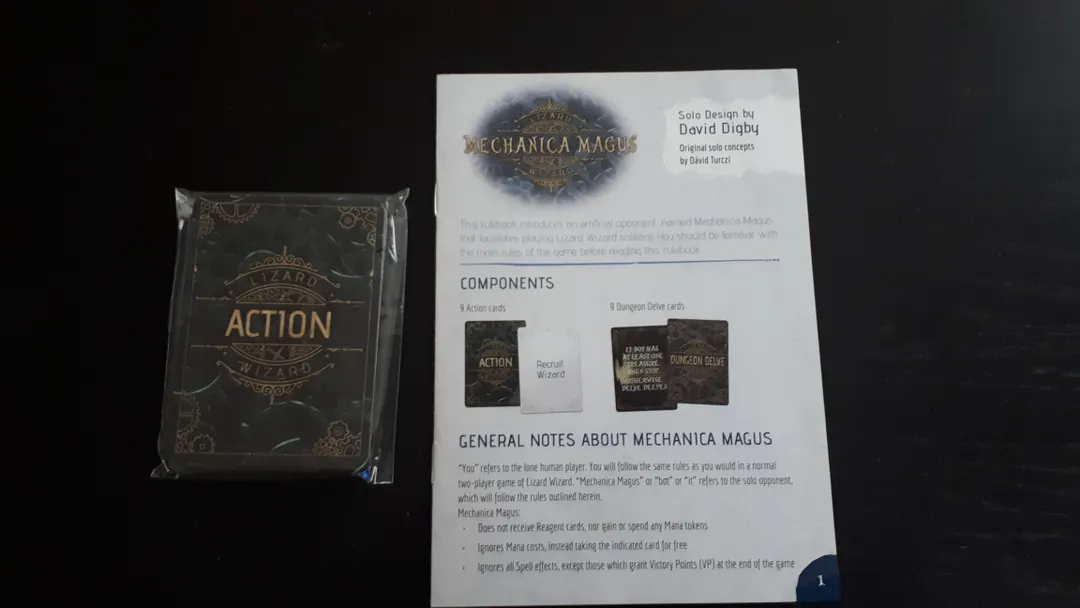
Lizard Wizard: Mechanica Magus
- 1 jugador
- Complejidad 3,0/5
- 2022
2021
Ayuda con las reglas de Lizard Wizard
Explicaciones claras de turnos, efectos de cartas y situaciones dudosas, con referencias a fuentes oficiales e historial de preguntas guardado.
Para 2 jugadores
¿Qué quieres saber?
Las respuestas salen del reglamento oficial, con la página para comprobarlo.
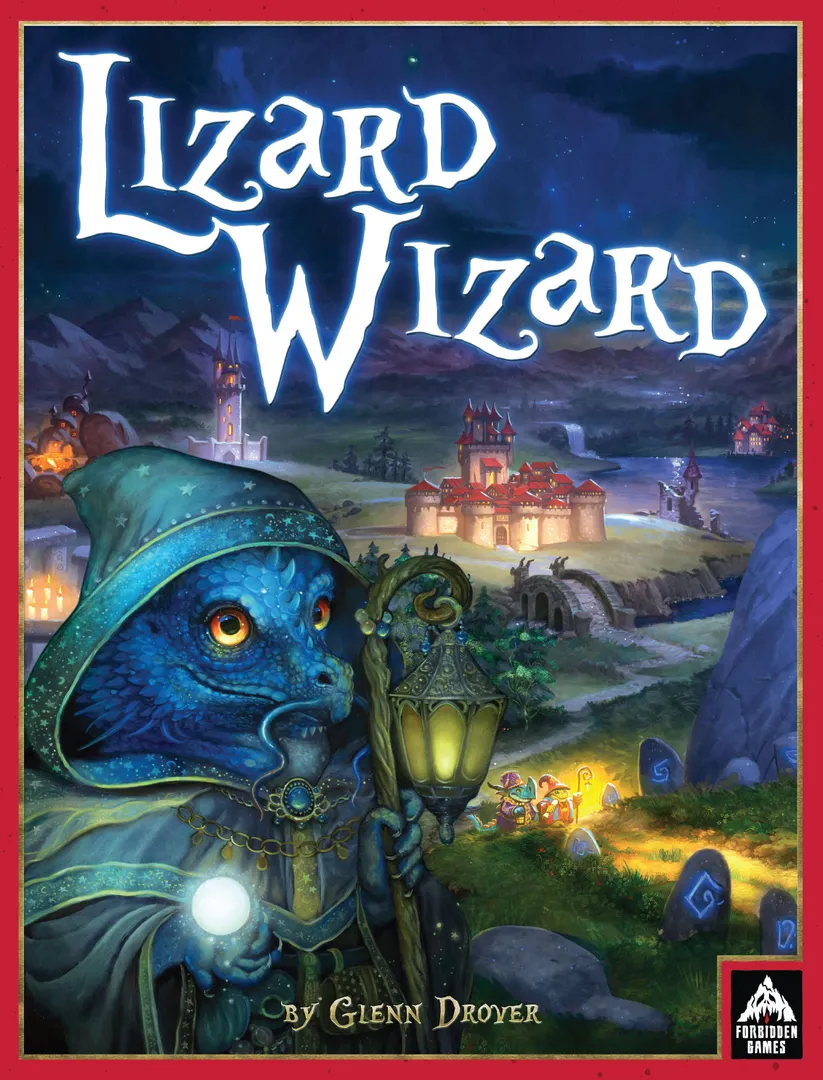
Lizard Wizard es un juego de mesa publicado en 2021 para 2–6 jugadores, con partidas de 90 a 120 minutos y a partir de 10 años. Fue diseñado por Glenn Drover y sus mecánicas principales son Hand Management, Set Collection y Push Your Luck.
En inglés
Astoria is a land pulsing with magic and intrigue! A handful of Arch-Mages are vying for the loyalty of wizards across the land so that they can wield ultimate power. Lizard Wizard is a game from the team that brought you Raccoon Tycoon. Aspects of gameplay will be familiar to fans of RT, and will add a bit of extra depth and strategy. In Lizard Wizard, players compete to recruit wizards from seven unique schools of magic, build mystical towers, research powerful spells, summon helpful familiars, and search dark dungeons for gold and items of power. Only one Arch-Mage will rise above the rest and control the land. Will it be you? Actions Lizard Wizard is an action-selection game. On a player’s turn, they may perform one of the following six Actions: 1) GATHER REAGENTS Just as there are seven schools of magic, there are seven magical reagents, or ingredients, that fuel the magic of Astoria. Knowing where these natural wonders can be found is the essential starting point for every young wizard. Sometimes they use familiars to perform this errand, but it is still very common to find even the most powerful arch-mages lurking in the Enchanted Wood, searching for the most pure reagents. Play a Gather Reagents Card Take Reagents shown on the ‘Gather Reagents’ half (plus any on your Wizard Cards) Increase the value of the Reagents shown on the ‘Increase Value’ half Cast one spell (if you have the necessary reagents) 2) CONVERT REAGENTS TO MANA Long ago, the wizards of Astoria learned how to convert reagents into mana, the magical energy that powers all things. The process is no longer dangerous, but it still takes great focus and knowledge. Turn in one type of reagents to the supply Gain Mana = Value of that Reagent x Tokens turned in Reduce the Value of that Reagent by the number of Tokens turned in 3) RECRUIT WIZARD The Arch Mages of Astoria are vying for ultimate power, which can only be achieved by drawing several lesser wizards into their circle of influence. They do this through demonstrations of their magical ability. Occasionally, their attempts to recruit a wizard are challenged by one or more rivals, and a Wizard’s Duel occurs. These contests of magical power can drain even the most powerful mage. Select one of the two Wizard Cards on offer and bid Mana in turn (or pass) Winner of the Auction pays the bid and takes the Wizard Card If the player who started the Auction didn’t win, they may take another Action 4) RESEARCH SPELL Arch-Mages have the ability to learn spells from any of the seven schools of magic. Once they have researched a new spell, it still must be cast with reagents (and the help of a familiar) before it takes effect. Select a Spell Card from the four on offer and pay 5 Mana Place the Spell Card face down in front of you Cast the Spell if you have the necessary Reagents 5) CREATE A TOWER Magical Towers amplify the power of wizards of each school of magic. Towers may be created through powerful magic, or built by workers who must be paid. Pay either the Reagents or the Gold shown on the Tower Card on offer Take the Tower Card and place it in front of you Towers add ‘1’ to your storage for Reagents 6) SUMMON FAMILIAR: Familiars are magical spirits that are summoned and inhabit the bodies of mortal creatures. They are essential servants who perform many vital services for wizards: They can be used for simple errands, such as gathering reagents or gold. They are the only ones who can locate the ever-shifting entrance to the famous Dungeons of Astoria. They are also essential assistants in the complex rituals required to cast spells. Use the Card for one of four purposes: a) Score one School of Magic (2 Gold/ Card of the same School of Magic as the Familiar) b) Gather Reagents shown on the Familiar Card and Cast any number of Spells c) Clear the Spell Offer, Replace them with four new Spell Cards and select one for free d) Enter the Dungeon Draw cards from the top of the Dungeon Deck, stopping when you want Monster Cards ‘hit’; 2 hits = failure If you stop before failure, keep the treasure cards and shuffle the monster cards back into the Dungeon Deck If you fail, shuffle all drawn cards back into the Dungeon Deck End Game and Scoring The game will end when any one of the following decks is depleted: Familiar, Tower, Wizard, Spell. When the game ends, the players will score points for each Wizard and Tower Card combo (10 VP if they are of the same school of magic, and 5 VP if they are not), 3 VP for each Spell Card in schools of magic where they have a matching Wizard and Tower, 1 VP for each Gold gathered from the dungeon or from scoring with a Familiar Card, and any points derived from the special abilities from spells. -description from publisher
Según el catálogo, Lizard Wizard admite de 2 a 6 jugadores. Este intervalo corresponde al número de jugadores indicado por la editorial, así que el juego puede prepararse para cualquier grupo dentro de ese margen. La preparación, algunas reglas y la puntuación pueden variar según el número de jugadores; consulta la configuración exacta en el reglamento de tu edición.
La duración indicada para Lizard Wizard es de 90 a 120 minutos, la estimación de la editorial para una partida completa. El tiempo real depende del grupo, del número de jugadores y del conocimiento de las reglas: las primeras partidas suelen alargarse y los grupos con experiencia terminan antes. La preparación y la explicación de las reglas no están incluidas.
El catálogo indica Lizard Wizard a partir de 10 años. Es la recomendación de la editorial y refleja la lectura necesaria, la complejidad de las reglas y las piezas pequeñas, no solo el tema. Los más pequeños a menudo pueden jugar con ayuda de un adulto: comprueba la edad recomendada en tu edición y la experiencia de tu grupo.
Lizard Wizard tiene una puntuación de complejidad de 2,4 sobre 5 según los jugadores de BoardGameGeek, lo que lo convierte en un juego algo ligero. La puntuación refleja cuánto conocimiento de reglas, planificación y toma de decisiones exige una partida típica. Los juegos exigentes requieren una explicación inicial más larga, así que conviene usar una guía de preparación.
Lizard Wizard pertenece a estas categorías: Fantasy, Animals y Economic. Sus mecánicas principales son Hand Management, Set Collection y Push Your Luck. Las categorías describen el tema y la ambientación de un juego, mientras que las mecánicas describen lo que los jugadores hacen realmente en su turno. Cada mecánica lleva a una página del catálogo con juegos similares.
Los autores acreditados de Lizard Wizard son: Glenn Drover. Estos créditos proceden de los datos publicados del juego y nombran a las personas responsables de su diseño, no a ilustradores ni editoriales. Las páginas de autor de MeepleRules reúnen otros títulos de los mismos autores, algo útil cuando un juego te gusta y buscas otros parecidos.
El catálogo clasifica Lizard Wizard como juego base. Se juega por sí solo con los componentes de la caja y no requiere ningún otro título. Las expansiones, si existen, añaden contenido o reglas nuevas y aparecen por separado en el catálogo con un enlace a este juego base.