
- Puesto en BGG
- BGG #8058
- Puntuación BGG
- 6,9
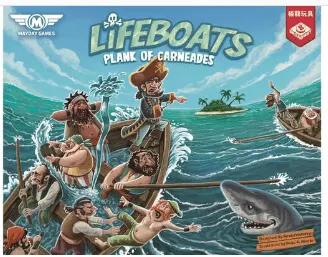
Lifeboats: Plank of Carneades
- 3–7 jugadores
- 45 min
- Complejidad 1,6/5
- 2024
2010
Ayuda con las reglas de Loch Ness
Explicaciones claras de turnos, efectos de cartas y situaciones dudosas, con referencias a fuentes oficiales e historial de preguntas guardado.
Para 2 jugadores
¿Qué quieres saber?
Las respuestas salen del reglamento oficial, con la página para comprobarlo.
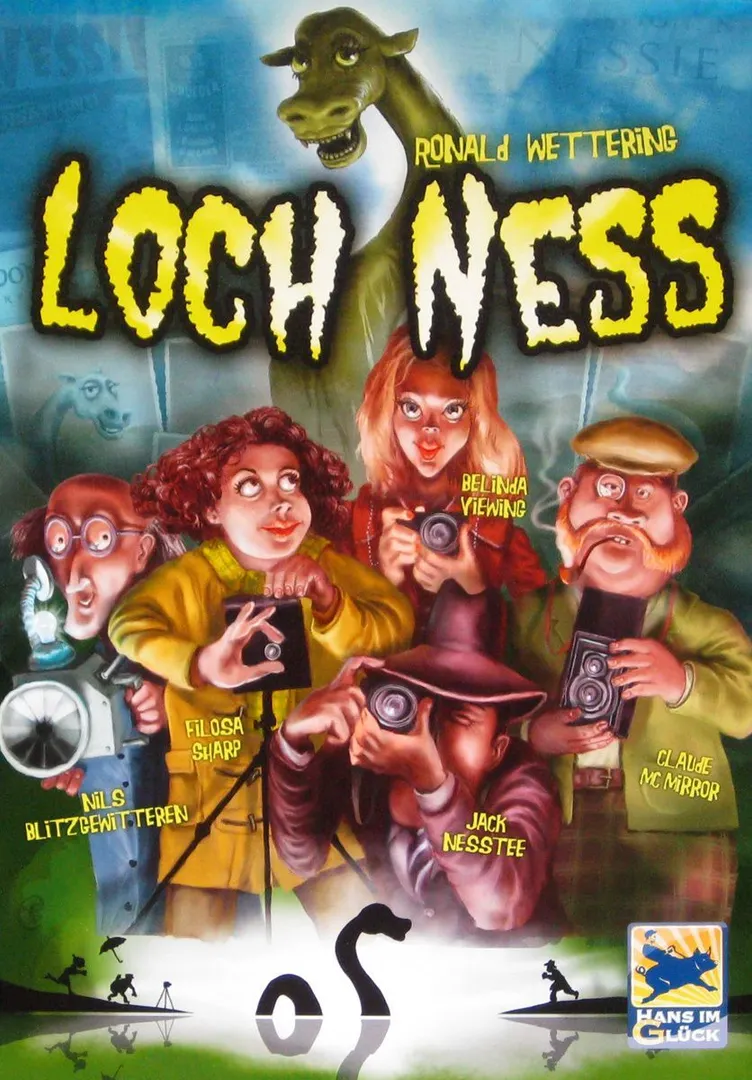
Loch Ness es un juego de mesa publicado en 2010 para 2–5 jugadores, con partidas de 30 a 45 minutos y a partir de 8 años. Fue diseñado por Ronald Wettering.


En inglés
From the rules: "For decades, reporters from around the world have been on the hunt for the Loch Ness monster. But lately reports of sightings of Nessie have been increasing. "Such reports naturally have drawn such reporters as the attractive Belinda Viewing from New York, the half-Belgian Claude McMirror, the clever Filosa Sharp, as well as her Londoner competitor Jack Nesstee, and even Nils the Blitzen from Denmark to the Loch. Equipped with the most modern equipment and techniques, these daring reporters have traveled to Scotland, in order to capture the elusive Nessie on film for their newspapers. "But the 5 will experience some surprises . . ." In Loch Ness, players compete to get pictures of Nessie. In turn order, players place or move their photographers on the board as they try to anticipate the movement of the Loch Ness monster. The movement of the monster is determined randomly by drawing move cards from the first three players, each card having a number from 1 to 5. The cards are not revealed until after the photographers have been placed. When they are revealed, the monster moves the total number of spaces and players score points based on the value of their photographers placed in the area where Nessie emerged. In addition, the players whose photographers were directly in front of Nessie select photo cards that will award points at the end of the game, especially if sets are created. Beginning in the second round, players will select an action space each round that gives them a unique power to use for for the round. Placement also gets more challenging from the second round onward as a player is required to move a photographer, perhaps opening up spots for opponents. Each round, some of the players do have a limited knowledge of how Nessie will move each round. When a player draws a movement card before positioning his photographers, he is allowed to look at it, giving him one-third of the movement for that round. However, movement varies tremendously and only three players draw movement cards each round. The game ends after the round in which a mini Nessie figure reaches space 65 on the score track. This figure moves the same number of spaces as the main Nessie figure in the game board each round. The player with the most points, scored during the game and from the photo cards at the end, wins the game. The rules include two optional variants that can be added individually or together with the base game. Not to be confused with the 2010 Walter Obert game with the same theme, Loch Ness.
Según el catálogo, Loch Ness admite de 2 a 5 jugadores. Este intervalo corresponde al número de jugadores indicado por la editorial, así que el juego puede prepararse para cualquier grupo dentro de ese margen. La preparación, algunas reglas y la puntuación pueden variar según el número de jugadores; consulta la configuración exacta en el reglamento de tu edición.
La duración indicada para Loch Ness es de 30 a 45 minutos, la estimación de la editorial para una partida completa. El tiempo real depende del grupo, del número de jugadores y del conocimiento de las reglas: las primeras partidas suelen alargarse y los grupos con experiencia terminan antes. La preparación y la explicación de las reglas no están incluidas.
El catálogo indica Loch Ness a partir de 8 años. Es la recomendación de la editorial y refleja la lectura necesaria, la complejidad de las reglas y las piezas pequeñas, no solo el tema. Los más pequeños a menudo pueden jugar con ayuda de un adulto: comprueba la edad recomendada en tu edición y la experiencia de tu grupo.
Loch Ness tiene una puntuación de complejidad de 1,5 sobre 5 según los jugadores de BoardGameGeek, lo que lo convierte en un juego ligero. La puntuación refleja cuánto conocimiento de reglas, planificación y toma de decisiones exige una partida típica. Los juegos exigentes requieren una explicación inicial más larga, así que conviene usar una guía de preparación.
Loch Ness pertenece a estas categorías: Deduction y Bluffing. Las categorías describen el tema, la ambientación y el estilo de un juego, no sus reglas. Filtra el catálogo por la misma categoría para encontrar juegos similares si te gustó Loch Ness y buscas algo parecido para tu próxima noche de juegos.
Los autores acreditados de Loch Ness son: Ronald Wettering. Estos créditos proceden de los datos publicados del juego y nombran a las personas responsables de su diseño, no a ilustradores ni editoriales. Las páginas de autor de MeepleRules reúnen otros títulos de los mismos autores, algo útil cuando un juego te gusta y buscas otros parecidos.
El catálogo clasifica Loch Ness como juego base. Se juega por sí solo con los componentes de la caja y no requiere ningún otro título. Las expansiones, si existen, añaden contenido o reglas nuevas y aparecen por separado en el catálogo con un enlace a este juego base.