
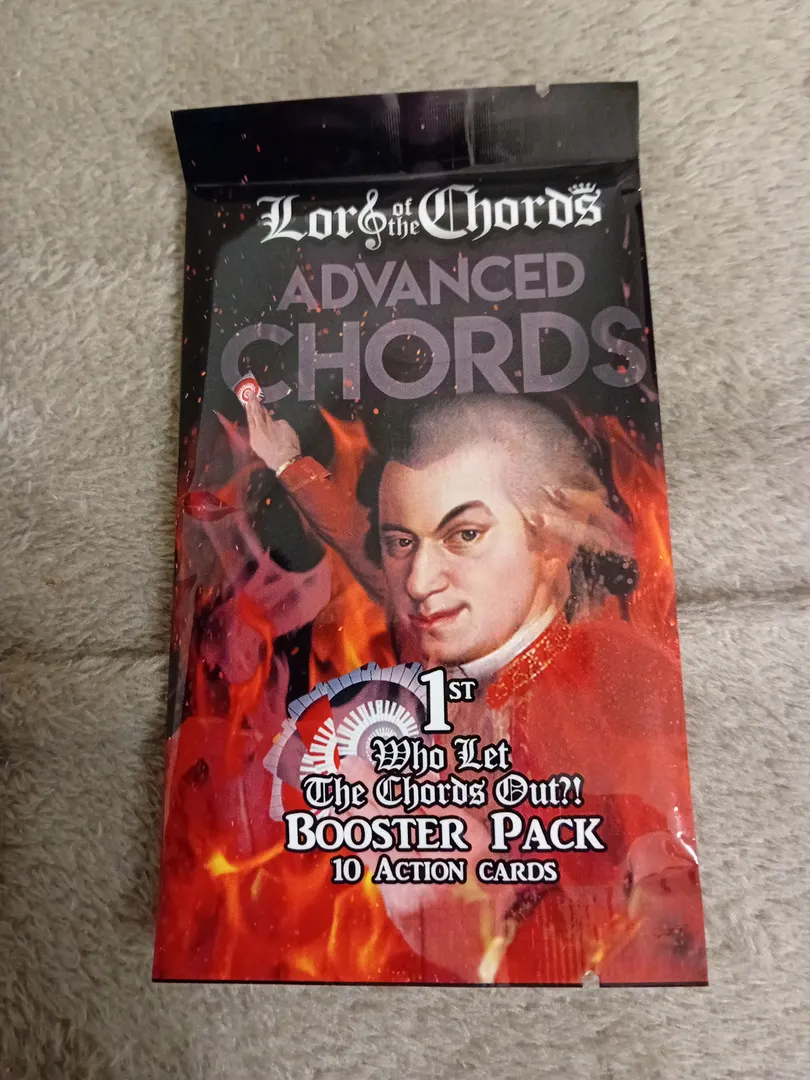
- Puntuación BGG
- 7,5
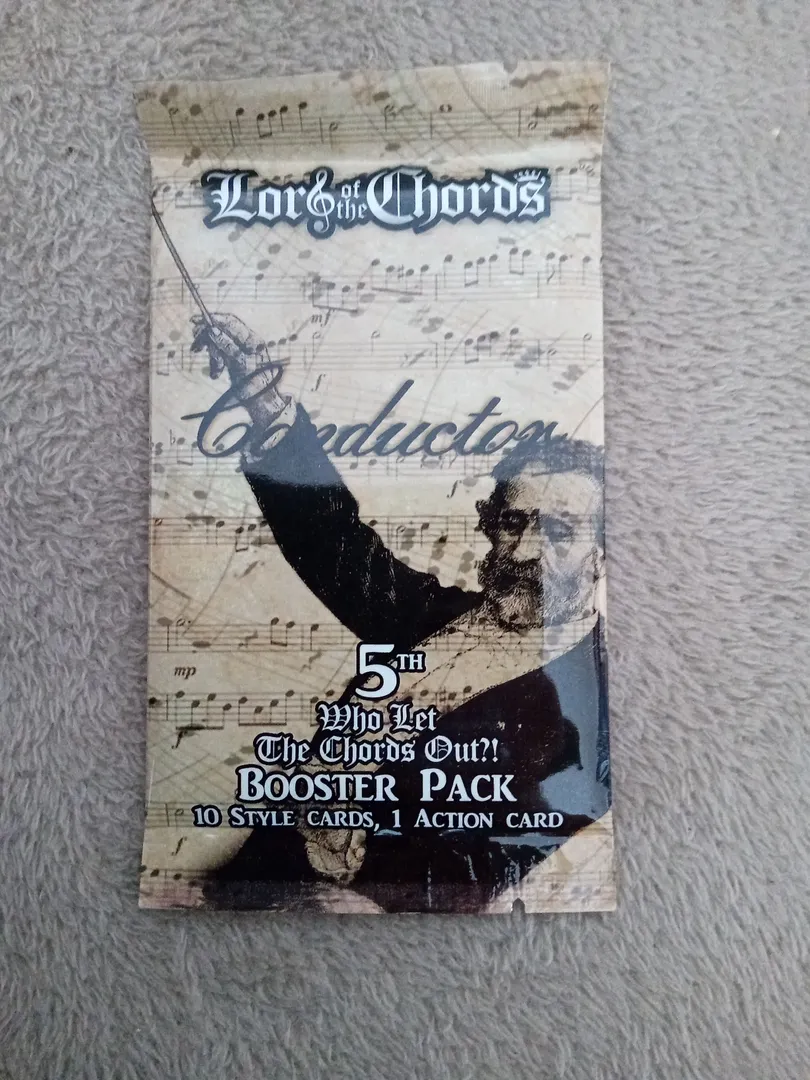
Lord of the Chords: Who Let The Chords Out? – 1st Booster Pack: Advanced Chords
- 2–4 jugadores
- 2019
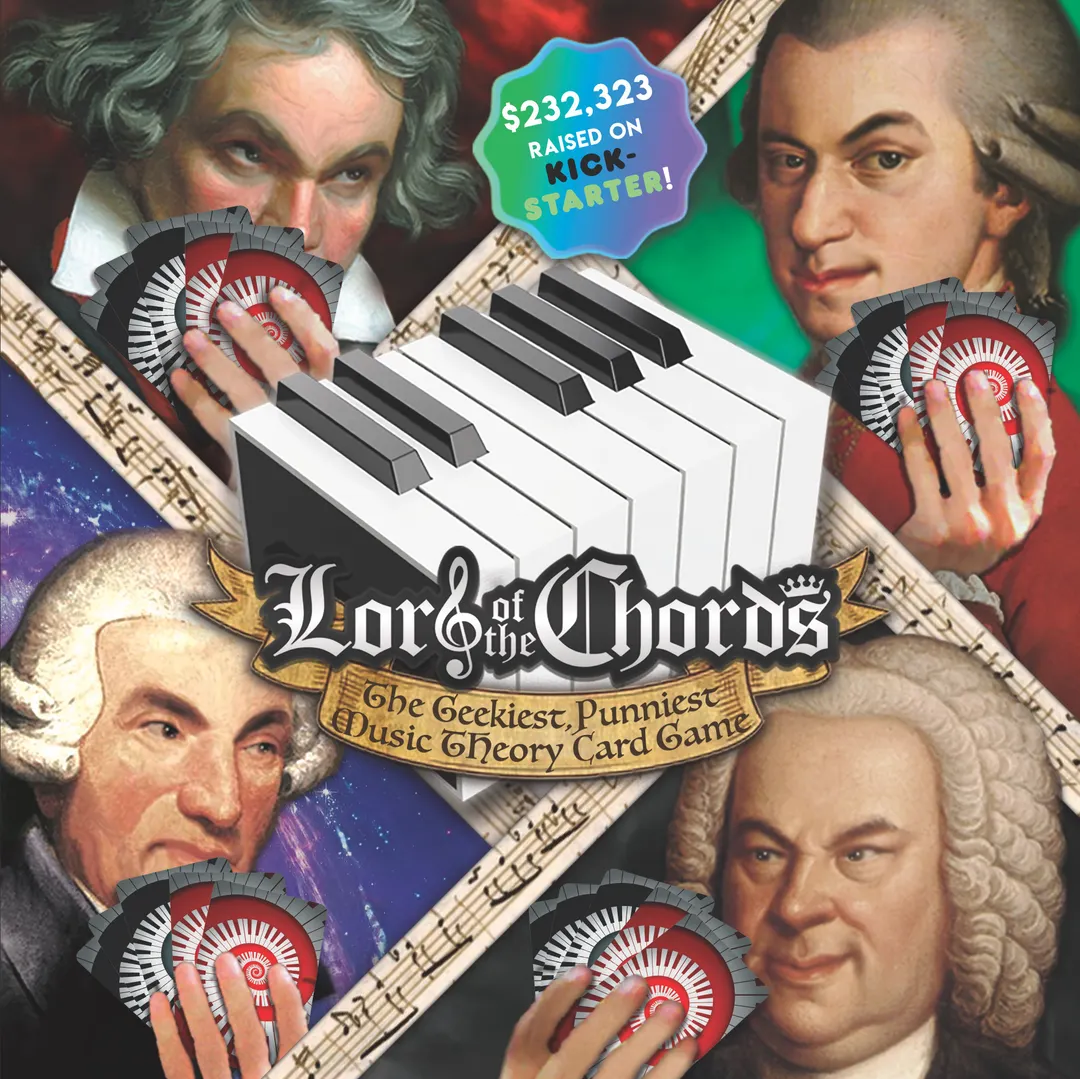
2019
Ayuda con las reglas de Lord of the Chords: The Geekiest, Punniest Music Theory Card Game
Explicaciones claras de turnos, efectos de cartas y situaciones dudosas, con referencias a fuentes oficiales e historial de preguntas guardado.
Para 2 jugadores
¿Qué quieres saber?
Las respuestas salen del reglamento oficial, con la página para comprobarlo.
Lord of the Chords: The Geekiest, Punniest Music Theory Card Game es un juego de mesa publicado en 2019 para 2–4 jugadores, con partidas de 25 a 45 minutos y a partir de 14 años. Fue diseñado por Jonathan Ng, Phang Jun Yu y Keith Teo y sus mecánicas principales son Variable Player Powers, Take That y Set Collection.


En inglés
Lord of the Chords is a classical music themed, card drafting set collection game for 2-4 players that has real music theory cleverly woven into its game mechanics. Prepare for augmented fun, major geeky learning, and diminished boredom! Players begin by choosing 1 of 13 musical instruments that grant variable player powers. To win the game, players must draft the right Note cards to their hands, according to the active Key Signature tile. Notes are then played to the field, and combined to form Chords. When a Chord that matches the current Key Signature is completed by a player, that Key Signature Tile is claimed! The first Player to collect 3 Key Signatures is the Bringer of Harmony, the Destroyer of Dissonance, the Lord of the Chords! On your turn, you first draft 3 cards, then make 3 moves. You may spend your moves by (1) playing a Note card, or (2) playing an Action card. Other ways to spend moves include: (A) Moving a Note card from one chord to another, (B) buying Accidental Tokens, or (C) spending 2 moves to draft 1 additional card. Note cards must be diatonic to be played, according to the active Key Signature. Action cards range from punny composer cards like “More-zart”, which allows you to draw 2 more cards, to powerful music theory concepts like “Major 7th Steal”, which allows you to turn the tables by stealing another player's hard earned Key Signature tile! Accidental Tokens make it easier to complete chords. They are placed on Note cards to raise or lower the note by a semitone/half step, depending on whether the sharp or flat side is facing up, respectively. Accidental tokens are bought by selling a dotted quarter note/dotted crotchet worth of Note cards. All cards are drafted from a pool of 6 cards, so memory, prediction and counter-strategizing are key to victory. Every play is noteworthy - you can't miss a beat! The player who most recently practiced music goes first, so go practice! —description from the designer
Según el catálogo, Lord of the Chords: The Geekiest, Punniest Music Theory Card Game admite de 2 a 4 jugadores. Este intervalo corresponde al número de jugadores indicado por la editorial, así que el juego puede prepararse para cualquier grupo dentro de ese margen. La preparación, algunas reglas y la puntuación pueden variar según el número de jugadores; consulta la configuración exacta en el reglamento de tu edición.
La duración indicada para Lord of the Chords: The Geekiest, Punniest Music Theory Card Game es de 25 a 45 minutos, la estimación de la editorial para una partida completa. El tiempo real depende del grupo, del número de jugadores y del conocimiento de las reglas: las primeras partidas suelen alargarse y los grupos con experiencia terminan antes. La preparación y la explicación de las reglas no están incluidas.
El catálogo indica Lord of the Chords: The Geekiest, Punniest Music Theory Card Game a partir de 14 años. Es la recomendación de la editorial y refleja la lectura necesaria, la complejidad de las reglas y las piezas pequeñas, no solo el tema. Los más pequeños a menudo pueden jugar con ayuda de un adulto: comprueba la edad recomendada en tu edición y la experiencia de tu grupo.
Lord of the Chords: The Geekiest, Punniest Music Theory Card Game tiene una puntuación de complejidad de 3,0 sobre 5 según los jugadores de BoardGameGeek, lo que lo convierte en un juego de complejidad media. La puntuación refleja cuánto conocimiento de reglas, planificación y toma de decisiones exige una partida típica. Los juegos exigentes requieren una explicación inicial más larga, así que conviene usar una guía de preparación.
Lord of the Chords: The Geekiest, Punniest Music Theory Card Game pertenece a estas categorías: Card Game, Music y Educational. Sus mecánicas principales son Variable Player Powers, Take That y Set Collection. Las categorías describen el tema y la ambientación de un juego, mientras que las mecánicas describen lo que los jugadores hacen realmente en su turno. Cada mecánica lleva a una página del catálogo con juegos similares.
Los autores acreditados de Lord of the Chords: The Geekiest, Punniest Music Theory Card Game son: Jonathan Ng, Phang Jun Yu y Keith Teo. Estos créditos proceden de los datos publicados del juego y nombran a las personas responsables de su diseño, no a ilustradores ni editoriales. Las páginas de autor de MeepleRules reúnen otros títulos de los mismos autores, algo útil cuando un juego te gusta y buscas otros parecidos.
El catálogo clasifica Lord of the Chords: The Geekiest, Punniest Music Theory Card Game como juego base. Se juega por sí solo con los componentes de la caja y no requiere ningún otro título. Las expansiones, si existen, añaden contenido o reglas nuevas y aparecen por separado en el catálogo con un enlace a este juego base.