
- Puesto en BGG
- BGG #11.454
- Puntuación BGG
- 6,8
2019: The ARCTIC
- 2–4 jugadores
- 120 min
- Complejidad 4,0/5
- 2011
2010
Ayuda con las reglas de Master of Economy
Explicaciones claras de turnos, efectos de cartas y situaciones dudosas, con referencias a fuentes oficiales e historial de preguntas guardado.
Para 2 jugadores
¿Qué quieres saber?
Las respuestas salen del reglamento oficial, con la página para comprobarlo.
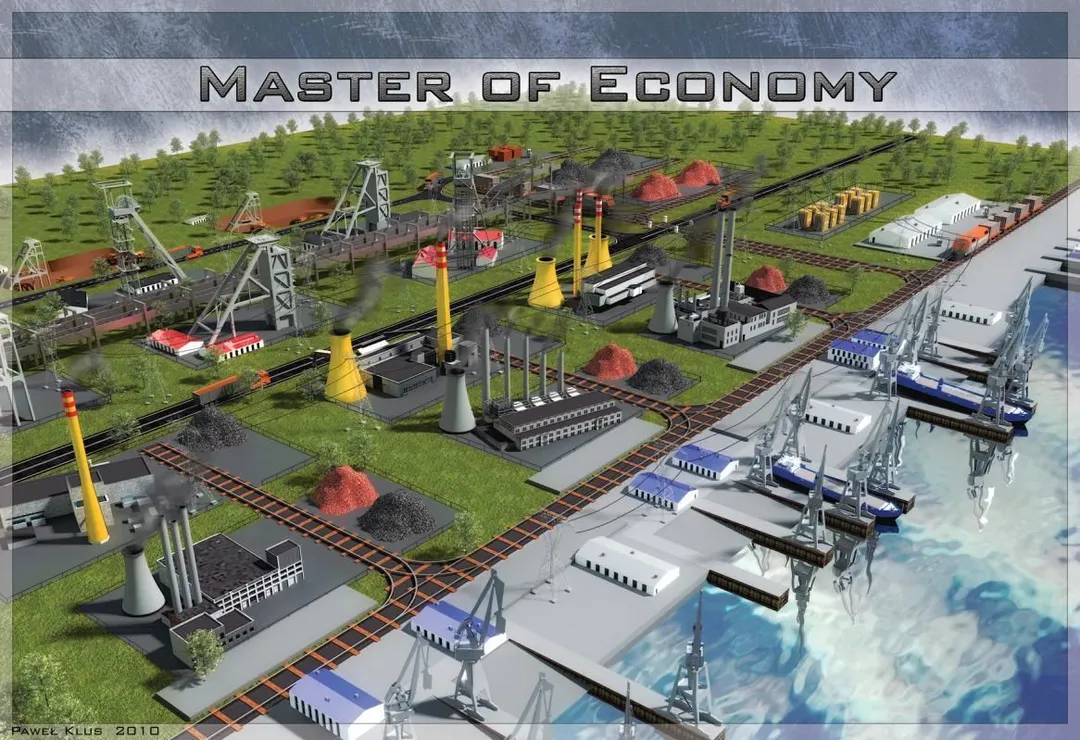
Master of Economy es un juego de mesa publicado en 2010 para 2–4 jugadores, con partidas de 120 minutos y a partir de 14 años. Fue diseñado por Andrzej Kurek y sus mecánicas principales son Hand Management, Trading y Auction / Bidding.

En inglés
Financial simulator. Players start the game by managing their corporations (1 of 4) and using them as a tool for increasing the value of private property (like countries in "Imperial"). By effective speculation on the stock market, a player may take control of more than one corporation. Proper corporation management is preferable but not the most essential. The rules attempt to simulate real conditions of business competition and relationships between shareholders. THERE IS NO LUCK FACTOR. Internal balance discourages to play in a relation of 2(3) players versus 1. Most of the rules are quite easy and intuitive. It is the most difficult to use the rules effectively by good planning and predicting opponents’ plans. Players manage their corporations by investing in new factories and trading produced goods to earn money (like in many other games). The point is what the players do with earned money. They can re-invest it to make their corporations earn more during next phase or try to make pressure on another player by buying shares of his/her corporation. The player who has the biggest number of shares can be elected by voting as a new leader of the corporation for the next stage. Even if you don`t have enough shares to take control over another player`s firm, the investment can be quite beneficiary because it can give you some profit (if that firm is managed well) or enforce your opponent to use the corporation money for defending, which makes his final result worse than could be achieved without your pressure. Of course, the more players (max 4), the more fun there is during voting phase when all the shareholders, who are going to manage the corporation in the next stage, vote. The game tries to extract maximum advantage of double circulation of money you can find in the "Imperial". Players have money and corporations have money. So, what is new then? Besides the players, also the corporations can be shareholders and they all (corporations and players) vote for new leaders. It means that if you want to keep control over a corporation you had started with, you can, for instance, first take control over some weaker corporation which has some shares of yours. The best defense is attack, isn`t it? ;) The only weapon in this war is money. There are some tools of defense, so taking control over experienced opponent`s corporation is rather difficult, though possible. When an experienced player plays versus a beginner, he/she shouldn`t have a problem with it. Moreover, keeping control of the corporation is useful, because it is a way of generating money for the leader, although speculating by buying and selling shares is a bit more efficient. It is the best to go both ways at the same time, choosing and changing your engagement alternately. Well, it is also possible to play without any corporation and increase the value of private property only by playing as a stock market profiteer, but this way is recommended only for very experienced players. There is a fixed variant of playing 2 vs. 2.
Según el catálogo, Master of Economy admite de 2 a 4 jugadores. Este intervalo corresponde al número de jugadores indicado por la editorial, así que el juego puede prepararse para cualquier grupo dentro de ese margen. La preparación, algunas reglas y la puntuación pueden variar según el número de jugadores; consulta la configuración exacta en el reglamento de tu edición.
La duración indicada para Master of Economy es de 120 minutos, la estimación de la editorial para una partida completa. El tiempo real depende del grupo, del número de jugadores y del conocimiento de las reglas: las primeras partidas suelen alargarse y los grupos con experiencia terminan antes. La preparación y la explicación de las reglas no están incluidas.
El catálogo indica Master of Economy a partir de 14 años. Es la recomendación de la editorial y refleja la lectura necesaria, la complejidad de las reglas y las piezas pequeñas, no solo el tema. Los más pequeños a menudo pueden jugar con ayuda de un adulto: comprueba la edad recomendada en tu edición y la experiencia de tu grupo.
Master of Economy tiene una puntuación de complejidad de 4,1 sobre 5 según los jugadores de BoardGameGeek, lo que lo convierte en un juego exigente. La puntuación refleja cuánto conocimiento de reglas, planificación y toma de decisiones exige una partida típica. Los juegos exigentes requieren una explicación inicial más larga, así que conviene usar una guía de preparación.
Master of Economy pertenece a estas categorías: Economic, Negotiation y Educational. Sus mecánicas principales son Hand Management, Trading y Auction / Bidding. Las categorías describen el tema y la ambientación de un juego, mientras que las mecánicas describen lo que los jugadores hacen realmente en su turno. Cada mecánica lleva a una página del catálogo con juegos similares.
Los autores acreditados de Master of Economy son: Andrzej Kurek. Estos créditos proceden de los datos publicados del juego y nombran a las personas responsables de su diseño, no a ilustradores ni editoriales. Las páginas de autor de MeepleRules reúnen otros títulos de los mismos autores, algo útil cuando un juego te gusta y buscas otros parecidos.
El catálogo clasifica Master of Economy como juego base. Se juega por sí solo con los componentes de la caja y no requiere ningún otro título. Las expansiones, si existen, añaden contenido o reglas nuevas y aparecen por separado en el catálogo con un enlace a este juego base.