
- Puntuación BGG
- 7,3
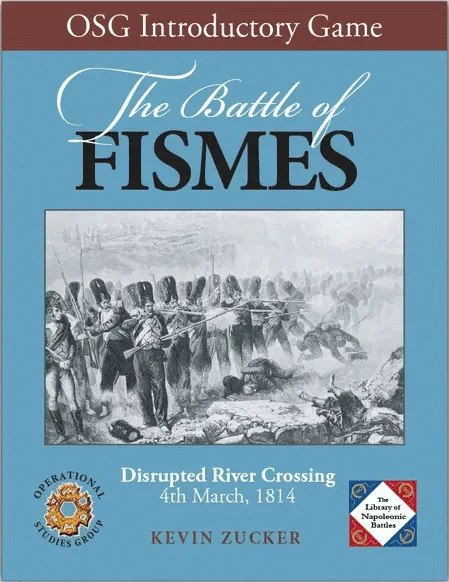
The Battle of Fismes: Disrupted River Crossing
- 2 jugadores
- Complejidad 3,5/5
- 2019
2019
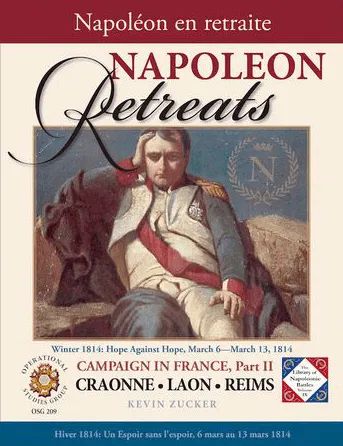
Ayuda con las reglas de Napoleon Retreats: Campaign in France, Part II
Explicaciones claras de turnos, efectos de cartas y situaciones dudosas, con referencias a fuentes oficiales e historial de preguntas guardado.
Para 2 jugadores
¿Qué quieres saber?
Las respuestas salen del reglamento oficial, con la página para comprobarlo.
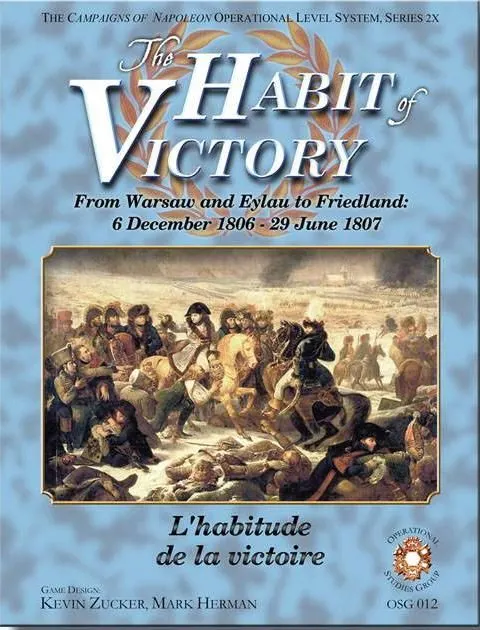
Napoleon Retreats: Campaign in France, Part II es un juego de mesa publicado en 2019 para 2–4 jugadores, con partidas de 60 minutos y a partir de 10 años. Fue diseñado por Kevin Zucker y sus mecánicas principales son Dice Rolling, Hexagon Grid y Simulation.

En inglés
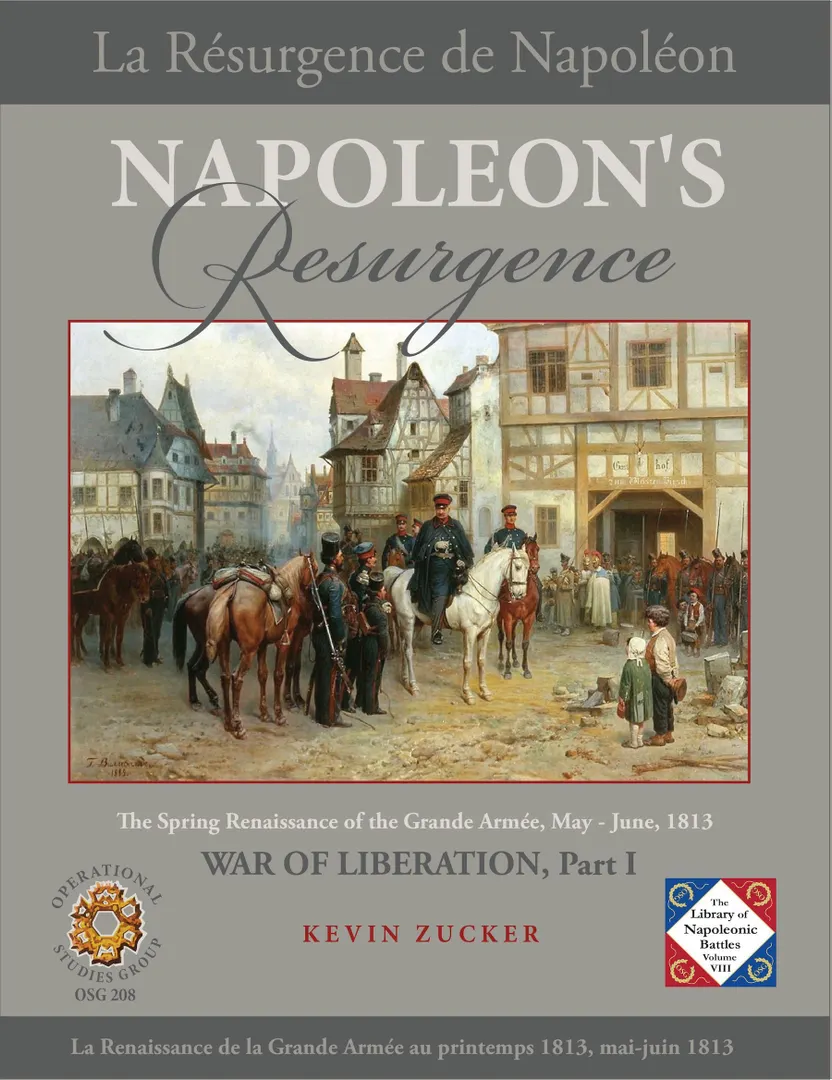
Napoleon Retreats - Campaign in France II Winter 1814: Hope Against Hope After dispatching Blücher’s Army of Silesia at Vauchamps, Napoleon diverted temporarily toward the Seine at Montereau, for an inconclusive brush with Schwarzenberg’s Army of Bohemia. His inveterate foe Blücher apparently had learned no lessons and threatened to move again on Paris. By March 3rd Napoleon was returning northward along the bank of the Ourcq River. The fall of Soissons, cheaply surrendered by General Moreau, saw the quarry escape over the Aisne River to link-up with 43,000 reinforcements near Laon, raising his strength to over 100,000. While the Emperor concentrated between Fismes and Berry au Bac, Blücher continued to retreat on Laon. Reaching Craonne, the Emperor decided to advance along the chemin des dames to test Blücher’s position on the plateau, and clear the flank of his advance on Laon. The next game of the TLNB-Series covers the Campaign in France, Part II: 6 March to 13 March 1814. The major battle was Laon, on 9-10 March, when Napoleon, with 37,000, went up against Blücher's position, on the hill of Laon, with 85,000. (Marshal Marmont with a separate VI Corps was supposed to support the attack, but he was dispersed in a night combat.) Blücher wasn't feeling well and failed to pursue. One more battle was to follow (after two days for R&R) and Napoleon won that battle: Reims, against St. Priest. So actually, he won two out of three. Battles Simulated Craonne, Struggle for the plateau des dames, 7 March The chemin des dames runs the length of a continuous ridge from the N2 to the N44, the two main highways leading north to Laon. Blücher stationed Sacken and Woronzoff’s infantry on the plateau just west of Craonne. Napoleon decided on a frontal attack up the chemin on what he believed to be no more than a 20,000-man rearguard. The Russians begrudgingly gave ground, gaining it back in a counterattack, and throwing Ney off the Plateau. Once the French Guard cavalry had stabilized the situation, the Russian right flank began to give way under combined pressure of infantry and cavalry. Napoleon directed 88 guns from the Guard artillery to destroy the Russian center and sent the Guard infantry to attack along the chemin to complete the victory. The Russians withdrew in good order. Laon, Beginning of the End, 9-10 March Marshal Ney advanced on Laon in the morning snow. Bülow with 17,000 men held the suburbs of Semilly and Ardon. On the plain west of Laon, Winzingerode was posted with 25,000 men; east of Laon at Athies, Yorck and Kleist held another 25,000 men; Langeron and Sacken were in reserve with 36,000; Napoleon attacked with fewer than 40,000. As the southern suburbs traded hands, Blücher thought that he was being attacked just by an advanced guard, but Napoleon threw everything into Ney’s attack up until 6 PM. Marmont commanded a separate force of 10,000 which had managed to fight their way to Athies by 5 PM, camping for the night. At 7:30, the Prussian Yorck launched a combined arms attack that routed Marmont’s entire camp. A small group of French Guardsmen managed to halt the pursuit. Marmont lost 45 guns, all his wagons, and 3,500 men. Blücher lost a chance to destroy his foe’s small army. Reims, A Quick Success en passant, 13 March On March 12th the Russian General St. Priest snatched Reims from its small French garrison. Hearing of this, Napoleon and his small force moved east on the 13th, beginning their attack at 4 PM, quickly driving out the enemy, and cutting communications between Blücher and Schwarzenberg at the same time. Only 10,000 French troops were actually engaged against 15,000 of St. Priest. St. Priest was killed along with 3,000 men while losing 23 guns. Campaign Game, 6 -13 March All three maps fit together to create an irregular playing area 44"x68" and covering an entire week of fighting. • Three 22" x 34" maps • 560 die-cut units • 100 playing cards • Two rulebooks • 15 player aid cards • Game Box STANDARD TLNB-GAME SYSTEM: • scale: 480m (525 yards)/ hex; • strength: 500-800 men/SP; • turn-duration: 1 hour/turn
Según el catálogo, Napoleon Retreats: Campaign in France, Part II admite de 2 a 4 jugadores. Este intervalo corresponde al número de jugadores indicado por la editorial, así que el juego puede prepararse para cualquier grupo dentro de ese margen. La preparación, algunas reglas y la puntuación pueden variar según el número de jugadores; consulta la configuración exacta en el reglamento de tu edición.
La duración indicada para Napoleon Retreats: Campaign in France, Part II es de 60 minutos, la estimación de la editorial para una partida completa. El tiempo real depende del grupo, del número de jugadores y del conocimiento de las reglas: las primeras partidas suelen alargarse y los grupos con experiencia terminan antes. La preparación y la explicación de las reglas no están incluidas.
El catálogo indica Napoleon Retreats: Campaign in France, Part II a partir de 10 años. Es la recomendación de la editorial y refleja la lectura necesaria, la complejidad de las reglas y las piezas pequeñas, no solo el tema. Los más pequeños a menudo pueden jugar con ayuda de un adulto: comprueba la edad recomendada en tu edición y la experiencia de tu grupo.
Napoleon Retreats: Campaign in France, Part II tiene una puntuación de complejidad de 3,0 sobre 5 según los jugadores de BoardGameGeek, lo que lo convierte en un juego de complejidad media. La puntuación refleja cuánto conocimiento de reglas, planificación y toma de decisiones exige una partida típica. Los juegos exigentes requieren una explicación inicial más larga, así que conviene usar una guía de preparación.
Napoleon Retreats: Campaign in France, Part II pertenece a estas categorías: Wargame y Napoleonic. Sus mecánicas principales son Dice Rolling, Hexagon Grid y Simulation. Las categorías describen el tema y la ambientación de un juego, mientras que las mecánicas describen lo que los jugadores hacen realmente en su turno. Cada mecánica lleva a una página del catálogo con juegos similares.
Los autores acreditados de Napoleon Retreats: Campaign in France, Part II son: Kevin Zucker. Estos créditos proceden de los datos publicados del juego y nombran a las personas responsables de su diseño, no a ilustradores ni editoriales. Las páginas de autor de MeepleRules reúnen otros títulos de los mismos autores, algo útil cuando un juego te gusta y buscas otros parecidos.
El catálogo clasifica Napoleon Retreats: Campaign in France, Part II como juego base. Se juega por sí solo con los componentes de la caja y no requiere ningún otro título. Las expansiones, si existen, añaden contenido o reglas nuevas y aparecen por separado en el catálogo con un enlace a este juego base.