
- Puntuación BGG
- 7,3
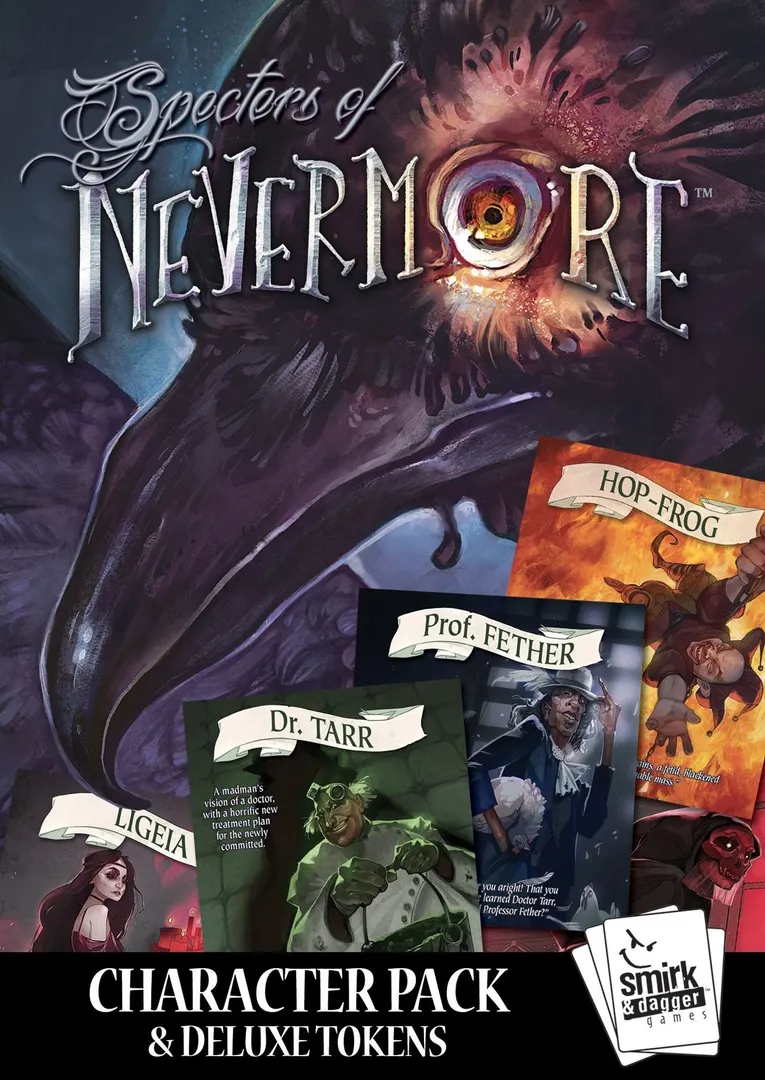
Specters of Nevermore
- 3–6 jugadores
- 45–60 min
- 2016
2015
Ayuda con las reglas de Nevermore
Explicaciones claras de turnos, efectos de cartas y situaciones dudosas, con referencias a fuentes oficiales e historial de preguntas guardado.
Para 3 jugadores
¿Qué quieres saber?
Las respuestas salen del reglamento oficial, con la página para comprobarlo.
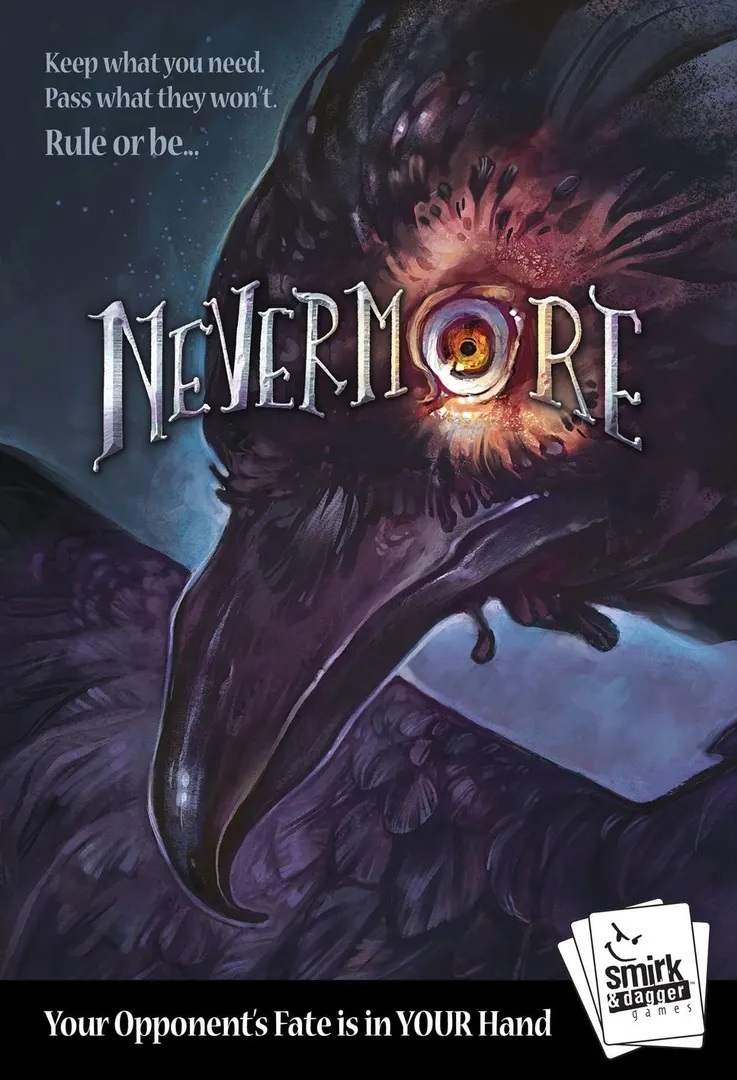
Nevermore es un juego de mesa publicado en 2015 para 3–6 jugadores, con partidas de 45 a 60 minutos y a partir de 14 años. Fue diseñado por Curt Covert y sus mecánicas principales son Hand Management, Take That y Set Collection.


En inglés
Pass with care... Many are the paths to power: brute force, subtle deception, cunning trickery. You hold the cards...but you can't keep them all. What will you decide to collect for personal gain? And what are you willing to give up in order to destroy? The Ravens are gathering, many of whom used to be rivals. Will you rise to power or simply be...nevermore. Nevermore is a casual-style, card-drafting game in which you quickly build your hand each round, collecting cards you want and poisoning your opponent's hand by passing along cards you think they can't use. Whoever holds the most of a given suit, gains the power of that suit to attack, heal, acquire Light or Shadow magicks and score victory points. Will you transform all your rivals into ravens — or can they regain their human form in time to score enough victory to win? Nevermore can be taught in less than five minutes, yet hides a surprising amount of depth in strategy, as players try to outwit and outmaneuver their opponents. Player ‘transformation’ replaces player elimination, keeping everyone in the game until the last moment, yet still rewards players who have performed better during the game. That's because a player who has become a Raven cannot win until they can find a way to transform back, but they still play, helping to doom other players and trying to collect one of two specific hands (all of one suit - or - one of every suit) to become human again. Short game length encourages multiple plays per session and appeals to players of all skill levels – with plenty of underhanded plotting and backstabby goodness. Play Overview: Players are dealt a hand of 5 cards - but they will not keep them all. During the drafting phase, players must pass three of those cards to the player on their left. From their new set of five, they must then pass two to the left. Lastly, they will pass one card left - ending the drafting phase with a final drafted hand of five cards. They will have attempted to collect cards from a certain suit (or two) trying to be the player who has the most of that suit this hand - and also carefully managing what they are passing to their opponent, to make sure they don't end up with too powerful a hand. During the resolution phase, each suit is called for, one at a time. All players show cards from that suit simultaneously. The player with the most gains the power of the suit - and the strength of the ability is determined by subtracting the second highest total of that suit. Example: I hold three Attack cards. Two other players each hold one Attack card. (3-1=2) I do a 2 point attack on a player I choose. Healing, Victory points and Radiance (which draws a Light Magick card for each you have minus the second highest amount) all work the same way. All but Ravens, who kill cards of other suits in your hand. Example: I have 3 Victory, 1 Attack and 1 Raven. I must choose to sacrifice either 1 Attack or 1 Victory card from my hand as they are Resolved. Certain special hands give additional benefits and/or Victory points. If your 5 Health points drop to 0, you become a Raven, still in the game, but unable to win until you can transform back. The winner is either the last human player standing - or the first to score 6 Victory points.
Según el catálogo, Nevermore admite de 3 a 6 jugadores. Este intervalo corresponde al número de jugadores indicado por la editorial, así que el juego puede prepararse para cualquier grupo dentro de ese margen. La preparación, algunas reglas y la puntuación pueden variar según el número de jugadores; consulta la configuración exacta en el reglamento de tu edición.
La duración indicada para Nevermore es de 45 a 60 minutos, la estimación de la editorial para una partida completa. El tiempo real depende del grupo, del número de jugadores y del conocimiento de las reglas: las primeras partidas suelen alargarse y los grupos con experiencia terminan antes. La preparación y la explicación de las reglas no están incluidas.
El catálogo indica Nevermore a partir de 14 años. Es la recomendación de la editorial y refleja la lectura necesaria, la complejidad de las reglas y las piezas pequeñas, no solo el tema. Los más pequeños a menudo pueden jugar con ayuda de un adulto: comprueba la edad recomendada en tu edición y la experiencia de tu grupo.
Nevermore tiene una puntuación de complejidad de 1,9 sobre 5 según los jugadores de BoardGameGeek, lo que lo convierte en un juego ligero. La puntuación refleja cuánto conocimiento de reglas, planificación y toma de decisiones exige una partida típica. Los juegos exigentes requieren una explicación inicial más larga, así que conviene usar una guía de preparación.
Nevermore pertenece a estas categorías: Card Game y Animals. Sus mecánicas principales son Hand Management, Take That y Set Collection. Las categorías describen el tema y la ambientación de un juego, mientras que las mecánicas describen lo que los jugadores hacen realmente en su turno. Cada mecánica lleva a una página del catálogo con juegos similares.
Los autores acreditados de Nevermore son: Curt Covert. Estos créditos proceden de los datos publicados del juego y nombran a las personas responsables de su diseño, no a ilustradores ni editoriales. Las páginas de autor de MeepleRules reúnen otros títulos de los mismos autores, algo útil cuando un juego te gusta y buscas otros parecidos.
El catálogo clasifica Nevermore como juego base. Se juega por sí solo con los componentes de la caja y no requiere ningún otro título. Las expansiones, si existen, añaden contenido o reglas nuevas y aparecen por separado en el catálogo con un enlace a este juego base.