
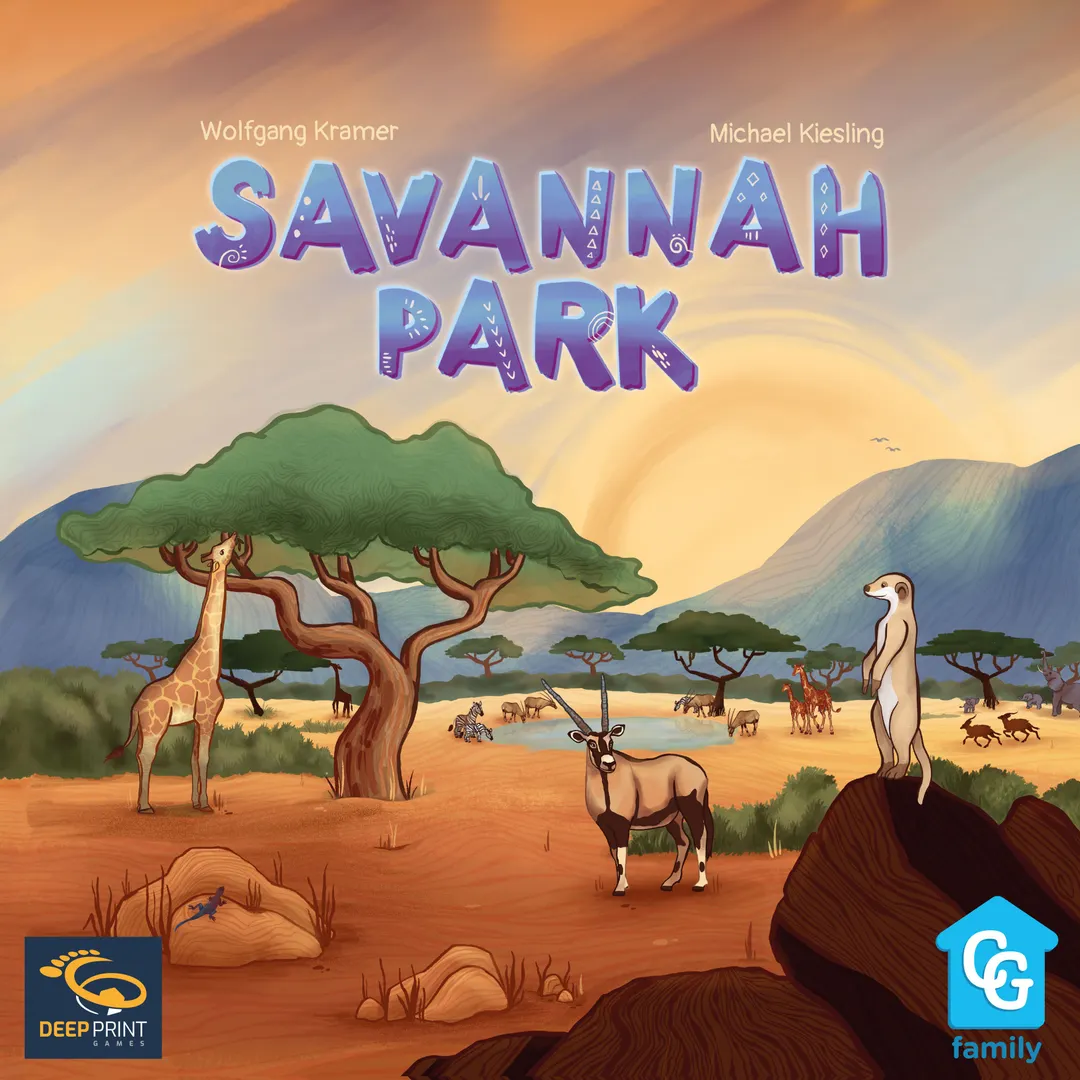
- Puesto en BGG
- BGG #2113
- Puntuación BGG
- 7,0
Savannah Park
- 1–4 jugadores
- 20–40 min
- Complejidad 1,8/5
- 2021
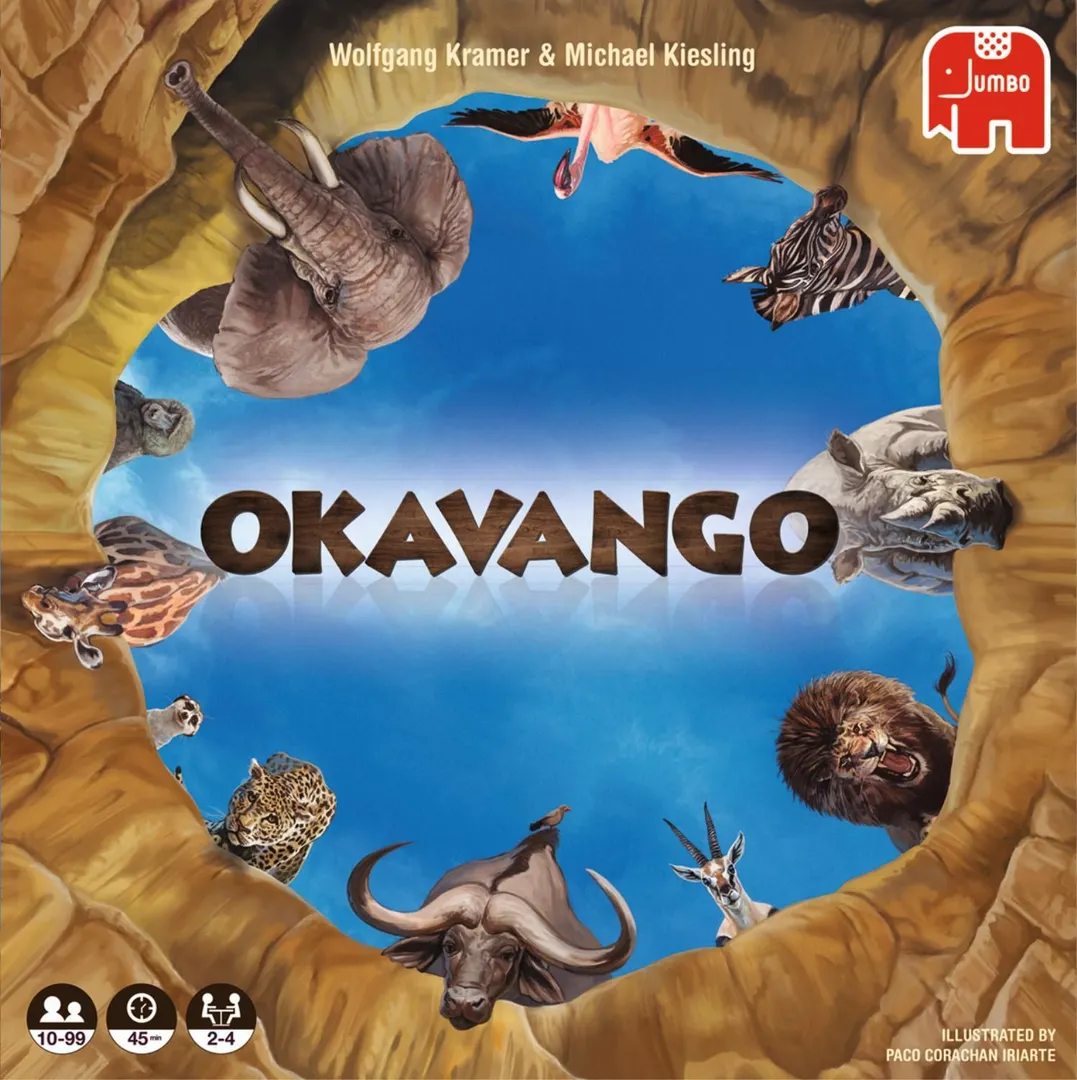
2018
Ayuda con las reglas de Okavango
Explicaciones claras de turnos, efectos de cartas y situaciones dudosas, con referencias a fuentes oficiales e historial de preguntas guardado.
Para 2 jugadores
¿Qué quieres saber?
Las respuestas salen del reglamento oficial, con la página para comprobarlo.
Okavango es un juego de mesa publicado en 2018 para 2–4 jugadores y a partir de 10 años. Fue diseñado por Wolfgang Kramer y Michael Kiesling.

En inglés
The Okavango River is almost dry, and the animals on the African savanna are practically dying of thirst! As a ranger in the nearby wildlife reserve, you have the important task of forming strong herds of animals and leading them to a delta of the fertile river or to one of the sparse waterholes. In Okavango, each player is an African ranger. The players are awarded points for leading their herds of animals to the river deltas and waterholes of the Okavango. At a waterhole, the player must replace the drinking herd with the same number OR a higher number of animals of a single kind. If the player brings the same number of animals, the thirsty animals must have a higher ranking than the animals already drinking at the waterhole. If the player brings a higher number of animals, the ranking doesn't matter. In case of a river delta, the player has to replace the drinking animals with different animals AS WELL AS a higher number of animals than at the river delta at that time. In this case, the animals' ranking doesn't matter. But there are only a limited number of waterholes and animals. The players therefore need to be smart about gathering their animals into herds and allowing them to drink. The player with the most points at the end of the game wins! —description from the publisher
Según el catálogo, Okavango admite de 2 a 4 jugadores. Este intervalo corresponde al número de jugadores indicado por la editorial, así que el juego puede prepararse para cualquier grupo dentro de ese margen. La preparación, algunas reglas y la puntuación pueden variar según el número de jugadores; consulta la configuración exacta en el reglamento de tu edición.
El catálogo indica Okavango a partir de 10 años. Es la recomendación de la editorial y refleja la lectura necesaria, la complejidad de las reglas y las piezas pequeñas, no solo el tema. Los más pequeños a menudo pueden jugar con ayuda de un adulto: comprueba la edad recomendada en tu edición y la experiencia de tu grupo.
Okavango tiene una puntuación de complejidad de 1,6 sobre 5 según los jugadores de BoardGameGeek, lo que lo convierte en un juego ligero. La puntuación refleja cuánto conocimiento de reglas, planificación y toma de decisiones exige una partida típica. Los juegos exigentes requieren una explicación inicial más larga, así que conviene usar una guía de preparación.
Okavango pertenece a estas categorías: Animals. Las categorías describen el tema, la ambientación y el estilo de un juego, no sus reglas. Filtra el catálogo por la misma categoría para encontrar juegos similares si te gustó Okavango y buscas algo parecido para tu próxima noche de juegos.
Los autores acreditados de Okavango son: Wolfgang Kramer y Michael Kiesling. Estos créditos proceden de los datos publicados del juego y nombran a las personas responsables de su diseño, no a ilustradores ni editoriales. Las páginas de autor de MeepleRules reúnen otros títulos de los mismos autores, algo útil cuando un juego te gusta y buscas otros parecidos.
El catálogo clasifica Okavango como juego base. Se juega por sí solo con los componentes de la caja y no requiere ningún otro título. Las expansiones, si existen, añaden contenido o reglas nuevas y aparecen por separado en el catálogo con un enlace a este juego base.