
- Puesto en BGG
- BGG #1870
- Puntuación BGG
- 6,6
Onirim
- 1–2 jugadores
- 15 min
- Complejidad 1,7/5
- 2010
2014
Ayuda con las reglas de Onirim (Second Edition)
Explicaciones claras de turnos, efectos de cartas y situaciones dudosas, con referencias a fuentes oficiales e historial de preguntas guardado.
Para 1 jugador
¿Qué quieres saber?
Las respuestas salen del reglamento oficial, con la página para comprobarlo.
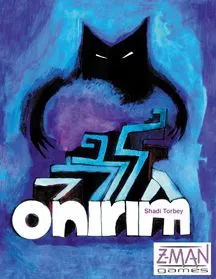
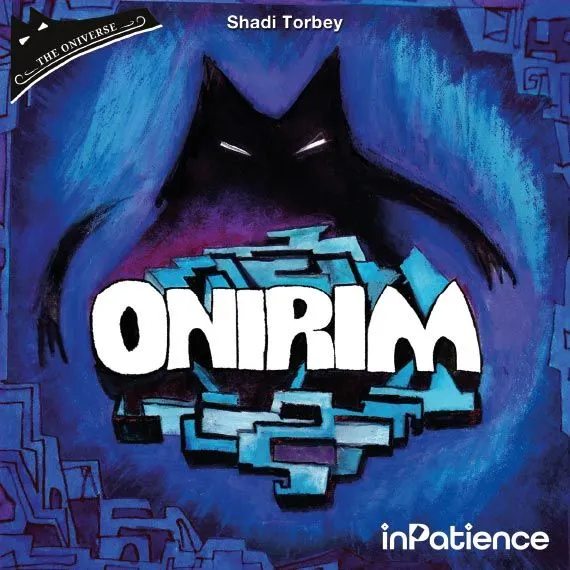
Onirim (Second Edition) es un juego de mesa publicado en 2014 para 1–2 jugadores, con partidas de 15 minutos y a partir de 10 años. Fue diseñado por Shadi Torbey y sus mecánicas principales son Hand Management, Set Collection y Cooperative Game.


En inglés
You are a Dreamwalker, lost in a mysterious labyrinth, and you must discover the oneiric doors before your dreamtime runs out – or you will remain trapped forever! You may wander through the chambers of dreams, hoping that chance will reveal the doors, or you can linger in each type of room. In both cases, you will have to deal with the slithering Nightmares, which haunt the hallways of the labyrinth. Onirim is a solo/cooperative card game. You (and a partner, if you wish) must work (together) against the game to gather the eight Door cards before the deck runs out; you can obtain those Door cards either by playing cards of the same color three turns in a row, or by discarding (under specific circumstances) one of your powerful Key cards. In both cases you will have to decide the best use of each card in your hand and carefully play around the Nightmares. Those cards are hidden in the deck and will trigger painful dilemmas when drawn... Seven mini-expansions, all standalone and compatible with one another, are included with the second edition of Onirim, including these three that were in the first edition of the game: "The Towers" introduces a new type of card that allows more searching and deck manipulation, while also imposing an additional victory condition. "Happy Dreams and Dark Premonitions" adds evil time bombs that will impede your progress at predictable moments of your quest as well as helpful but unreliable allies. In "The Book of Steps Lost and Found", you must find the eight Door cards in a randomly given order and may remove discarded cards from the game to cast powerful spells that will help you complete this difficult task. In addition to these three variants from the first edition, there are four new modules in the Onirim 2nd edition box. Just like previously, each module consists of something that makes the game easier and something that makes the game harder: "The Glyphs" introduces a fourth symbol on location cards (apart from Key, Sun and Moon), which makes it easier to compose the row of unrepeated symbols. Player must then find one extra door of each color (so 12 doors in total) to win "The Dreamcatchers" are four cards that "guard" the Limbo piles. The Limbo pile stays with Dreamcatcher until some effect allows the player to shuffle the pile back to the deck... if all Dreamcatchers are full and new cards should come to Limbo, a Dreamcatcher is discarded and his cards shuffled back. Also, four new "Lost Dreams" cards are supposed to be in Limbo at the end of the game, as an extra winning condition - so discarding all Dreamcatchers means loss. "The Crossroads and Dead Ends" introduce location cards with a given symbol (3 Sun, 2 Moon, 1 Key), but serving as any color "joker". It also contains 10 "Dead End" cards, that remain in players hand (un-discard-able on its own) and block her 5-cards hand limit... until a player discards the whole hand (=the only way to discard a Dead End). "The Door To The Oniverse" brings several one-time abilities cards as "inhabitants of the Oniverse"... and one extra colorless door to find. Apart from all those, there are a few special rules to use the dark meeple in the game (which interferes with Nightmare cards resolving), making the game easier or harder, depending on the chosen variant.
Según el catálogo, Onirim (Second Edition) admite de 1 a 2 jugadores. Este intervalo corresponde al número de jugadores indicado por la editorial, así que el juego puede prepararse para cualquier grupo dentro de ese margen. La preparación, algunas reglas y la puntuación pueden variar según el número de jugadores; consulta la configuración exacta en el reglamento de tu edición.
La duración indicada para Onirim (Second Edition) es de 15 minutos, la estimación de la editorial para una partida completa. El tiempo real depende del grupo, del número de jugadores y del conocimiento de las reglas: las primeras partidas suelen alargarse y los grupos con experiencia terminan antes. La preparación y la explicación de las reglas no están incluidas.
El catálogo indica Onirim (Second Edition) a partir de 10 años. Es la recomendación de la editorial y refleja la lectura necesaria, la complejidad de las reglas y las piezas pequeñas, no solo el tema. Los más pequeños a menudo pueden jugar con ayuda de un adulto: comprueba la edad recomendada en tu edición y la experiencia de tu grupo.
Onirim (Second Edition) tiene una puntuación de complejidad de 1,6 sobre 5 según los jugadores de BoardGameGeek, lo que lo convierte en un juego ligero. La puntuación refleja cuánto conocimiento de reglas, planificación y toma de decisiones exige una partida típica. Los juegos exigentes requieren una explicación inicial más larga, así que conviene usar una guía de preparación.
Onirim (Second Edition) pertenece a estas categorías: Card Game, Fantasy y Exploration. Sus mecánicas principales son Hand Management, Set Collection y Cooperative Game. Las categorías describen el tema y la ambientación de un juego, mientras que las mecánicas describen lo que los jugadores hacen realmente en su turno. Cada mecánica lleva a una página del catálogo con juegos similares.
Los autores acreditados de Onirim (Second Edition) son: Shadi Torbey. Estos créditos proceden de los datos publicados del juego y nombran a las personas responsables de su diseño, no a ilustradores ni editoriales. Las páginas de autor de MeepleRules reúnen otros títulos de los mismos autores, algo útil cuando un juego te gusta y buscas otros parecidos.
El catálogo clasifica Onirim (Second Edition) como juego base. Se juega por sí solo con los componentes de la caja y no requiere ningún otro título. Las expansiones, si existen, añaden contenido o reglas nuevas y aparecen por separado en el catálogo con un enlace a este juego base.