

- Puesto en BGG
- BGG #4062
- Puntuación BGG
- 6,8
Magnastorm
- 2–4 jugadores
- 70–100 min
- Complejidad 3,1/5
- 2018
2009
Ayuda con las reglas de Power Struggle
Explicaciones claras de turnos, efectos de cartas y situaciones dudosas, con referencias a fuentes oficiales e historial de preguntas guardado.
Para 3 jugadores
¿Qué quieres saber?
Las respuestas salen del reglamento oficial, con la página para comprobarlo.
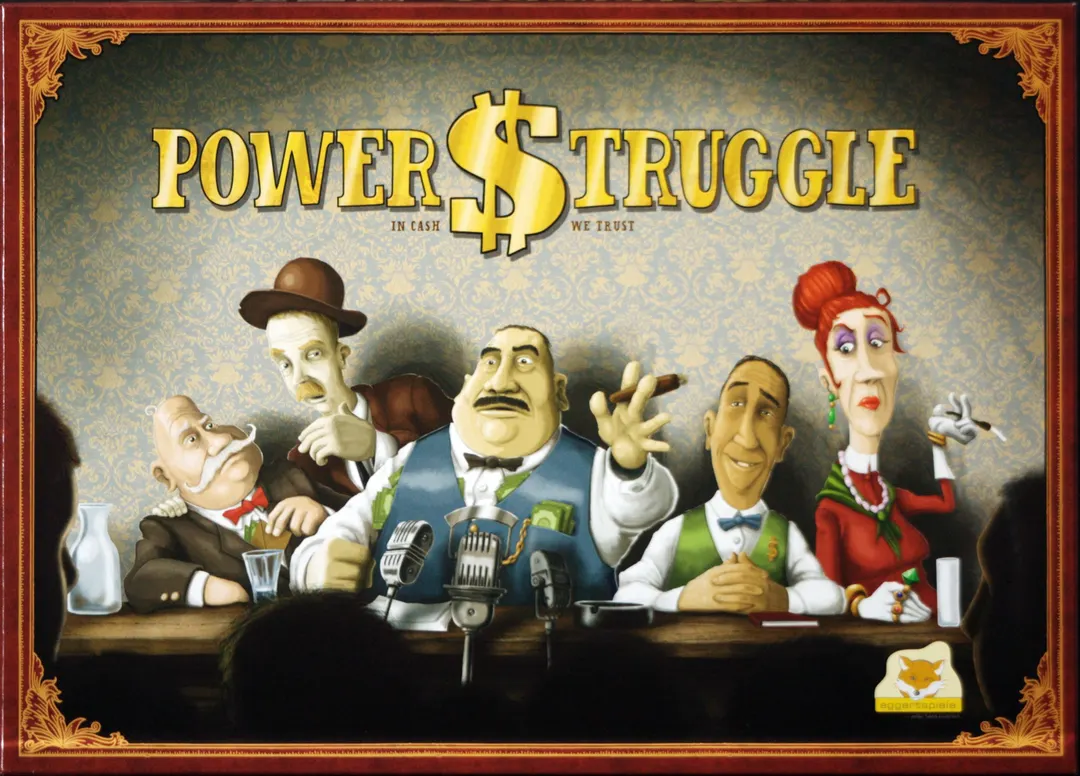
Power Struggle es un juego de mesa publicado en 2009 para 3–5 jugadores, con partidas de 105 minutos y a partir de 12 años. Fue diseñado por Maximilian Maria Thiel y Bauldric & Friends y sus mecánicas principales son Area Majority / Influence y Bribery.




En inglés
This description was originally based on a review from BoardgameNews.com. In this corporation-themed game, players compete to be the first to acquire four out of six possible victory points. You earn a point by reaching certain numbers along tracks, such as at least 7 on the influence track or 8 on the majority track. You also may earn a point by beating your secretly assigned archenemy on three specified tracks. The game lasts a number of rounds, with each round consisting of a directors' meeting, followed by 4-7 turns. At the meeting, the "company chairman" is replaced (the next token in line moves up) and the "division heads" are named (by seeing who has the majority in each column of placed cubes). Chairmen and heads get salary bonuses and a card detailing a single advantage for the cardholder. The player who's the "communications" head then secretly looks at the Event cards and determines in which order they will be played (and so how many turns will be in the current round). Other heads' cards will let them pay less for stocks, for example, or place or remove bits. After each event card is revealed, players select one action to perform, such as "hiring and relocating employees" (placing or moving cubes), resigning as a department head, using an advantage card, or bribing players for their advantage cards. These actions result in points on the scoring tracks and sometimes money (which is only used for bribery and buying blocks of stock). A bribed card has more power than an earned one, giving incentive to accept bribes (the card is less useful or even useless to the original owner, depending on the workers' happiness scale). In addition to bribery getting you a power you want, it also moves you up the corruption track. A player who rejects a bribe, however, loses one cube on the majority columns. It's not a business simulation, and gameplay isn't as dastardly as the theme implies. The event cards provide most of the humor. (The card may read that you have failed to fix the breakroom game table, or vacations were canceled, so worker satisfaction goes down, which is what you want). The feel of rising through the ranks (getting more points) is there, and there are many things to attempt to excel in, by doing various business-related (at least in name) actions. Efficient manipulating of your opportunities will win you victory points and, if you gain four, the game. Awards: Machtspiele (Power $truggle) is derived from "Die Firma", which won a special prize in the 2009 Hippodice game design competition for best full-length game.
Según el catálogo, Power Struggle admite de 3 a 5 jugadores. Este intervalo corresponde al número de jugadores indicado por la editorial, así que el juego puede prepararse para cualquier grupo dentro de ese margen. La preparación, algunas reglas y la puntuación pueden variar según el número de jugadores; consulta la configuración exacta en el reglamento de tu edición.
La duración indicada para Power Struggle es de 105 minutos, la estimación de la editorial para una partida completa. El tiempo real depende del grupo, del número de jugadores y del conocimiento de las reglas: las primeras partidas suelen alargarse y los grupos con experiencia terminan antes. La preparación y la explicación de las reglas no están incluidas.
El catálogo indica Power Struggle a partir de 12 años. Es la recomendación de la editorial y refleja la lectura necesaria, la complejidad de las reglas y las piezas pequeñas, no solo el tema. Los más pequeños a menudo pueden jugar con ayuda de un adulto: comprueba la edad recomendada en tu edición y la experiencia de tu grupo.
Power Struggle tiene una puntuación de complejidad de 3,4 sobre 5 según los jugadores de BoardGameGeek, lo que lo convierte en un juego de complejidad media. La puntuación refleja cuánto conocimiento de reglas, planificación y toma de decisiones exige una partida típica. Los juegos exigentes requieren una explicación inicial más larga, así que conviene usar una guía de preparación.
Power Struggle pertenece a estas categorías: Humor y Negotiation. Sus mecánicas principales son Area Majority / Influence y Bribery. Las categorías describen el tema y la ambientación de un juego, mientras que las mecánicas describen lo que los jugadores hacen realmente en su turno. Cada mecánica lleva a una página del catálogo con juegos similares.
Los autores acreditados de Power Struggle son: Maximilian Maria Thiel y Bauldric & Friends. Estos créditos proceden de los datos publicados del juego y nombran a las personas responsables de su diseño, no a ilustradores ni editoriales. Las páginas de autor de MeepleRules reúnen otros títulos de los mismos autores, algo útil cuando un juego te gusta y buscas otros parecidos.
El catálogo clasifica Power Struggle como juego base. Se juega por sí solo con los componentes de la caja y no requiere ningún otro título. Las expansiones, si existen, añaden contenido o reglas nuevas y aparecen por separado en el catálogo con un enlace a este juego base.