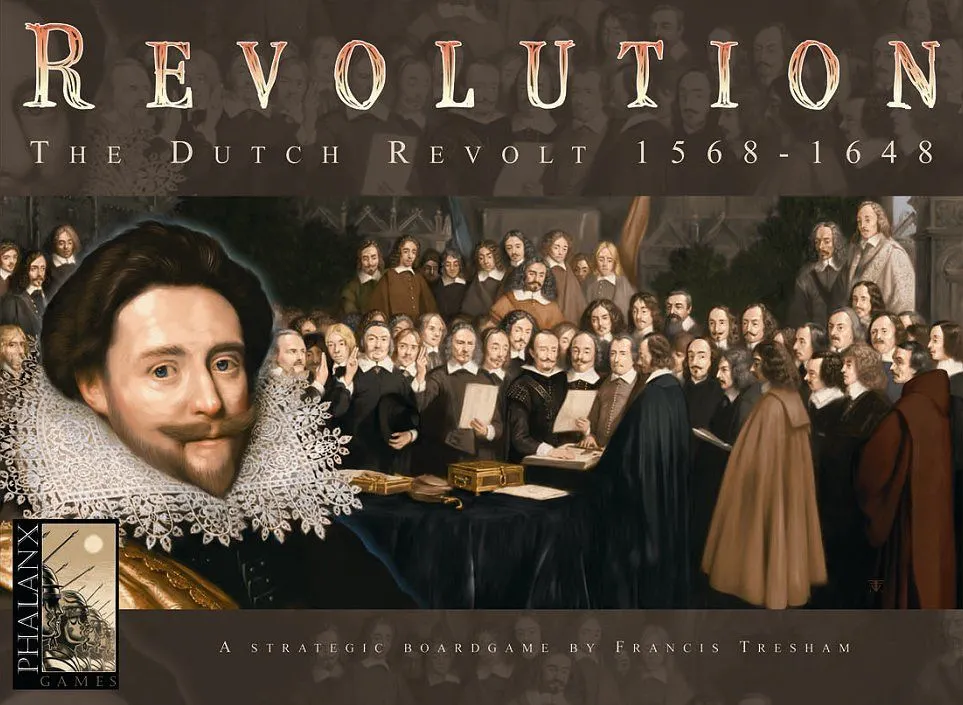
- Puesto en BGG
- BGG #3281
- Puntuación BGG
- 7,3
Revolution: The Dutch Revolt 1568-1648
2004
Ayuda con las reglas de Revolution: The Dutch Revolt 1568-1648
Explicaciones claras de turnos, efectos de cartas y situaciones dudosas, con referencias a fuentes oficiales e historial de preguntas guardado.
- 2–5 jugadores
- 240–480 min
- 12+
- Complejidad 4,2/5

Para 2 jugadores
Asistente de reglas de Revolution: The Dutch Revolt 1568-1648
¿Qué quieres saber?
Las respuestas salen del reglamento oficial, con la página para comprobarlo.
Revolution: The Dutch Revolt 1568-1648 es un juego de mesa publicado en 2004 para 2–5 jugadores, con partidas de 240 a 480 minutos y a partir de 12 años. Fue diseñado por Francis Tresham y sus mecánicas principales son Variable Player Powers, Area Majority / Influence y Simulation.
Sobre el juego
En inglés
(from Phalanx Games:) Revolution: The Dutch Revolt simulates the Eighty Years' War between Spain and the Netherlands. This epic struggle lasted from 1568 until 1648 and eventually brought independence to Holland and the northern provinces. In the south, the revolt was less successful and Belgium did not emerge as an independent state until after the Napoleonic era. During the initial stages of the struggle, William of Orange became the symbol of freedom. His main adversary was the Spanish King Philip II, who sent in the Duke of Alba with his formidable conquistadores to stop the rebellion. Revolution depicts a power struggle with many facets. Each player represents one of the principal factions involved: the Catholics, Habsburgs, Nobility, Burghers and Reformers. Each faction has its particular goals, which are often partly common. Although factions may sometimes co-operate, they are not allies for long and easily turn on each other if the situation calls for this. Historically, there were periods of open warfare and others of uneasy peace. The reforming factions gradually became more established, particularly in the north and along the coast. The once supreme Habsburg armies were slowly driven out of these areas through a series of siege battles. The defeat of the mighty Armada by a combined Dutch/English fleet in 1588 cost the Spaniards dearly. The Catholics were eventually allowed to retain some of their influence, while the local Nobility, initially catholic but with local sympathies, succeeded or failed according to their willingness to accept the changed circumstances. This game is not a detailed military re-enactment of the Eighty Years' War. It tries to capture the flavor of these interesting times in a much broader sense. It contains an element of warfare in the form of battles and sieges but the main theme is built on economic, religious and political control. The constantly shifting balance of power, caused by temporary alliances, makes Revolution an immensely challenging game, and not for the faint-hearted. Clever and timely use of available resources, including those of foreign sympathizers and allies, is needed to achieve ultimate success. Revolution: The Dutch Revolt was more than 15 years in the making, and marks Francis Tresham's long-awaited return to the forefront of game design. He is most famous for his widely acclaimed board games Civilization and 1829. Revolution: The Dutch Revolt includes 1 large gameboard, 41 playing cards, 416 colorful game pieces (56 resource pieces in each of 5 colors, 8 army pieces in each of 5 colors, 47 neutral pieces, 3 water beggars, 1 VP marker for each color, 1 game turn marker and 40 status markers), 1 player aid card and 1 rules booklet.
Categorías
Diseñadores
Editoriales
- Phalanx Games B.V.
Preguntas y respuestas
Según el catálogo, Revolution: The Dutch Revolt 1568-1648 admite de 2 a 5 jugadores. Este intervalo corresponde al número de jugadores indicado por la editorial, así que el juego puede prepararse para cualquier grupo dentro de ese margen. La preparación, algunas reglas y la puntuación pueden variar según el número de jugadores; consulta la configuración exacta en el reglamento de tu edición.
La duración indicada para Revolution: The Dutch Revolt 1568-1648 es de 240 a 480 minutos, la estimación de la editorial para una partida completa. El tiempo real depende del grupo, del número de jugadores y del conocimiento de las reglas: las primeras partidas suelen alargarse y los grupos con experiencia terminan antes. La preparación y la explicación de las reglas no están incluidas.
El catálogo indica Revolution: The Dutch Revolt 1568-1648 a partir de 12 años. Es la recomendación de la editorial y refleja la lectura necesaria, la complejidad de las reglas y las piezas pequeñas, no solo el tema. Los más pequeños a menudo pueden jugar con ayuda de un adulto: comprueba la edad recomendada en tu edición y la experiencia de tu grupo.
Revolution: The Dutch Revolt 1568-1648 tiene una puntuación de complejidad de 4,2 sobre 5 según los jugadores de BoardGameGeek, lo que lo convierte en un juego exigente. La puntuación refleja cuánto conocimiento de reglas, planificación y toma de decisiones exige una partida típica. Los juegos exigentes requieren una explicación inicial más larga, así que conviene usar una guía de preparación.
Revolution: The Dutch Revolt 1568-1648 pertenece a estas categorías: Wargame, Political y Renaissance. Sus mecánicas principales son Variable Player Powers, Area Majority / Influence y Simulation. Las categorías describen el tema y la ambientación de un juego, mientras que las mecánicas describen lo que los jugadores hacen realmente en su turno. Cada mecánica lleva a una página del catálogo con juegos similares.
Los autores acreditados de Revolution: The Dutch Revolt 1568-1648 son: Francis Tresham. Estos créditos proceden de los datos publicados del juego y nombran a las personas responsables de su diseño, no a ilustradores ni editoriales. Las páginas de autor de MeepleRules reúnen otros títulos de los mismos autores, algo útil cuando un juego te gusta y buscas otros parecidos.
El catálogo clasifica Revolution: The Dutch Revolt 1568-1648 como juego base. Se juega por sí solo con los componentes de la caja y no requiere ningún otro título. Las expansiones, si existen, añaden contenido o reglas nuevas y aparecen por separado en el catálogo con un enlace a este juego base.