
- Puesto en BGG
- BGG #408
- Puntuación BGG
- 8,0
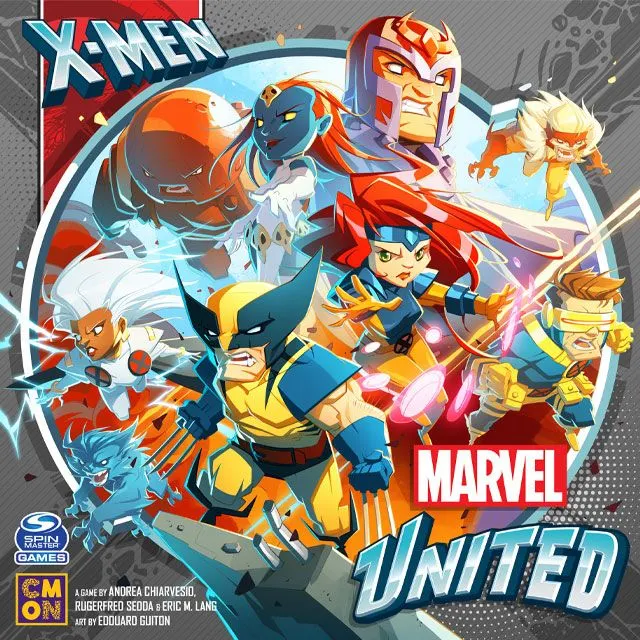
Marvel United: X-Men
- 1–5 jugadores
- 40 min
- Complejidad 2,0/5
- 2021
2014
Ayuda con las reglas de Richard I
Explicaciones claras de turnos, efectos de cartas y situaciones dudosas, con referencias a fuentes oficiales e historial de preguntas guardado.
Para 3 jugadores
¿Qué quieres saber?
Las respuestas salen del reglamento oficial, con la página para comprobarlo.
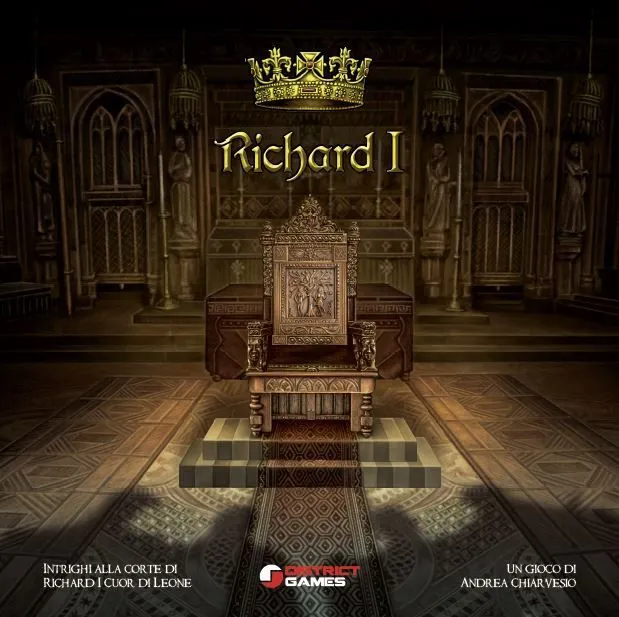
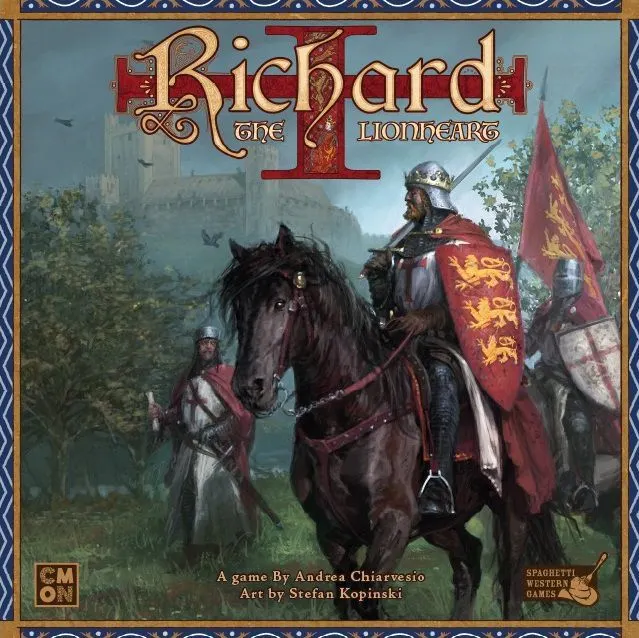
Richard I es un juego de mesa publicado en 2014 para 3–8 jugadores, con partidas de 60 minutos y a partir de 12 años. Fue diseñado por Andrea Chiarvesio y sus mecánicas principales son Variable Player Powers, Cooperative Game y Team-Based Game.


En inglés
England, a land so harsh that forged heroes and conquerors, where the people are so indomitable that not even the Roman Empire managed to subjugate them. England has built an extensive empire on which the sun never set, vastly extending its domain beyond the British Isles on the spur of the Plantagenets, a royal lineage that dominated much of medieval European history, a dynasty forged from steel and blood, a lineage that would prevail for more than half a millennium. Plantagenet is a name that inspires admiration among enemies and fear among allies. Henry II, the first Plantagenet king to extend and stabilize his domains, contracted a political marriage with Eleanor of Aquitaine, a marriage intended to generate heirs to the throne. This strategic alliance by marriage produced four heirs: children who would rebel against their own father, more than once, leading to war, bloodshed and pacification, the stuff history is made of. Who is going to inherit the throne? Who will prove to be worthy of the illustrious name of Plantagenet? After years of battles and rivalry, only two of the heirs survived. The first, opposed by his own father, is a man with a destiny marked out by his own land, which he rarely set foot on as he was preoccupied for his entire life in conquests beyond the British Isles. The hope of an entire era would depend on his choices. The difference between being the usurper or the chosen one would depend on his actions. He is Richard I of England, better known as Richard the Lionheart. The other, the last born, was far removed from the throne. Overshadowed by his own family, derided by his own people and saddled with the unfortunate title of “Lackland”, John Lackland had the opportunity of a lifetime: Richard left for the Crusades and John could claim the throne for himself in Richard’s absence. But would he have the mettle of a king? Would he surpass his more illustrious brother Richard? Would he be able to counter his brother’s supporters? A wise choice as to with whom to form an alliance is crucial to one’s place in history. Only brave choices will crown the true king of England, and only those who loyally and valiantly supported him in the conquest and administration of the kingdom would be remembered in history. This is a choice that only the strong and the wise would make.This is history. In Richard I, the players assume the role of the characters who remained in England when King Richard I left for the Crusades. They have to decide which side to take without knowing whether Richard I will return home a victor with glory and riches, or he won't come back at all (but there are many possible intermediate outcomes). During the game, the players take turns to influence the different characters available in order to earn prestige points (PPs) for themselves, but also to use their powers to influence the Crusade from far away by sending resources. A player might even decide to betray his own side, if worrying news were to come from the East... At the end of the game, the outcome of the Crusade leads to an increase of PPs for the players who were deployed by the faction which has achieved its goal, but the game has only one winner: the player who has accumulated the most PPs, regardless of the faction to which he belongs! The object of the game is to amass the most Prestige Points (PP) by wisely choosing alliances and exerting influence on the performance of the Crusade.
Según el catálogo, Richard I admite de 3 a 8 jugadores. Este intervalo corresponde al número de jugadores indicado por la editorial, así que el juego puede prepararse para cualquier grupo dentro de ese margen. La preparación, algunas reglas y la puntuación pueden variar según el número de jugadores; consulta la configuración exacta en el reglamento de tu edición.
La duración indicada para Richard I es de 60 minutos, la estimación de la editorial para una partida completa. El tiempo real depende del grupo, del número de jugadores y del conocimiento de las reglas: las primeras partidas suelen alargarse y los grupos con experiencia terminan antes. La preparación y la explicación de las reglas no están incluidas.
El catálogo indica Richard I a partir de 12 años. Es la recomendación de la editorial y refleja la lectura necesaria, la complejidad de las reglas y las piezas pequeñas, no solo el tema. Los más pequeños a menudo pueden jugar con ayuda de un adulto: comprueba la edad recomendada en tu edición y la experiencia de tu grupo.
Richard I tiene una puntuación de complejidad de 2,6 sobre 5 según los jugadores de BoardGameGeek, lo que lo convierte en un juego algo ligero. La puntuación refleja cuánto conocimiento de reglas, planificación y toma de decisiones exige una partida típica. Los juegos exigentes requieren una explicación inicial más larga, así que conviene usar una guía de preparación.
Richard I pertenece a estas categorías: Medieval. Sus mecánicas principales son Variable Player Powers, Cooperative Game y Team-Based Game. Las categorías describen el tema y la ambientación de un juego, mientras que las mecánicas describen lo que los jugadores hacen realmente en su turno. Cada mecánica lleva a una página del catálogo con juegos similares.
Los autores acreditados de Richard I son: Andrea Chiarvesio. Estos créditos proceden de los datos publicados del juego y nombran a las personas responsables de su diseño, no a ilustradores ni editoriales. Las páginas de autor de MeepleRules reúnen otros títulos de los mismos autores, algo útil cuando un juego te gusta y buscas otros parecidos.
El catálogo clasifica Richard I como juego base. Se juega por sí solo con los componentes de la caja y no requiere ningún otro título. Las expansiones, si existen, añaden contenido o reglas nuevas y aparecen por separado en el catálogo con un enlace a este juego base.