
- Puesto en BGG
- BGG #2444
- Puntuación BGG
- 6,3
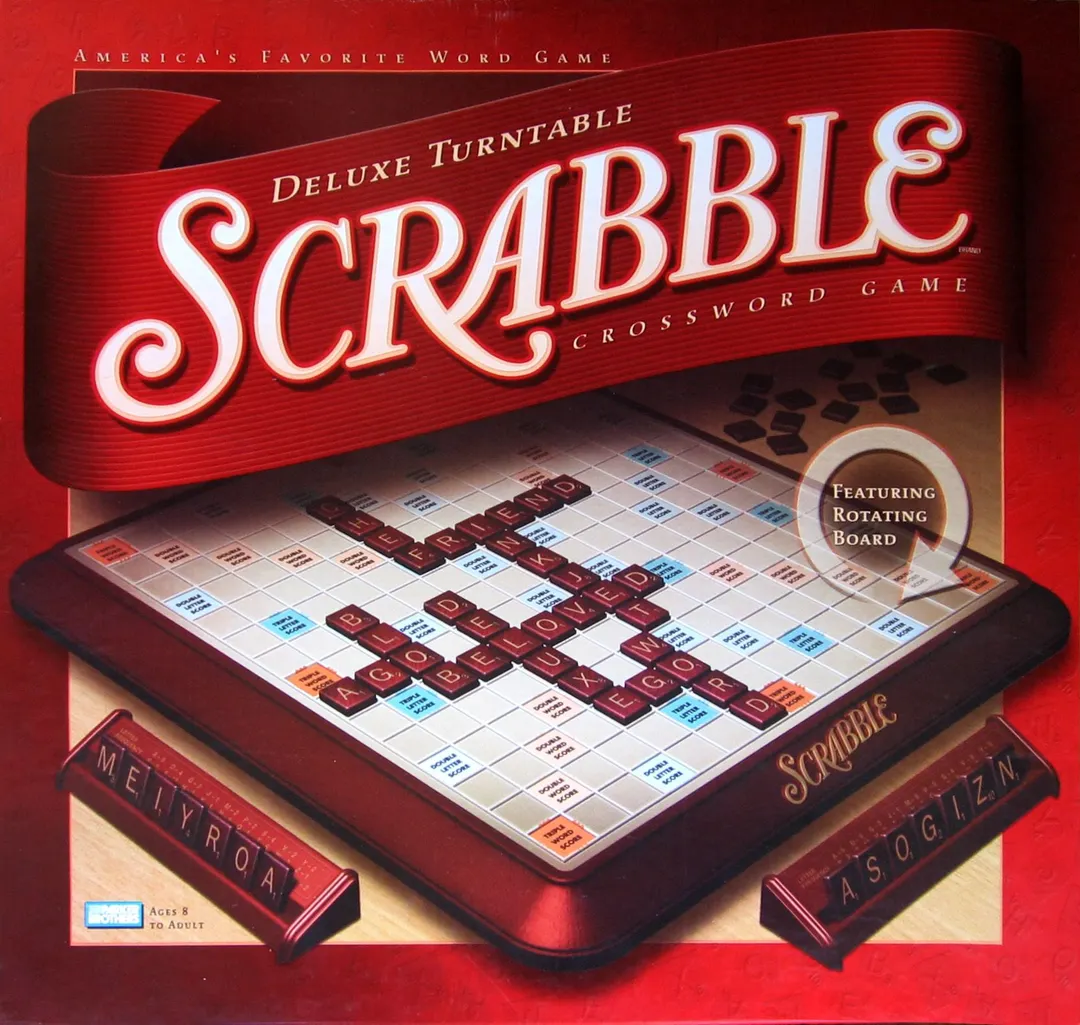
Scrabble
- 2–4 jugadores
- 90 min
- Complejidad 2,1/5
- 1948
Ayuda con las reglas de Scrabble Streaks Word Search
Explicaciones claras de turnos, efectos de cartas y situaciones dudosas, con referencias a fuentes oficiales e historial de preguntas guardado.
¿Qué quieres saber?
Las respuestas salen del reglamento oficial, con la página para comprobarlo.
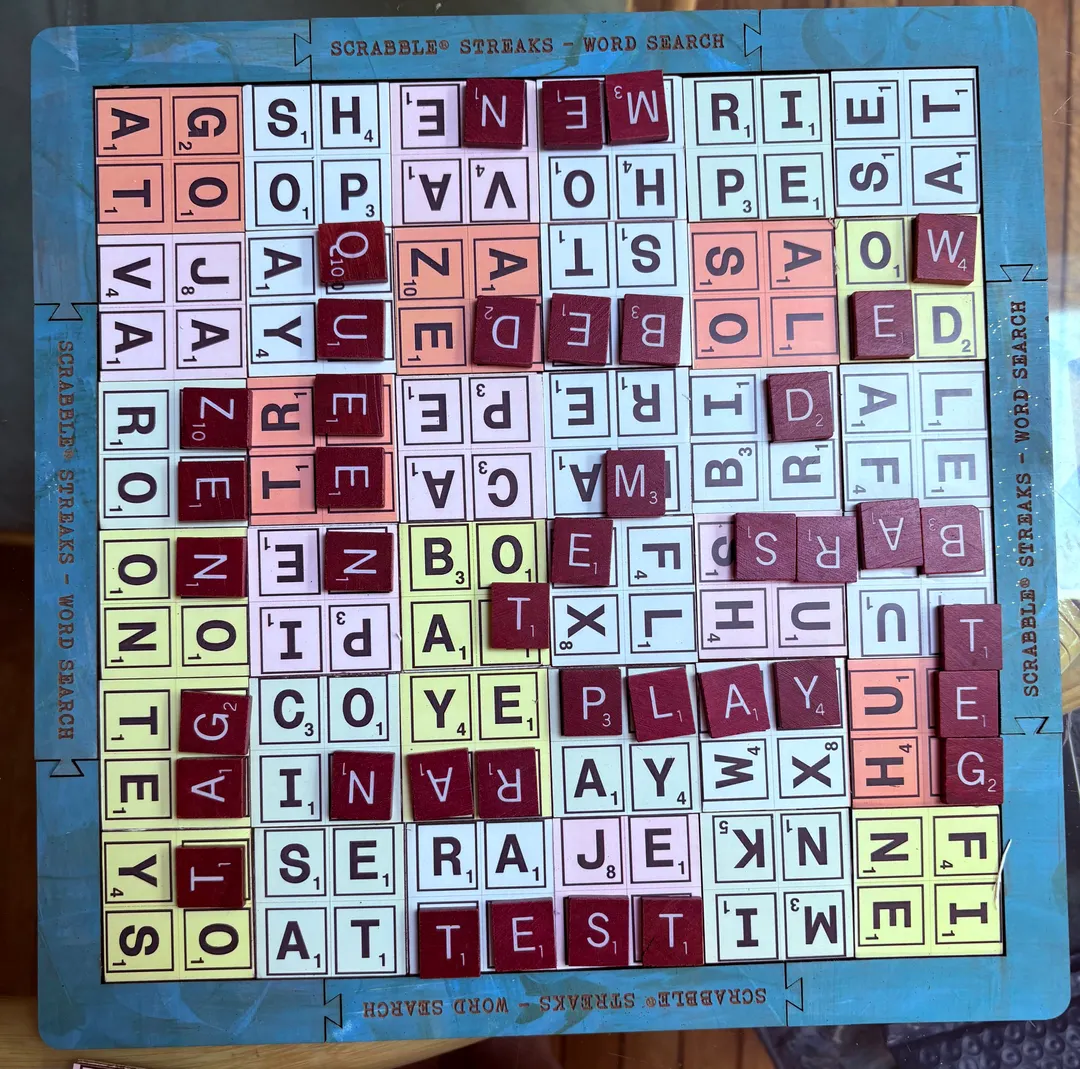
Scrabble Streaks Word Search es una expansión de Bananagrams publicada en 2025 para 1–6 jugadores, con partidas de 20 a 60 minutos y a partir de 6 años. Fue diseñado por Mark Kolb y sus mecánicas principales son Tile Placement y Spelling.
En inglés
A word search game played using your own Scrabble or Bananagram tiles. The game board is composed of 36 movable squares, each with four bigrams (2-letter fragments) and/or single letters within boxes. LASERCUT WOODEN COMPONENTS: Eight-piece frame and 40 base tiles. Also included is a list of valid 3-letter words and common acronyms (eg FAQ, VIP). GOAL: Make words from adjacent letters (streaks). You can play solo or with multiple players. The game is played in strategic yet simultaneous phases: - letter tile placement - word search. SET UP: Assemble the game board by connecting the frame and inserting 36 random base tiles in any orientation. Four base tiles will remain unused. Flip all your Scrabble (or Bananagram) tiles, except blanks, upside down. Grab a paper and pen. SOLO GAME PLAY: Draw a tile and place it over a bigram inside a box such that the combination of your tile and the bigram makes a 3-letter word or your tile and the single letter makes a 2-letter word. Your letter can be combined to the start or end of the bigram. For example: F+OX = FOX, while KI+T = KIT or B+E = BE. Letter placement is the first phase. In the second phase, look for words. Attempt to place tiles such that a word can be formed from other adjacent letters in a straight line. The word can be in any of eight directions. If you cannot place a letter, discard the tile. This will occur when no more bigrams or single letters are available for tile placement. SOLO SCORING: Upon finding a word of at least three letters, record its score. With Scrabble tiles, add up the point values. With Bananagram tiles and for younger children, the score is the number of letters in the word. SOLO END OF GAME: Play until all tiles have been drawn. Play again to beat your score. MULTI-PLAYER GAME PLAY: To avoid waiting, game play is simultaneous. Each player draws one tile and places it over a bigram or letter inside a box such that the combination of the tile and the bigram/letter makes a word. The word must be called out for validation by all players. the letter can be combined to the start or end of the bigram. For example J+AM = JAM while BO+W = BOW or H+I = HI. Letter placement is the first phase. In the second phase, look out for words. Attempt to place tiles such that a word can be formed from other adjacent letters. The word can be in any of eight directions. Call out the word and score it. MULTI-PLAYER SCORING: Upon finding a word of at least three letters, call out the word. With Scrabble tiles, add up the point value. With Bananagram tiles and for younger children, the score is the number of letters in the word. If you cannot place a letter, discard the tile. MULTI-PLAYER END OF GAME: Once all tiles have been placed, the winner has the highest score. OPTIONAL PLAY: When playing with younger children, allow for them finding two-letter words as well as longer words. —description from the publisher
Según el catálogo, Scrabble Streaks Word Search admite de 1 a 6 jugadores. Este intervalo corresponde al número de jugadores indicado por la editorial, así que el juego puede prepararse para cualquier grupo dentro de ese margen. La preparación, algunas reglas y la puntuación pueden variar según el número de jugadores; consulta la configuración exacta en el reglamento de tu edición.
La duración indicada para Scrabble Streaks Word Search es de 20 a 60 minutos, la estimación de la editorial para una partida completa. El tiempo real depende del grupo, del número de jugadores y del conocimiento de las reglas: las primeras partidas suelen alargarse y los grupos con experiencia terminan antes. La preparación y la explicación de las reglas no están incluidas.
El catálogo indica Scrabble Streaks Word Search a partir de 6 años. Es la recomendación de la editorial y refleja la lectura necesaria, la complejidad de las reglas y las piezas pequeñas, no solo el tema. Los más pequeños a menudo pueden jugar con ayuda de un adulto: comprueba la edad recomendada en tu edición y la experiencia de tu grupo.
Scrabble Streaks Word Search pertenece a estas categorías: Word Game y Expansion for Base-game. Sus mecánicas principales son Tile Placement y Spelling. Las categorías describen el tema y la ambientación de un juego, mientras que las mecánicas describen lo que los jugadores hacen realmente en su turno. Cada mecánica lleva a una página del catálogo con juegos similares.
Los autores acreditados de Scrabble Streaks Word Search son: Mark Kolb. Estos créditos proceden de los datos publicados del juego y nombran a las personas responsables de su diseño, no a ilustradores ni editoriales. Las páginas de autor de MeepleRules reúnen otros títulos de los mismos autores, algo útil cuando un juego te gusta y buscas otros parecidos.
El catálogo clasifica Scrabble Streaks Word Search como expansión de Bananagrams. Las expansiones añaden contenido, reglas o escenarios al juego base y normalmente no se pueden jugar solas, así que necesitas Bananagrams para usarla. Comprueba que tu edición de Bananagrams sea compatible, porque algunas expansiones se revisaron entre ediciones.