
- Puesto en BGG
- BGG #13.041
- Puntuación BGG
- 7,6
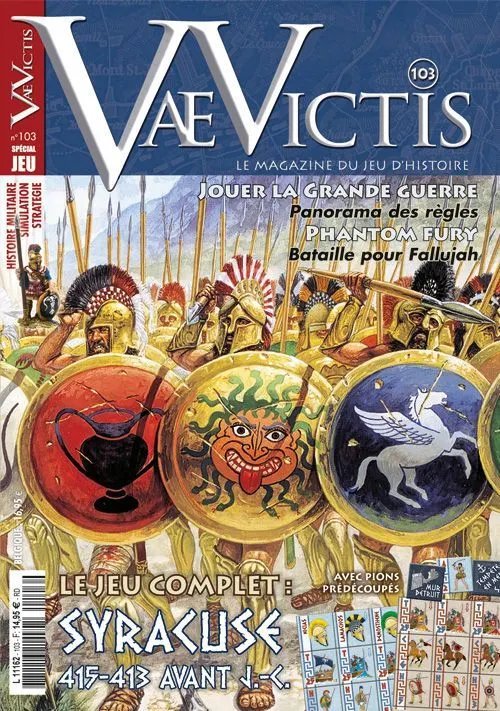
Syracuse: 415-413 avant J.-C.
- 2 jugadores
- 120 min
- Complejidad 2,1/5
- 2012
2004
Ayuda con las reglas de Semper Victor
Explicaciones claras de turnos, efectos de cartas y situaciones dudosas, con referencias a fuentes oficiales e historial de preguntas guardado.
Para 2 jugadores
¿Qué quieres saber?
Las respuestas salen del reglamento oficial, con la página para comprobarlo.
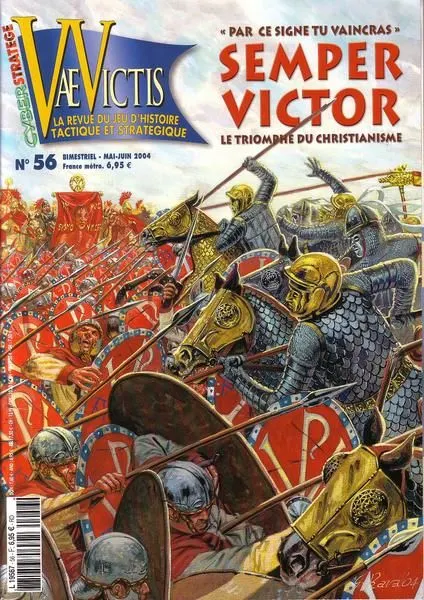
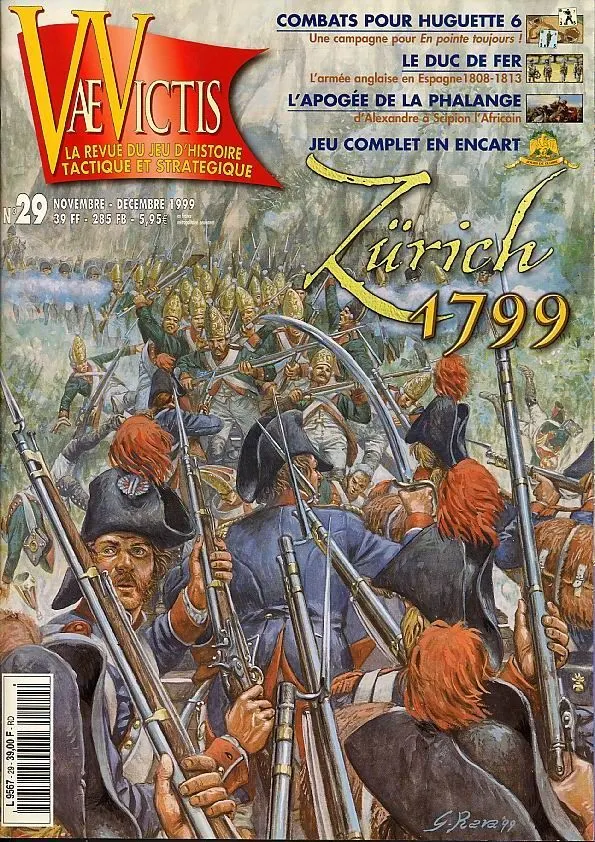
Semper Victor es un juego de mesa publicado en 2004 para 2 jugadores, con partidas de 1200 minutos y a partir de 12 años. Fue diseñado por Frédéric Bey y sus mecánicas principales son Area Movement y Dice Rolling.
En inglés
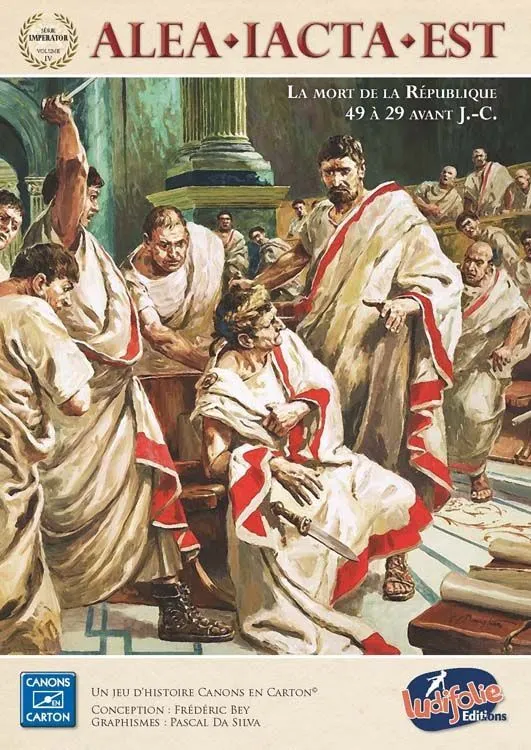
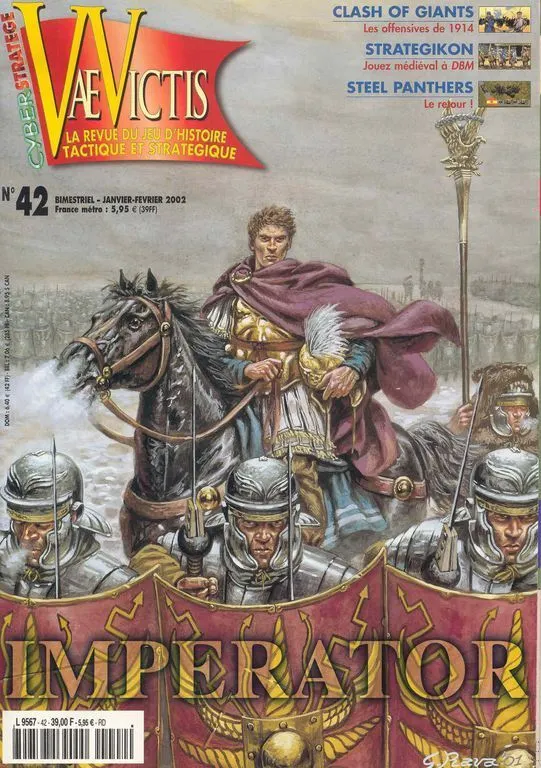
The second game in the series that includes Imperator and Ultimus Romanorum: La Chute de Rome, Semper Victor offers a grand strategic view of the Fourth Century Roman Empire. The full campaign opens with the abdication of Emperor Diocletian (305 A.D.) and continues to the death of Julian the Apostate (in the 360's or 370's - the date is variable). Scenarios cover shorter periods, such as the fateful war between Constantine the Great and Licinius (313-324). The map shows the Roman Empire in 305, divided into zones that, in turn, are grouped into 12 Dioceses, the Imperial administrative districts of that time. Surrounding the Empire are the zones of barbarian peoples and the rival Persian Empire. A turn is one year. Units have Points de Force (Strength Points) representing about 1,000 men each. Roman units come in three types: Ripenses, who cannot leave their home diocese, Pseudo-Comitatenses, whose ability to range far from home is limited, and Comitatenses, who can go anywhere in the Empire and beyond. The opposing sides are unusual and may puzzle players who know little or nothing about this era. One player (dubbed "Primus") represents the senior Emperor ("Primus Augustus") and his allies, who may include another Augustus, one or two Caesars (junior Emperors), other Roman generals, and even non-Roman peoples. The other player ("Secundus", misspelled "Secondus" in the rules) has his own set of Augusti, Caesars, generals and non-Romans. An important limitation is that each Augustus and Caesar must have a capital of his own, and only six capital cites are available at the beginning of the game. A seventh, Constantinople, may be constructed, though its advent is not a certainty. (Rome, by the way, is not one of the capitals; its political importance had long since faded.) In the course of play, Primus and Secundus may swap positions as the result of either a successful usurpation plotted by the Secundus or the death of the Primus Augustus without an Augustus or Caesar to succeed him. In general, it is better to be Primus than Secundus, but it isn't impossible for a perpetual Secundus to win. The Roman leaders are historical figures (38 in all), who enter the game at the same time as in actuality and run an increasing risk of death from natural causes if they aren't killed off sooner. Names are rendered in their French versions, e. g., "Constance Chlore" for Constantius Chlorus. A Leader is rated for "Capacité de Commandement" (number of units he can command), "Capacité Politique" (a variety of functions, such as determination of the initiative each turn), "Valeur Stratégique" (ability to evade combat plus other functions) and "Bonus Tactique" (useful in battles). Many Leaders are also marked as Christian or Pagan, though religion has much less of an impact than it did in real life. Very important to play are "stratagems", which make it possible to embark on a usurpation against the other player, assassinate rival Leaders, spread plagues, trigger barbarian uprisings, pacify barbarians already at war with the Empire, inspire desertions from enemy ranks, and much else. Turns have a variable number of movement/combat phases, determined by adding the valeurs stratégiques of the Primus Augustus and the highest rated Leader in the Secundus camp. The pace of the game thus depends on the quality of the current Leaders. Movement and combat are straightforward. Leaders, accompanied by a number of units up to their capacité de commandement, may move up to four zones, halting and fighting when they encounter enemies. Units without Leaders may move only one zone at a time. Battles are often bloody, but weakened or eliminated units quickly return to full strength. Players tally Victory Points at the end of each Turn. The list of achievements that garner VP's is long: victory in major battles (35 PF's or more engaged), control of Dioceses, defeat of non-Romans, presence of non-Roman troops in the other player's controlled territory, and so on. Players must mount and cut the game's counters themselves, which is a non-trivial task. As a minor annoyance, the counters are a bit too big for the zones on the map. The rules are in French, though English translations are easy to find.
Según el catálogo, Semper Victor admite 2 jugadores. Es el número de jugadores indicado por la editorial, así que el juego está diseñado exactamente para esa cantidad de participantes. Las variantes para otros tamaños de grupo, si existen, se describen en el reglamento de tu edición; consúltalo antes de preparar otra configuración.
La duración indicada para Semper Victor es de 1200 minutos, la estimación de la editorial para una partida completa. El tiempo real depende del grupo, del número de jugadores y del conocimiento de las reglas: las primeras partidas suelen alargarse y los grupos con experiencia terminan antes. La preparación y la explicación de las reglas no están incluidas.
El catálogo indica Semper Victor a partir de 12 años. Es la recomendación de la editorial y refleja la lectura necesaria, la complejidad de las reglas y las piezas pequeñas, no solo el tema. Los más pequeños a menudo pueden jugar con ayuda de un adulto: comprueba la edad recomendada en tu edición y la experiencia de tu grupo.
Semper Victor tiene una puntuación de complejidad de 2,8 sobre 5 según los jugadores de BoardGameGeek, lo que lo convierte en un juego algo ligero. La puntuación refleja cuánto conocimiento de reglas, planificación y toma de decisiones exige una partida típica. Los juegos exigentes requieren una explicación inicial más larga, así que conviene usar una guía de preparación.
Semper Victor pertenece a estas categorías: Wargame y Ancient. Sus mecánicas principales son Area Movement y Dice Rolling. Las categorías describen el tema y la ambientación de un juego, mientras que las mecánicas describen lo que los jugadores hacen realmente en su turno. Cada mecánica lleva a una página del catálogo con juegos similares.
Los autores acreditados de Semper Victor son: Frédéric Bey. Estos créditos proceden de los datos publicados del juego y nombran a las personas responsables de su diseño, no a ilustradores ni editoriales. Las páginas de autor de MeepleRules reúnen otros títulos de los mismos autores, algo útil cuando un juego te gusta y buscas otros parecidos.
El catálogo clasifica Semper Victor como juego base. Se juega por sí solo con los componentes de la caja y no requiere ningún otro título. Las expansiones, si existen, añaden contenido o reglas nuevas y aparecen por separado en el catálogo con un enlace a este juego base.