- Puesto en BGG
- BGG #1855
- Puntuación BGG
- 7,4
Shogi
1587
Ayuda con las reglas de Shogi
Explicaciones claras de turnos, efectos de cartas y situaciones dudosas, con referencias a fuentes oficiales e historial de preguntas guardado.
- 2 jugadores
- 60 min
- 8+
- Complejidad 3,8/5

Para 2 jugadores
Asistente de reglas de Shogi
¿Qué quieres saber?
Las respuestas salen del reglamento oficial, con la página para comprobarlo.
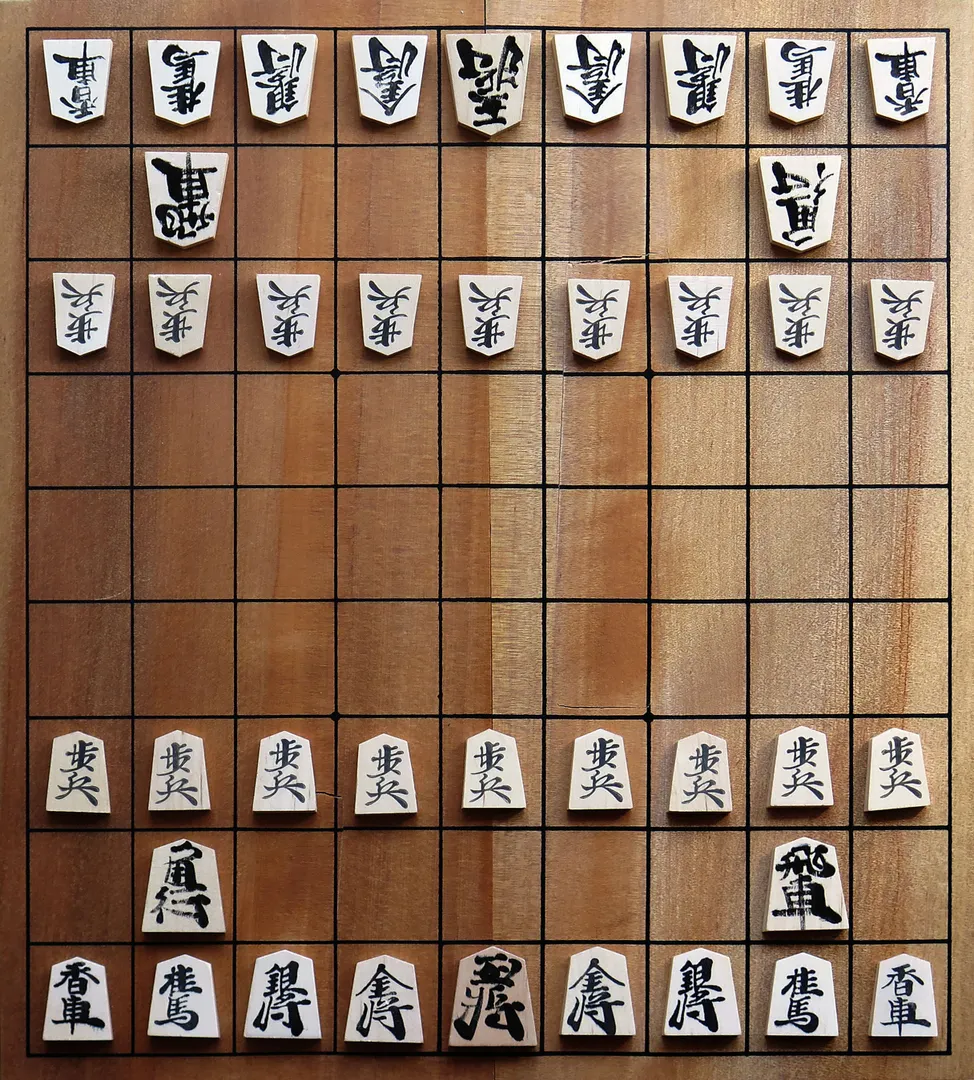
Shogi es un juego de mesa publicado en 1587 para 2 jugadores, con partidas de 60 minutos y a partir de 8 años. Sus mecánicas principales son Square Grid, Grid Movement y Pattern Movement.
Sobre el juego
En inglés
Of Japanese origins, Shogi is played on a 9 by 9 board, and the object is to capture the opponent's king. There are two main differences with Western chess. First, not only pawns but almost every piece can promote if it reaches the opponents three last rows. Second and most distinctive characteristic is that captured pieces become property of the capturing player and during his turn he can "parachute" or "drop" them back to the board instead of performing a normal move. Because of this feature, similar to Bughouse, the game can last longer than a Chess game, the board generally stays fairly crowded and there is no simplification going into the endgame. However, the endgame is typically more rapid with many possibilities for attack and ways to achieve a checkmate, which also makes draws/ties very rare. According to "A World of Chess" by Jean-Louis Cazaux & Rick Knowlton (2017, ISBN 978-0-7864-9427-9), Bishop, Rook and Drunk Elephant were introduced to the 9x9 Shogi creating Sho Shogi, the immediate predecessor of Shogi, in the middle of the 15th century. Modern Shogi where created with the introduction of the drop rule and the removal of the Drunk Elephant piece in Sho Shogi. This happened between 1567 and 1587 (earliest recording of modern Shogi). The latter date is based upon a picture in the diary of the samurai Matsudaira Ietada, dated 1587, which shows a game identical to the one of today.
Categorías
Editoriales
- (Unknown)
- (Self-Published)
- Hanayama
- SYU Creation
- F.X. Schmid
- (Public Domain)
- Invicta Games
- Global Partner
- L. P. Septímio
- Marigó
- nestorgames
- The Games Gang, LTD
- Philos
- Nintendo Co., Ltd.
- Yellow Mountain Imports
- Japon Brand
- U3
- Ishi Press International
- L'Impensé Radical
- The Elephant Chess Club
- Ancient Chess
- Gentosha Education
- Volume-One Products
- Origineering Enterprises Ltd
- Aztral Games
- The Shogi Association
- LPSA
- pieco design
- Nekomado
- Pàcly
- Logy Games
- XVIe
- 小学館 (Shogakukan)
- Kumon
- Eyeup
- Shogi.cz
- ilexberry B.V.
Preguntas y respuestas
Según el catálogo, Shogi admite 2 jugadores. Es el número de jugadores indicado por la editorial, así que el juego está diseñado exactamente para esa cantidad de participantes. Las variantes para otros tamaños de grupo, si existen, se describen en el reglamento de tu edición; consúltalo antes de preparar otra configuración.
La duración indicada para Shogi es de 60 minutos, la estimación de la editorial para una partida completa. El tiempo real depende del grupo, del número de jugadores y del conocimiento de las reglas: las primeras partidas suelen alargarse y los grupos con experiencia terminan antes. La preparación y la explicación de las reglas no están incluidas.
El catálogo indica Shogi a partir de 8 años. Es la recomendación de la editorial y refleja la lectura necesaria, la complejidad de las reglas y las piezas pequeñas, no solo el tema. Los más pequeños a menudo pueden jugar con ayuda de un adulto: comprueba la edad recomendada en tu edición y la experiencia de tu grupo.
Shogi tiene una puntuación de complejidad de 3,8 sobre 5 según los jugadores de BoardGameGeek, lo que lo convierte en un juego exigente. La puntuación refleja cuánto conocimiento de reglas, planificación y toma de decisiones exige una partida típica. Los juegos exigentes requieren una explicación inicial más larga, así que conviene usar una guía de preparación.
Shogi pertenece a estas categorías: Abstract Strategy. Sus mecánicas principales son Square Grid, Grid Movement y Pattern Movement. Las categorías describen el tema y la ambientación de un juego, mientras que las mecánicas describen lo que los jugadores hacen realmente en su turno. Cada mecánica lleva a una página del catálogo con juegos similares.
El catálogo clasifica Shogi como juego base. Se juega por sí solo con los componentes de la caja y no requiere ningún otro título. Las expansiones, si existen, añaden contenido o reglas nuevas y aparecen por separado en el catálogo con un enlace a este juego base.