

- Puesto en BGG
- BGG #109
- Puntuación BGG
- 7,9
Aeon's End
- 1–4 jugadores
- 60 min
- Complejidad 2,8/5
- 2016
2016
Ayuda con las reglas de Steam Court
Explicaciones claras de turnos, efectos de cartas y situaciones dudosas, con referencias a fuentes oficiales e historial de preguntas guardado.
¿Qué quieres saber?
Las respuestas salen del reglamento oficial, con la página para comprobarlo.
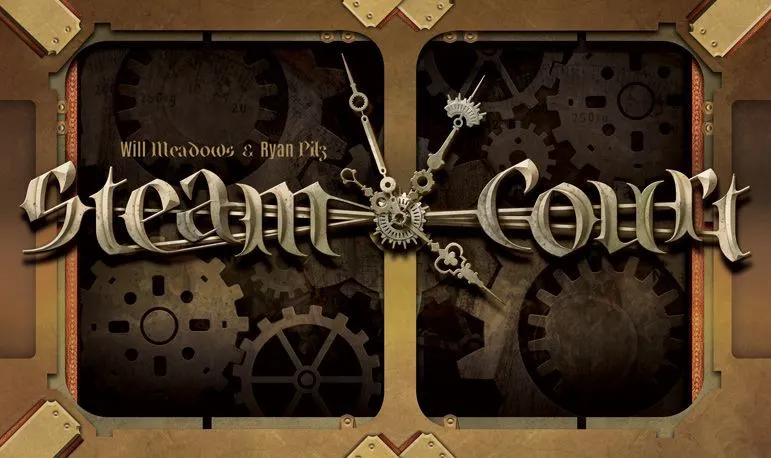
Steam Court es un juego de mesa publicado en 2016 para 1–12 jugadores, con partidas de 30 a 90 minutos y a partir de 13 años. Fue diseñado por Will Meadows y Ryan Pilz y sus mecánicas principales son Variable Player Powers, Hand Management y Solo / Solitaire Game.










En inglés
In a place where politics, magic and science are covered in a heavy layer of coal dust lies the world of Steam Court. Steam Court is a 1–12 player card game that mixes elements of traditional trick-taking, with character based abilities and victory point win conditions. Steam Court is a game of Victorian hierarchy where the more powerful your position, the greater your opportunity in the game. You'll want to try and hold onto the throne, but don't play your cards right and you'll end up serving the lousy Tea Boy. Each round, players rotate position at the table, and depending on their seat they gain/lose privileges. Even though the game is stacked in favor of those at the top, the luck of the deal, use of special cards, and player strategy are guaranteed to make it interesting. There are multiple variations on how to play, but the typical game involves four rounds of cards and usually takes around 60 minutes. The original artwork, intriguing theme, and clever game play will have you ratcheting for the top in Steam Court. Goal: get rid of the cards in your hand before other players do. There are many strategies you can employ do this, but the most common is to be the controlling player to start the trick. The player who wins the trick starts the next trick. This allows you to decide how many cards of the same number you will play. Then all other players must match the quantity of cards played and also beat the number that is on the cards. For example, if a player lays three 1s, then the next player must lay three cards of a higher number - like three 2s or three 3s. What gives this game an extra dimension are the variable character privileges. Each Engineer is granted a different privilege by their Courtier that can be employed at the beginning of the Quarter or throughout the game. For example, the Duke can lay matching numbered cards instead of having to play higher numbered cards on a set of cards. End of the Quarter: After everyone's cards have been played the Quarter ends and players re-seat based on the order they went out in (first player out becomes the Queen, and so on). They then gain the privileges of a different character for the next Quarter. 7-12 players: When playing with a large group a new element is added to the game -- a second table full of Renegades. Players who do poorly in the Royal Court are banished to the Renegade table, while the top two engineers at the Renegade Table are promoted to the Royal Court. In Steam Court, anything can happen. The lowest of low can climb to the top, or the Queen’s engineer can wind up working for the vagabond.
Según el catálogo, Steam Court admite de 1 a 12 jugadores. Este intervalo corresponde al número de jugadores indicado por la editorial, así que el juego puede prepararse para cualquier grupo dentro de ese margen. La preparación, algunas reglas y la puntuación pueden variar según el número de jugadores; consulta la configuración exacta en el reglamento de tu edición.
La duración indicada para Steam Court es de 30 a 90 minutos, la estimación de la editorial para una partida completa. El tiempo real depende del grupo, del número de jugadores y del conocimiento de las reglas: las primeras partidas suelen alargarse y los grupos con experiencia terminan antes. La preparación y la explicación de las reglas no están incluidas.
El catálogo indica Steam Court a partir de 13 años. Es la recomendación de la editorial y refleja la lectura necesaria, la complejidad de las reglas y las piezas pequeñas, no solo el tema. Los más pequeños a menudo pueden jugar con ayuda de un adulto: comprueba la edad recomendada en tu edición y la experiencia de tu grupo.
Steam Court tiene una puntuación de complejidad de 1,5 sobre 5 según los jugadores de BoardGameGeek, lo que lo convierte en un juego ligero. La puntuación refleja cuánto conocimiento de reglas, planificación y toma de decisiones exige una partida típica. Los juegos exigentes requieren una explicación inicial más larga, así que conviene usar una guía de preparación.
Steam Court pertenece a estas categorías: Card Game, Party Game y Science Fiction. Sus mecánicas principales son Variable Player Powers, Hand Management y Solo / Solitaire Game. Las categorías describen el tema y la ambientación de un juego, mientras que las mecánicas describen lo que los jugadores hacen realmente en su turno. Cada mecánica lleva a una página del catálogo con juegos similares.
Los autores acreditados de Steam Court son: Will Meadows y Ryan Pilz. Estos créditos proceden de los datos publicados del juego y nombran a las personas responsables de su diseño, no a ilustradores ni editoriales. Las páginas de autor de MeepleRules reúnen otros títulos de los mismos autores, algo útil cuando un juego te gusta y buscas otros parecidos.
El catálogo clasifica Steam Court como juego base. Se juega por sí solo con los componentes de la caja y no requiere ningún otro título. Las expansiones, si existen, añaden contenido o reglas nuevas y aparecen por separado en el catálogo con un enlace a este juego base.