
- Puesto en BGG
- BGG #28.957
- Puntuación BGG
- 4,9
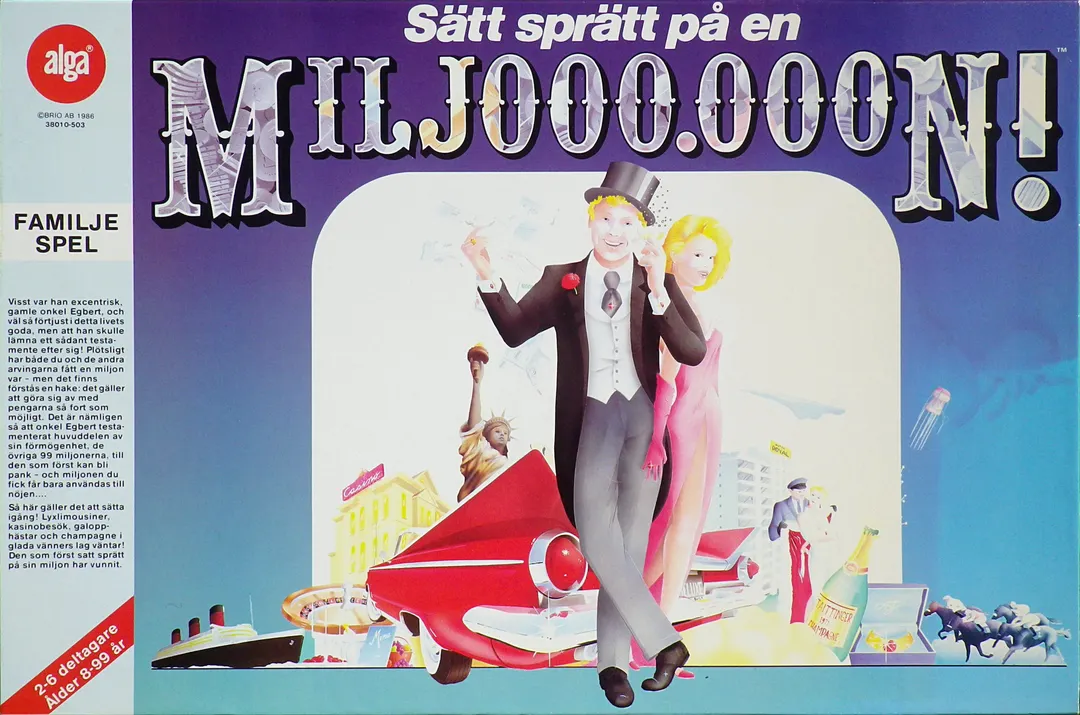
Sätt sprätt på en miljon!
- 2–6 jugadores
- 45–60 min
- Complejidad 1,0/5
- 1986
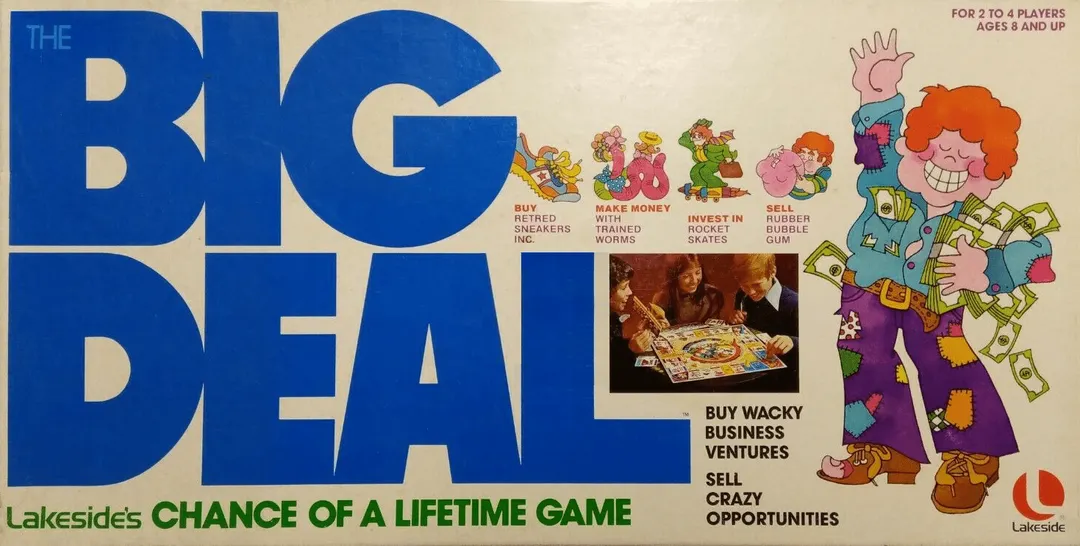
1977
Ayuda con las reglas de The Big Deal
Explicaciones claras de turnos, efectos de cartas y situaciones dudosas, con referencias a fuentes oficiales e historial de preguntas guardado.
Para 2 jugadores
¿Qué quieres saber?
Las respuestas salen del reglamento oficial, con la página para comprobarlo.
The Big Deal es un juego de mesa publicado en 1977 para 2–4 jugadores, con partidas de 90 minutos y a partir de 8 años. Sus mecánicas principales son Roll / Spin and Move, Betting and Bluffing y Stock Holding.


En inglés
A game of quickly changing fortunes, where you try to climb the ladder of success by buying into wacky business opportunities (Rent-A-Monster, Kangaroo Airlines, Paint-On Socks, etc.) and hopefully selling them for a fortune. (How little things have changed since...) Your net worth is kept track of using a slide rule of sorts, dubbed the "ladder of success". The first player to move into the Ritz by buying or winning steps on his ladder wins. You can buy into up to four opportunities at once; when you land on another player's opportunity, you can attempt to "bail him out" of it by paying the bail out price and beating him on the dice. The "Chance of a Lifetime" circle is entered on doubles or by landing on an entry space; if you enter it, you may roll as often as you wish, hoping to land on the Big Deal space (which gives you 3 ladder steps) or another good space (where you sell your opportunities for varying profit). Of course, the circle also includes bad spaces, so there is considerable risk... A few other spaces round out the board, giving you the opportunity to challenge other players (swapping a ladder step) and other things like that. The game is sort of a cross between Can't Stop and Monopoly.
Según el catálogo, The Big Deal admite de 2 a 4 jugadores. Este intervalo corresponde al número de jugadores indicado por la editorial, así que el juego puede prepararse para cualquier grupo dentro de ese margen. La preparación, algunas reglas y la puntuación pueden variar según el número de jugadores; consulta la configuración exacta en el reglamento de tu edición.
La duración indicada para The Big Deal es de 90 minutos, la estimación de la editorial para una partida completa. El tiempo real depende del grupo, del número de jugadores y del conocimiento de las reglas: las primeras partidas suelen alargarse y los grupos con experiencia terminan antes. La preparación y la explicación de las reglas no están incluidas.
El catálogo indica The Big Deal a partir de 8 años. Es la recomendación de la editorial y refleja la lectura necesaria, la complejidad de las reglas y las piezas pequeñas, no solo el tema. Los más pequeños a menudo pueden jugar con ayuda de un adulto: comprueba la edad recomendada en tu edición y la experiencia de tu grupo.
The Big Deal tiene una puntuación de complejidad de 1,3 sobre 5 según los jugadores de BoardGameGeek, lo que lo convierte en un juego ligero. La puntuación refleja cuánto conocimiento de reglas, planificación y toma de decisiones exige una partida típica. Los juegos exigentes requieren una explicación inicial más larga, así que conviene usar una guía de preparación.
The Big Deal pertenece a estas categorías: Economic. Sus mecánicas principales son Roll / Spin and Move, Betting and Bluffing y Stock Holding. Las categorías describen el tema y la ambientación de un juego, mientras que las mecánicas describen lo que los jugadores hacen realmente en su turno. Cada mecánica lleva a una página del catálogo con juegos similares.
El catálogo clasifica The Big Deal como juego base. Se juega por sí solo con los componentes de la caja y no requiere ningún otro título. Las expansiones, si existen, añaden contenido o reglas nuevas y aparecen por separado en el catálogo con un enlace a este juego base.