
- Puesto en BGG
- BGG #12.163
- Puntuación BGG
- 9,1
1985: Deadly Northern Lights
- 2–4 jugadores
- 180–5000 min
- Complejidad 4,2/5
- 2020
2021
Ayuda con las reglas de The Dogs of War
Explicaciones claras de turnos, efectos de cartas y situaciones dudosas, con referencias a fuentes oficiales e historial de preguntas guardado.
Para 2 jugadores
¿Qué quieres saber?
Las respuestas salen del reglamento oficial, con la página para comprobarlo.
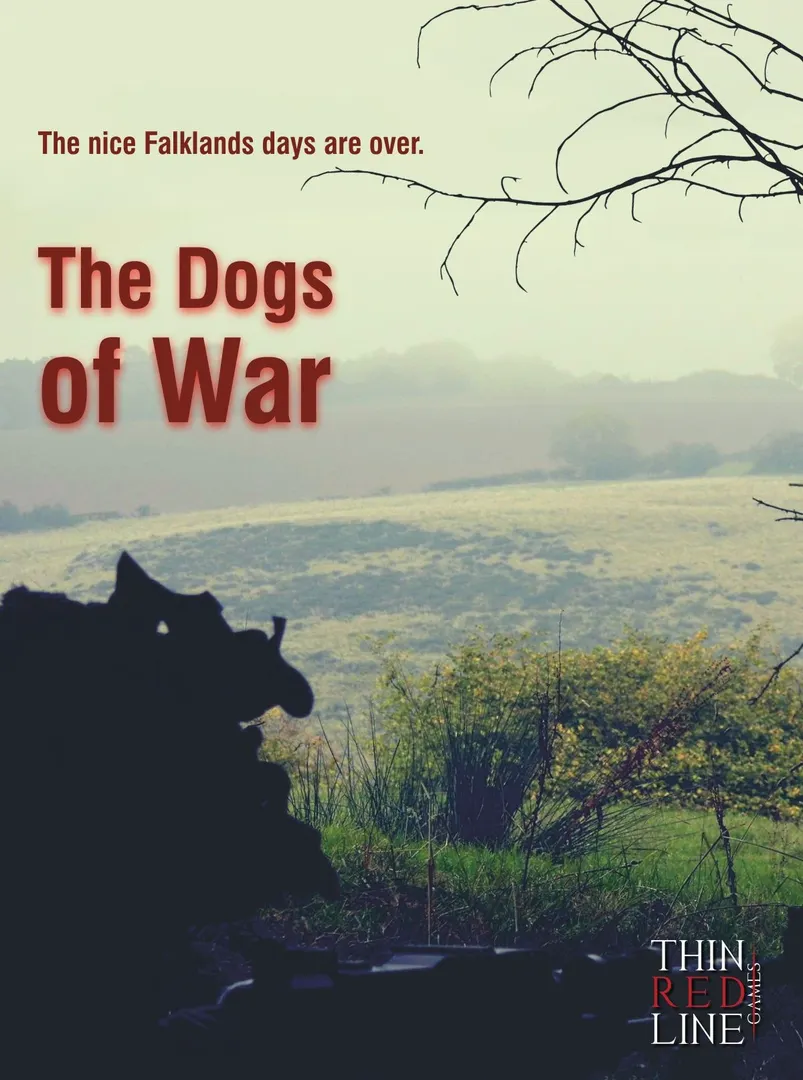
The Dogs of War es un juego de mesa publicado en 2021 para 2–4 jugadores, con partidas de 180 a 600 minutos y a partir de 16 años. Fue diseñado por Fabrizio Vianello y sus mecánicas principales son Dice Rolling, Variable Set-up y Grid Movement.






En inglés
"The goal is to collapse adversary’s system into confusion and disorder causing him to over and under react to activity that appears simultaneously menacing as well as ambiguous, chaotic, or misleading." John R. Boyd, “Patterns of Conflict” At 0400 Zulu Time, July 24 1985, Warsaw Pact forces cross the Inner German Border and assault NATO positions in West Germany. The main thrust, formed by 10 Soviet Category I Divisions, is in the BAOR sector and points directly to the Ruhr area. Taking its roots from SPI’s Central Front and NATO: Division Commander, The Dogs of War is the second module of the C3 series, focused on Command, Control and Communication. All the elements of modern mechanized warfare are covered: Chemical and Nuclear Weapons, Attack Helicopters, Engineers, Electronic Warfare, Counter-battery Fire, Ribbon Bridges, Army Doctrines, Reconnaissance units, Close Air Support coordination and more. Several typical wargame mechanics have been reinterpreted, and both sides will fight three equally dangerous foes: the enemy, their own plan and time. Even a simple action can quickly turn into a disaster when facing an opponent using more efficiently the real key to victory: the OODA Loop theorized by John Boyd in the early ‘80s and used today as the basis for several military doctrines. Military doctrine, tactics and peculiarities for each side are represented, allowing a skilled commander to use his own strength points and exploit the enemy’s weak ones. Some examples are: West German Auftragstaktik (Mission-Type Orders), giving Bundeswehr a flexibility hardly obtained by other armies. British Engineers, allowing extensive use of prepared defense positions. BAOR logistic deficiencies and ammunition shortage. Soviet Sappers, first-line assault units used to crack the toughest nuts. Soviet Assault From March doctrine. Warsaw Pact vulnerable supply network. Game Highlights 5 km per hex, 3 hours per game turn Regiment / Battalion sized ground units Detailed Order of Battle set in 1985 Close Air Support and Attack Helicopters Command, Control & Communication related problems Electronic and Intelligence Warfare Artillery interdiction and Counter-Battery fire Chemical and Nuclear warfare Specific events for Warsaw Pact and NATO Random events to further increase battlefield chaos Two Campaign Games: "The River Weser Deep and Wide", Warsaw Pact offensive in BAOR sector. "One Minute to Midnight", all-out chemical and nuclear warfare after several weeks of tension and build-up Four Smaller Scenarios: "Welcome to Braunschweig", West German 2 Panzer Brigade defense of the city against Soviet 35th Motorized Rifle Division. "They Came Before Dawn", Soviet 76th Guards Airborne assault to key crossings on Weser and Leine rivers. "Give Me the Night", British 1st Armoured Division fight to slow down Soviet 3rd Shock Army assault. "Queen's Gambit", British 3rd Armoured Division counter-attack at D+4. Game Components 98×55 cm matte plasticized map, covering BAOR area of responsibility 1000+ 5/8″ matte plasticized counters 44 Action and Event Cards 30 pages Rules Booklet 30 pages Scenarios & Designer’s Notes Booklet 10 pages Examples of Play Booklet 2x Tables booklets 4x Players' Aid Charts 2x 10-sided dice 10x zipbags
Según el catálogo, The Dogs of War admite de 2 a 4 jugadores. Este intervalo corresponde al número de jugadores indicado por la editorial, así que el juego puede prepararse para cualquier grupo dentro de ese margen. La preparación, algunas reglas y la puntuación pueden variar según el número de jugadores; consulta la configuración exacta en el reglamento de tu edición.
La duración indicada para The Dogs of War es de 180 a 600 minutos, la estimación de la editorial para una partida completa. El tiempo real depende del grupo, del número de jugadores y del conocimiento de las reglas: las primeras partidas suelen alargarse y los grupos con experiencia terminan antes. La preparación y la explicación de las reglas no están incluidas.
El catálogo indica The Dogs of War a partir de 16 años. Es la recomendación de la editorial y refleja la lectura necesaria, la complejidad de las reglas y las piezas pequeñas, no solo el tema. Los más pequeños a menudo pueden jugar con ayuda de un adulto: comprueba la edad recomendada en tu edición y la experiencia de tu grupo.
The Dogs of War tiene una puntuación de complejidad de 4,1 sobre 5 según los jugadores de BoardGameGeek, lo que lo convierte en un juego exigente. La puntuación refleja cuánto conocimiento de reglas, planificación y toma de decisiones exige una partida típica. Los juegos exigentes requieren una explicación inicial más larga, así que conviene usar una guía de preparación.
The Dogs of War pertenece a estas categorías: Wargame y Modern Warfare. Sus mecánicas principales son Dice Rolling, Variable Set-up y Grid Movement. Las categorías describen el tema y la ambientación de un juego, mientras que las mecánicas describen lo que los jugadores hacen realmente en su turno. Cada mecánica lleva a una página del catálogo con juegos similares.
Los autores acreditados de The Dogs of War son: Fabrizio Vianello. Estos créditos proceden de los datos publicados del juego y nombran a las personas responsables de su diseño, no a ilustradores ni editoriales. Las páginas de autor de MeepleRules reúnen otros títulos de los mismos autores, algo útil cuando un juego te gusta y buscas otros parecidos.
El catálogo clasifica The Dogs of War como juego base. Se juega por sí solo con los componentes de la caja y no requiere ningún otro título. Las expansiones, si existen, añaden contenido o reglas nuevas y aparecen por separado en el catálogo con un enlace a este juego base.