
- Puesto en BGG
- BGG #6039
- Puntuación BGG
- 6,1
Can't Stop Express
- 1–4 jugadores
- 30 min
- Complejidad 1,3/5
- 1989
1974
Ayuda con las reglas de The Great Races
Explicaciones claras de turnos, efectos de cartas y situaciones dudosas, con referencias a fuentes oficiales e historial de preguntas guardado.
Para 2 jugadores
¿Qué quieres saber?
Las respuestas salen del reglamento oficial, con la página para comprobarlo.
The Great Races es un juego de mesa publicado en 1974 para 2–4 jugadores y con partidas de 30 minutos. Fue diseñado por Sid Sackson y sus mecánicas principales son Dice Rolling y Paper-and-Pencil.

En inglés
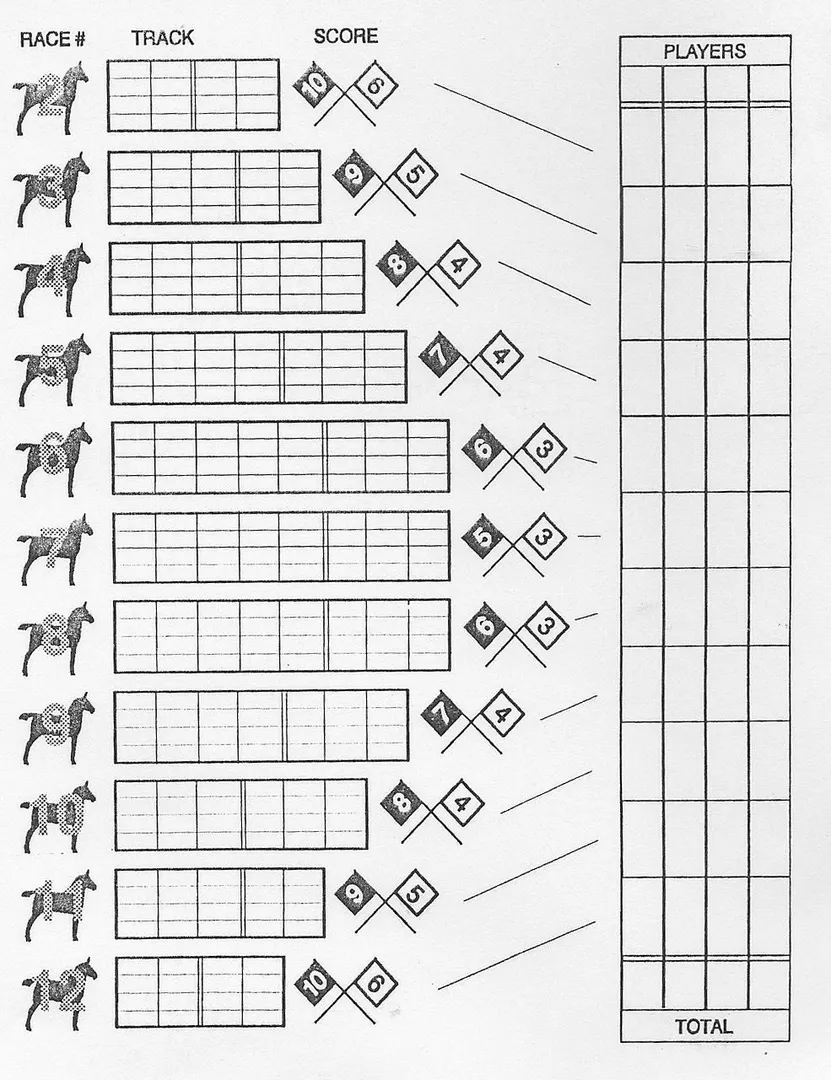
A simple dice game using a dedicated scoring sheet. Players in turn roll four dice and gather them into pairs. Each line of the scoresheet represents a separate race to accumulate multiple rolls for each value between 2 and 12. Mark the scoresheet to record completion of one race segment for each of the two totals rolled. First to complete all race segments for a particular value wins that individual race. Game ends when all races have a winner. Published as a paper-and-pencil game in the box (6 games included, The 6 Pack of Paper & Pencil Games (1974), and elsewhere. By similarities in both the basic gameplay and the scoring track it seems a predecesor to another Sackson game, Can't Stop, yet here there are different movement rules and winning condtion. Comparing key elements (with Can't Stop in parenthesis): only one roll per turn (push-your-luck element of multiple rolls) point values assigned individually for each race, with full value given to race winner and reduced value to second place finisher (no scoring) win game with highest tally after all races completed (win game by completing any three)
Según el catálogo, The Great Races admite de 2 a 4 jugadores. Este intervalo corresponde al número de jugadores indicado por la editorial, así que el juego puede prepararse para cualquier grupo dentro de ese margen. La preparación, algunas reglas y la puntuación pueden variar según el número de jugadores; consulta la configuración exacta en el reglamento de tu edición.
La duración indicada para The Great Races es de 30 minutos, la estimación de la editorial para una partida completa. El tiempo real depende del grupo, del número de jugadores y del conocimiento de las reglas: las primeras partidas suelen alargarse y los grupos con experiencia terminan antes. La preparación y la explicación de las reglas no están incluidas.
The Great Races tiene una puntuación de complejidad de 1,7 sobre 5 según los jugadores de BoardGameGeek, lo que lo convierte en un juego ligero. La puntuación refleja cuánto conocimiento de reglas, planificación y toma de decisiones exige una partida típica. Los juegos exigentes requieren una explicación inicial más larga, así que conviene usar una guía de preparación.
The Great Races pertenece a estas categorías: Dice y Racing. Sus mecánicas principales son Dice Rolling y Paper-and-Pencil. Las categorías describen el tema y la ambientación de un juego, mientras que las mecánicas describen lo que los jugadores hacen realmente en su turno. Cada mecánica lleva a una página del catálogo con juegos similares.
Los autores acreditados de The Great Races son: Sid Sackson. Estos créditos proceden de los datos publicados del juego y nombran a las personas responsables de su diseño, no a ilustradores ni editoriales. Las páginas de autor de MeepleRules reúnen otros títulos de los mismos autores, algo útil cuando un juego te gusta y buscas otros parecidos.
El catálogo clasifica The Great Races como juego base. Se juega por sí solo con los componentes de la caja y no requiere ningún otro título. Las expansiones, si existen, añaden contenido o reglas nuevas y aparecen por separado en el catálogo con un enlace a este juego base.