
- Puesto en BGG
- BGG #9960
- Puntuación BGG
- 6,1
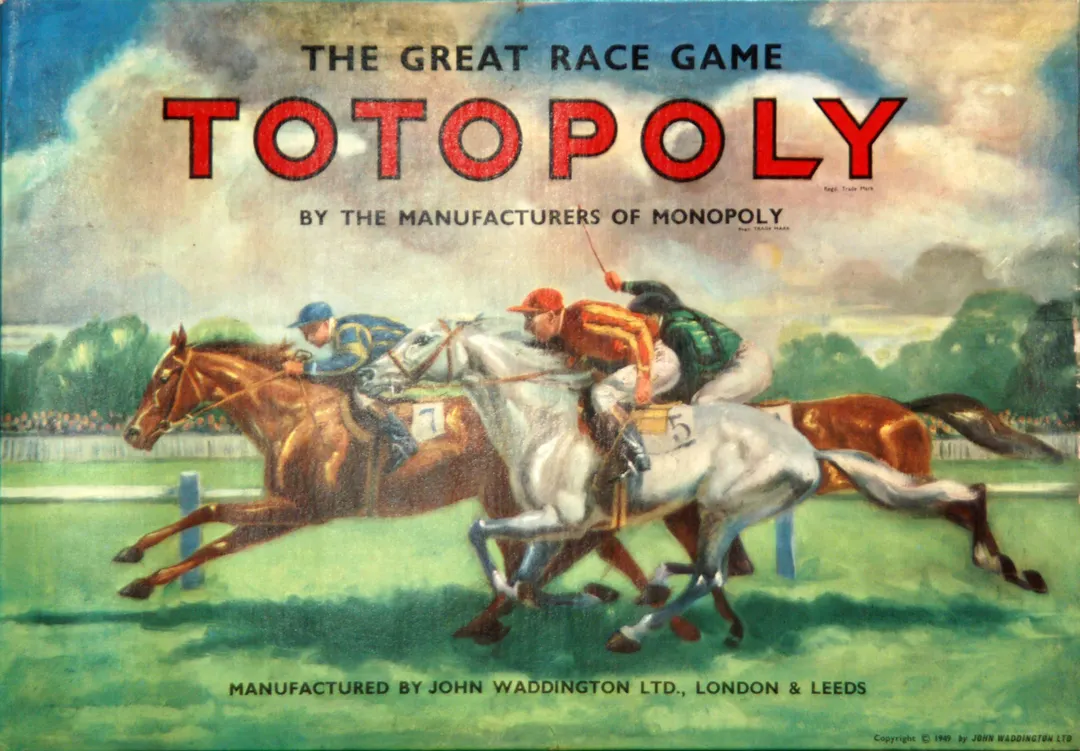
Totopoly
- 2–6 jugadores
- 90 min
- Complejidad 1,8/5
- 1938
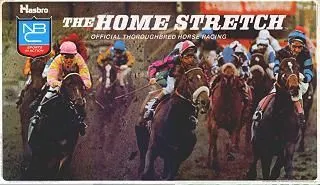
1970
Ayuda con las reglas de The Home Stretch
Explicaciones claras de turnos, efectos de cartas y situaciones dudosas, con referencias a fuentes oficiales e historial de preguntas guardado.
¿Qué quieres saber?
Las respuestas salen del reglamento oficial, con la página para comprobarlo.
The Home Stretch es un juego de mesa publicado en 1970 para 2–20 jugadores, con partidas de 60 minutos y a partir de 8 años. Sus mecánicas principales son Auction / Bidding, Roll / Spin and Move y Grid Movement.








En inglés
Horse racing game released by Hasbro and NBC (Yes, the US Television company) in a format nearly identical to the 3M plastic "wrap-around" boards. The Home Stretch is a horse racing game. The players represent the owners and jockeys of the horses in the race and the people betting on the race. To start the game, each player is given a certain amount of cash. This money is used to bid on horses. Each horse is represented by an "Ownership Card" which shows the horse's name, stable and "Speed". Speed is used to determine the likelihood of gaining an "Advantage" during the race. Bidding for each horse lasts three rounds and the high bidder gets the horse. Once the horses have been assigned their starting positions are determined and the Ownership Cards are placed in the "Readout Machine". This is a tray which holds the cards and will be used to determine movement. After all the horses are in the tray "Odds Cards" are placed below each Ownership Card. Odds Cards will determine the actual movement of each horse. Players may now make wagers on any horse they choose. Wagers may be made on any number of horses and may be made for Win, Place or Show. The player records their bets on a "Betting Slip" and places it face down on the board, then pays the total amount of the bets. To run the race the spinner is used to generate a random number. This number is used on the Readout Machine to determine the number of spaces moved and the "Diagonal Allowance" for each horse. Each Odds card has a column of numbers for total movement and a second column for Diagonal allowance. The Diagonal Allowance is the number of diagonal moves the horse may make and is therefore the number of times the horse can change lanes. The horse must use all of its movement but does not have to use all of its allowed lane changes. The spinner's random number determines which row of numbers on the Odds cards will be used in the current round for moving the horses along the track. Sometimes the spinner will indicate "Advantage". When this happens an Advantage card is drawn. Advantage Cards each show the name of one horse and that horse is allowed a free move of 6 with a diagonal allowance of 2. Other horses may not move. The better a horse's speed, the more Advantage Cards that horse has in the deck. The race continues until all of the horses have crossed the finish line. If more than one horse crosses the line in the same turn the horse which moves the furtherest past the finish line is the winner. The second and third place horse is determined the same way. Once all the horses have crossed the finish line the betting slips are revealed and winning wagers are paid. The players then set up the horses and the Readout Machine for the next race. Ownership of the horses remains the same but the starting order and Odds Cards change. A total of six races are run. The player with the most cash at the end of all six races is the winner. This is a very good game. Players can spend a good deal of money buying the best horses at the start of the game, but they then have less cash to place bets with. Meanwhile, other players can bet on their horses anyway. Also, the randomness of the appearance of the Advantage Cards mean that a good horse can have a bad showing and the slowest horse may come from behind to win. There is nothing to prevent a player from betting on another horse and racing theirs badly to influence the outcome but the other players may be doing the same thing and the fact that six races are run means that no one is likely to try it more than once (though it may show up as a race 6 strategy). A very interesting game.
Según el catálogo, The Home Stretch admite de 2 a 20 jugadores. Este intervalo corresponde al número de jugadores indicado por la editorial, así que el juego puede prepararse para cualquier grupo dentro de ese margen. La preparación, algunas reglas y la puntuación pueden variar según el número de jugadores; consulta la configuración exacta en el reglamento de tu edición.
La duración indicada para The Home Stretch es de 60 minutos, la estimación de la editorial para una partida completa. El tiempo real depende del grupo, del número de jugadores y del conocimiento de las reglas: las primeras partidas suelen alargarse y los grupos con experiencia terminan antes. La preparación y la explicación de las reglas no están incluidas.
El catálogo indica The Home Stretch a partir de 8 años. Es la recomendación de la editorial y refleja la lectura necesaria, la complejidad de las reglas y las piezas pequeñas, no solo el tema. Los más pequeños a menudo pueden jugar con ayuda de un adulto: comprueba la edad recomendada en tu edición y la experiencia de tu grupo.
The Home Stretch tiene una puntuación de complejidad de 1,0 sobre 5 según los jugadores de BoardGameGeek, lo que lo convierte en un juego ligero. La puntuación refleja cuánto conocimiento de reglas, planificación y toma de decisiones exige una partida típica. Los juegos exigentes requieren una explicación inicial más larga, así que conviene usar una guía de preparación.
The Home Stretch pertenece a estas categorías: Animals, Racing y Sports. Sus mecánicas principales son Auction / Bidding, Roll / Spin and Move y Grid Movement. Las categorías describen el tema y la ambientación de un juego, mientras que las mecánicas describen lo que los jugadores hacen realmente en su turno. Cada mecánica lleva a una página del catálogo con juegos similares.
El catálogo clasifica The Home Stretch como juego base. Se juega por sí solo con los componentes de la caja y no requiere ningún otro título. Las expansiones, si existen, añaden contenido o reglas nuevas y aparecen por separado en el catálogo con un enlace a este juego base.