
- Puesto en BGG
- BGG #11.349
- Puntuación BGG
- 6,0
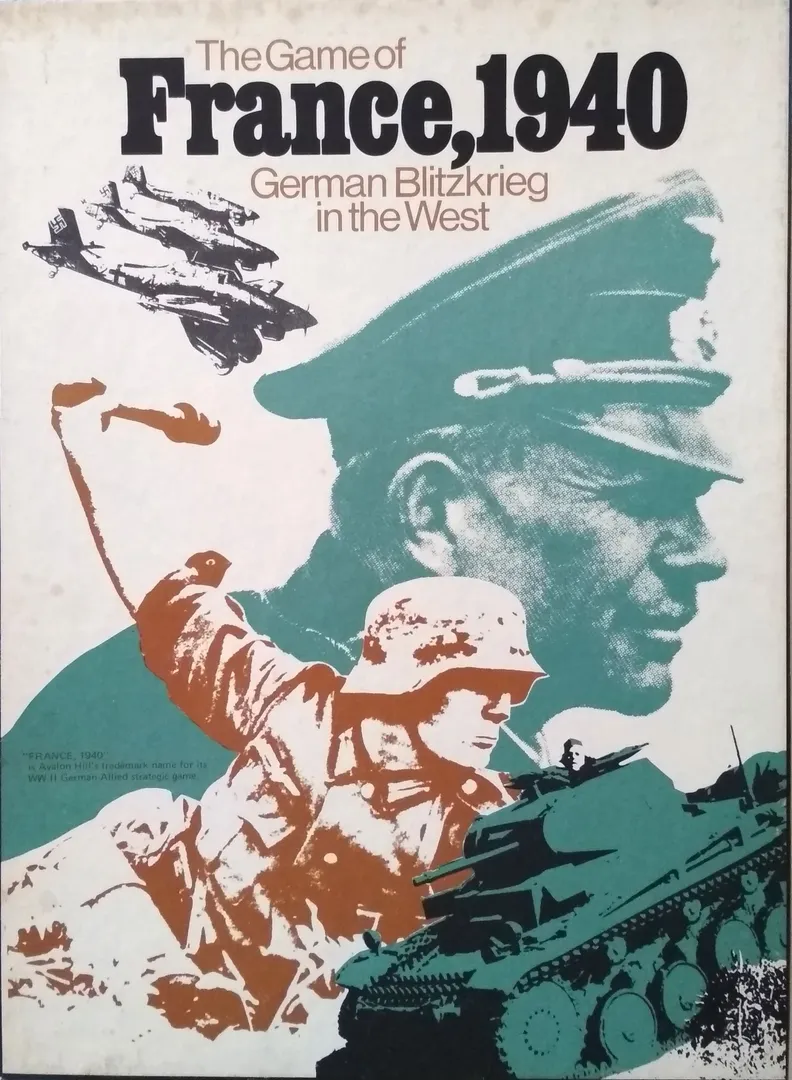
The Game of France, 1940: German Blitzkrieg in the West
- 2 jugadores
- 180 min
- Complejidad 2,7/5
- 1971
1972
Ayuda con las reglas de The Moscow Campaign: Strike and Counterstrike Russia, 1941
Explicaciones claras de turnos, efectos de cartas y situaciones dudosas, con referencias a fuentes oficiales e historial de preguntas guardado.
Para 2 jugadores
¿Qué quieres saber?
Las respuestas salen del reglamento oficial, con la página para comprobarlo.
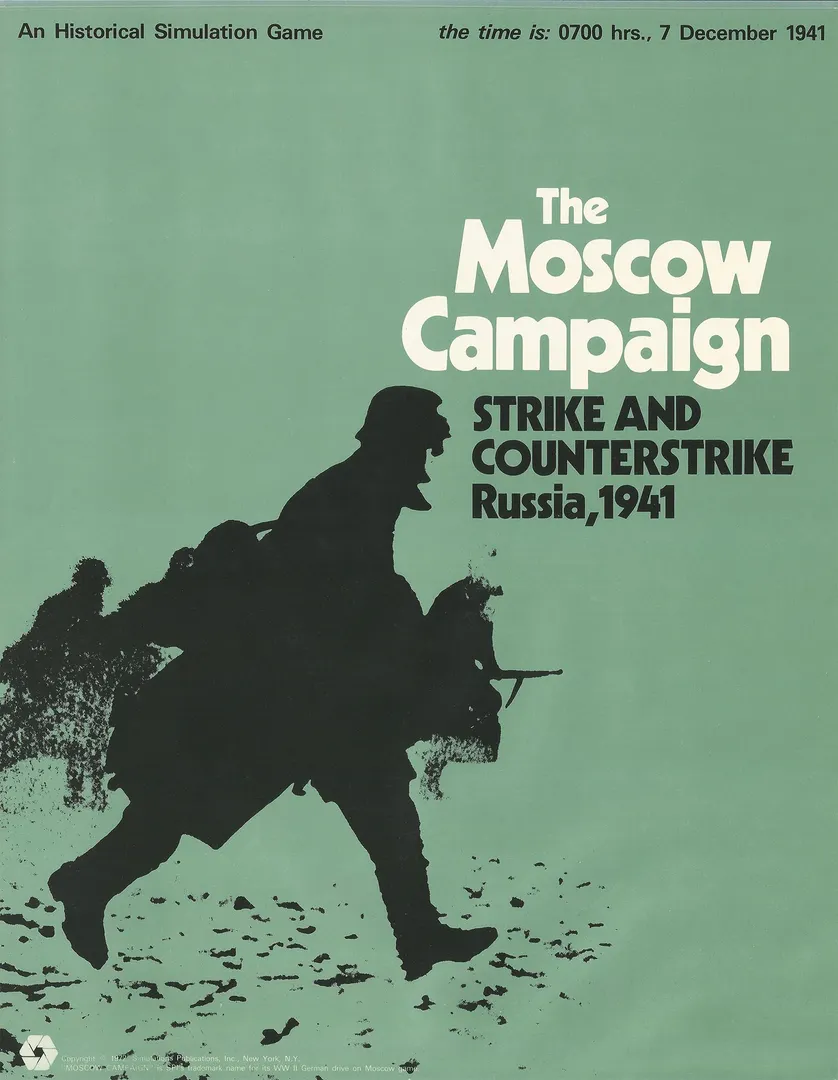
The Moscow Campaign: Strike and Counterstrike Russia, 1941 es un juego de mesa publicado en 1972 para 2 jugadores, con partidas de 120 minutos y a partir de 12 años. Fue diseñado por Jim Dunnigan y sus mecánicas principales son Dice Rolling, Grid Movement y Hexagon Grid.



En inglés
The Moscow Campaign; Strike and Counterstrike Russia, 1941, is the successor to SPI's earlier treatment of roughly the same events, The Battle of Moscow (originally published in Strategy & Tactics magazine #24). The Moscow Campaign covers the final German drives on the Russian capital and the first Soviet counteroffensive. The scale is 6 miles per hex and three days per turn. Units (blue Germans and brown Soviets) are predominantly divisions. The Soviets have a few corps, and some German mechanized divisions are replaced by kampfgruppen if eliminated in combat. Though they have "historical" designations, the formations are pretty generic. They display combat factors, movement allowances and NATO symbols. Most formidable are the German 6-8 panzer divisions; most common are the lowly Soviet 1-4 infantry. Games can begin as early as September 30, 1941, and end as late as December 31st. A variety of starting points, ending points and German orders of battle produce 24 scenarios, four lasting all 31 turns, the rest - centered on the German offensives in early October and late November and the Soviet riposte at the end of the year - 8 turns each. The four-color map is functional though not an aesthetic gem. It shows cities, rivers, railroads, forests, swamps, lakes, Soviet fortifications and scenario start lines. Players alternate turns, each having a movement phase, combat phase and second movement phase for mechanized units. Zones of control are "semi-active" (requiring extra movement points to enter or leave but not mandating combat between adjacent enemies). The stacking limit is three units of any size per hex. The Combat Results Table has the classic Eliminate, Exchange, Retreat outcomes. Overruns during movement are also possible, though they require 11 to 1 odds. Germans must trace supply lines to railroads that have been converted by Eisenbahn Bautruppen, Soviets to unconverted rail lines that run to the north, south or east of the map. Lack of supply halves movement and combat factors but doesn't, by itself, result in elimination. Weather changes historically. Rain, mud and full winter successively erode movement allowances and combat strengths. There are no air or command rules. Victory points are awarded for destroying enemy units and for geographical objectives (possession of Moscow for either side, proximity to Moscow for the Germans, pushing units west of the start line for the Soviets). When published, this was one of SPI's largest and most sophisticated games. Game Scale: Game Turn: 2 days Hex: 6 miles / 9.6 kilometers Units: Brigade to Corps Game Inventory: One 22 x 34" four-color mapsheet One single-side printed countersheet (400 1/2" counters) One 10-page foldout Moscow Campaign folder One 6-sided die Solitaire Suitability: Medium Complexity Level: Medium Players: 2 or more Playing Time: 2-4 hours
Según el catálogo, The Moscow Campaign: Strike and Counterstrike Russia, 1941 admite 2 jugadores. Es el número de jugadores indicado por la editorial, así que el juego está diseñado exactamente para esa cantidad de participantes. Las variantes para otros tamaños de grupo, si existen, se describen en el reglamento de tu edición; consúltalo antes de preparar otra configuración.
La duración indicada para The Moscow Campaign: Strike and Counterstrike Russia, 1941 es de 120 minutos, la estimación de la editorial para una partida completa. El tiempo real depende del grupo, del número de jugadores y del conocimiento de las reglas: las primeras partidas suelen alargarse y los grupos con experiencia terminan antes. La preparación y la explicación de las reglas no están incluidas.
El catálogo indica The Moscow Campaign: Strike and Counterstrike Russia, 1941 a partir de 12 años. Es la recomendación de la editorial y refleja la lectura necesaria, la complejidad de las reglas y las piezas pequeñas, no solo el tema. Los más pequeños a menudo pueden jugar con ayuda de un adulto: comprueba la edad recomendada en tu edición y la experiencia de tu grupo.
The Moscow Campaign: Strike and Counterstrike Russia, 1941 tiene una puntuación de complejidad de 2,1 sobre 5 según los jugadores de BoardGameGeek, lo que lo convierte en un juego algo ligero. La puntuación refleja cuánto conocimiento de reglas, planificación y toma de decisiones exige una partida típica. Los juegos exigentes requieren una explicación inicial más larga, así que conviene usar una guía de preparación.
The Moscow Campaign: Strike and Counterstrike Russia, 1941 pertenece a estas categorías: Wargame y World War II. Sus mecánicas principales son Dice Rolling, Grid Movement y Hexagon Grid. Las categorías describen el tema y la ambientación de un juego, mientras que las mecánicas describen lo que los jugadores hacen realmente en su turno. Cada mecánica lleva a una página del catálogo con juegos similares.
Los autores acreditados de The Moscow Campaign: Strike and Counterstrike Russia, 1941 son: Jim Dunnigan. Estos créditos proceden de los datos publicados del juego y nombran a las personas responsables de su diseño, no a ilustradores ni editoriales. Las páginas de autor de MeepleRules reúnen otros títulos de los mismos autores, algo útil cuando un juego te gusta y buscas otros parecidos.
El catálogo clasifica The Moscow Campaign: Strike and Counterstrike Russia, 1941 como juego base. Se juega por sí solo con los componentes de la caja y no requiere ningún otro título. Las expansiones, si existen, añaden contenido o reglas nuevas y aparecen por separado en el catálogo con un enlace a este juego base.