
- Puesto en BGG
- BGG #23.637
- Puntuación BGG
- 5,8
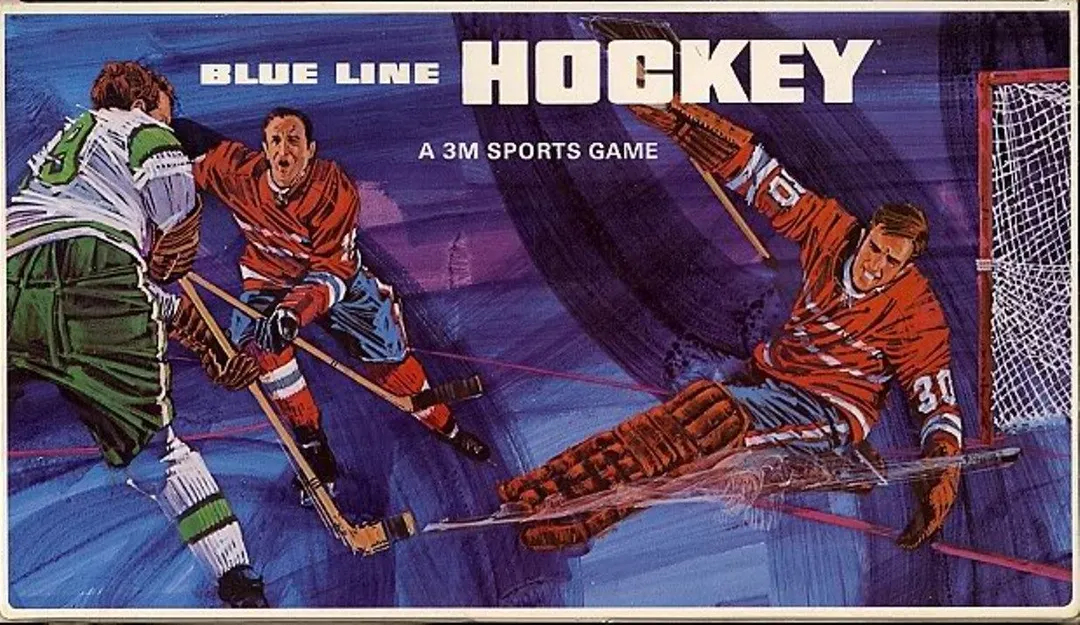
Blue Line Hockey
- 2 jugadores
- 45 min
- Complejidad 1,9/5
- 1968
1966
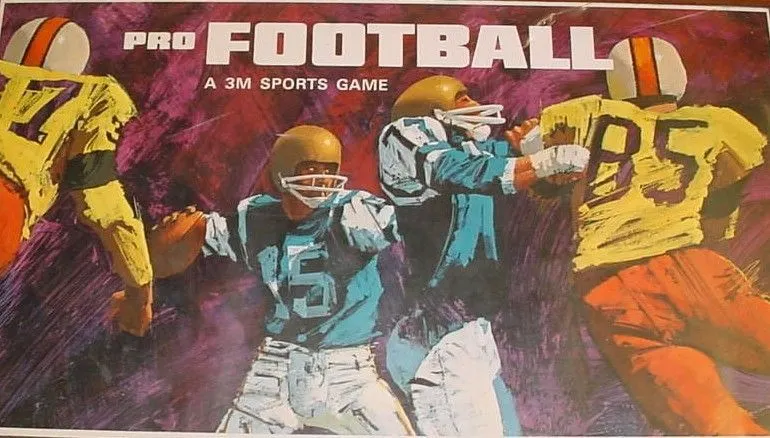
Ayuda con las reglas de Thinking Man's Football
Explicaciones claras de turnos, efectos de cartas y situaciones dudosas, con referencias a fuentes oficiales e historial de preguntas guardado.
Para 2 jugadores
¿Qué quieres saber?
Las respuestas salen del reglamento oficial, con la página para comprobarlo.
Thinking Man's Football es un juego de mesa publicado en 1966 para 2 jugadores y con partidas de 90 minutos. Fue diseñado por Frederick A. Herschler y sus mecánicas principales son Dice Rolling y Simultaneous Action Selection.

En inglés
Originally published as Pro Football and later rebranded Thinking Man’s Football, this strategic head-to-head simulation captures the cerebral side of American football. Released as part of the 3M Sports Games line, it focuses on play selection, tactical prediction, and statistical outcomes. Each turn, the offensive player secretly selects a play—run, pass, or special play—while the defense chooses a formation and one of three areas to guard: left, center, or right. Both choices are revealed simultaneously, and a chart combined with a die roll determines the result of the play: yardage gained or lost. Standard football rules for downs, possession, and scoring apply. The game plays out over two halves, challenging players to outthink one another while balancing risk and field position. Unlike arcade-style football games, Thinking Man’s Football emphasizes play-calling strategy and probability, making it a great fit for fans of sports analytics, gridiron tactics, and old-school simulation.
Según el catálogo, Thinking Man's Football admite 2 jugadores. Es el número de jugadores indicado por la editorial, así que el juego está diseñado exactamente para esa cantidad de participantes. Las variantes para otros tamaños de grupo, si existen, se describen en el reglamento de tu edición; consúltalo antes de preparar otra configuración.
La duración indicada para Thinking Man's Football es de 90 minutos, la estimación de la editorial para una partida completa. El tiempo real depende del grupo, del número de jugadores y del conocimiento de las reglas: las primeras partidas suelen alargarse y los grupos con experiencia terminan antes. La preparación y la explicación de las reglas no están incluidas.
Thinking Man's Football tiene una puntuación de complejidad de 2,3 sobre 5 según los jugadores de BoardGameGeek, lo que lo convierte en un juego algo ligero. La puntuación refleja cuánto conocimiento de reglas, planificación y toma de decisiones exige una partida típica. Los juegos exigentes requieren una explicación inicial más larga, así que conviene usar una guía de preparación.
Thinking Man's Football pertenece a estas categorías: Sports. Sus mecánicas principales son Dice Rolling y Simultaneous Action Selection. Las categorías describen el tema y la ambientación de un juego, mientras que las mecánicas describen lo que los jugadores hacen realmente en su turno. Cada mecánica lleva a una página del catálogo con juegos similares.
Los autores acreditados de Thinking Man's Football son: Frederick A. Herschler. Estos créditos proceden de los datos publicados del juego y nombran a las personas responsables de su diseño, no a ilustradores ni editoriales. Las páginas de autor de MeepleRules reúnen otros títulos de los mismos autores, algo útil cuando un juego te gusta y buscas otros parecidos.
El catálogo clasifica Thinking Man's Football como juego base. Se juega por sí solo con los componentes de la caja y no requiere ningún otro título. Las expansiones, si existen, añaden contenido o reglas nuevas y aparecen por separado en el catálogo con un enlace a este juego base.