
- Puesto en BGG
- BGG #384
- Puntuación BGG
- 7,4
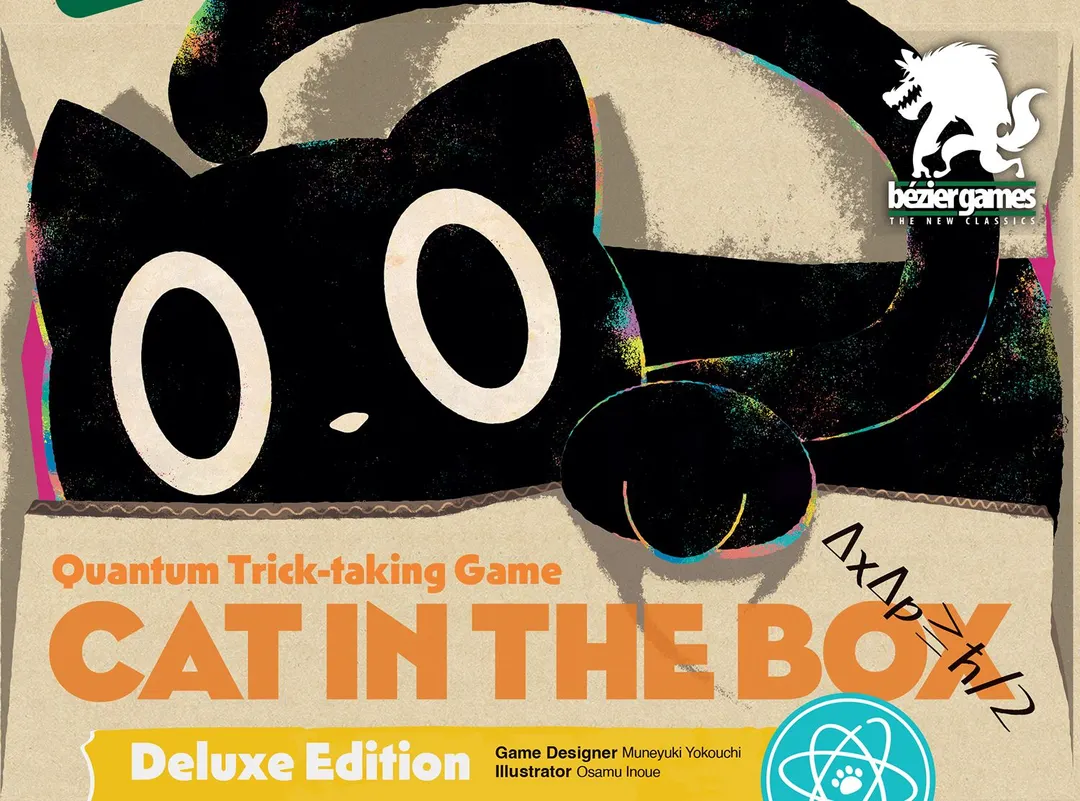
Cat in the Box: Deluxe Edition
- 2–5 jugadores
- 20–40 min
- Complejidad 2,1/5
- 2022
2021
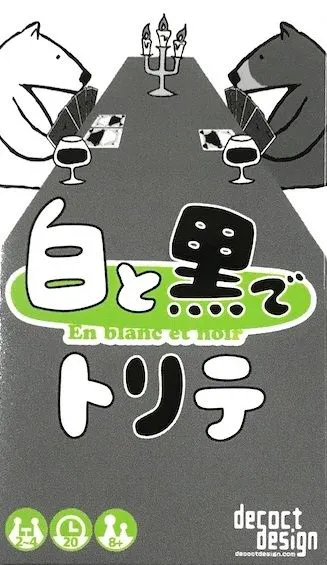
Ayuda con las reglas de 白と黒でトリテ (Trick-Taking in Black and White)
Explicaciones claras de turnos, efectos de cartas y situaciones dudosas, con referencias a fuentes oficiales e historial de preguntas guardado.
Para 2 jugadores
¿Qué quieres saber?
Las respuestas salen del reglamento oficial, con la página para comprobarlo.
白と黒でトリテ (Trick-Taking in Black and White) es un juego de mesa publicado en 2021 para 2–4 jugadores, con partidas de 20 a 30 minutos y a partir de 8 años. Fue diseñado por Tsutomu Dejima (出嶋 勉) y sus mecánicas principales son Trick-taking.






En inglés
In 白と黒でトリテ (Trick-Taking in Black and White), each of the 36 cards has two suits — black and white — and the numbers on a card always add up to 37, e.g., 11 black and 26 white. At the start of a round, deal the deck evenly to all players. Whoever leads the round plays a card from their hand and chooses either black or white as the suit. All other players play a card of their choice, then whoever played the highest number in the chosen suit collects the trick (recording in some manner whether the trick was white or black), then leads the next trick. Once all the cards have been played, players score their collected tricks. If you have taken an equal number of black tricks and white tricks, then you score positive points equal to the number of tricks collected; if not, you score negative points equal to the number of tricks collected. After a certain number of rounds, whoever has the highest score wins. Not to be confused with En Blanc et Noir, a very similar looking and titled game from the same publisher.
Según el catálogo, 白と黒でトリテ (Trick-Taking in Black and White) admite de 2 a 4 jugadores. Este intervalo corresponde al número de jugadores indicado por la editorial, así que el juego puede prepararse para cualquier grupo dentro de ese margen. La preparación, algunas reglas y la puntuación pueden variar según el número de jugadores; consulta la configuración exacta en el reglamento de tu edición.
La duración indicada para 白と黒でトリテ (Trick-Taking in Black and White) es de 20 a 30 minutos, la estimación de la editorial para una partida completa. El tiempo real depende del grupo, del número de jugadores y del conocimiento de las reglas: las primeras partidas suelen alargarse y los grupos con experiencia terminan antes. La preparación y la explicación de las reglas no están incluidas.
El catálogo indica 白と黒でトリテ (Trick-Taking in Black and White) a partir de 8 años. Es la recomendación de la editorial y refleja la lectura necesaria, la complejidad de las reglas y las piezas pequeñas, no solo el tema. Los más pequeños a menudo pueden jugar con ayuda de un adulto: comprueba la edad recomendada en tu edición y la experiencia de tu grupo.
白と黒でトリテ (Trick-Taking in Black and White) tiene una puntuación de complejidad de 1,2 sobre 5 según los jugadores de BoardGameGeek, lo que lo convierte en un juego ligero. La puntuación refleja cuánto conocimiento de reglas, planificación y toma de decisiones exige una partida típica. Los juegos exigentes requieren una explicación inicial más larga, así que conviene usar una guía de preparación.
白と黒でトリテ (Trick-Taking in Black and White) pertenece a estas categorías: Card Game y Animals. Sus mecánicas principales son Trick-taking. Las categorías describen el tema y la ambientación de un juego, mientras que las mecánicas describen lo que los jugadores hacen realmente en su turno. Cada mecánica lleva a una página del catálogo con juegos similares.
Los autores acreditados de 白と黒でトリテ (Trick-Taking in Black and White) son: Tsutomu Dejima (出嶋 勉). Estos créditos proceden de los datos publicados del juego y nombran a las personas responsables de su diseño, no a ilustradores ni editoriales. Las páginas de autor de MeepleRules reúnen otros títulos de los mismos autores, algo útil cuando un juego te gusta y buscas otros parecidos.
El catálogo clasifica 白と黒でトリテ (Trick-Taking in Black and White) como juego base. Se juega por sí solo con los componentes de la caja y no requiere ningún otro título. Las expansiones, si existen, añaden contenido o reglas nuevas y aparecen por separado en el catálogo con un enlace a este juego base.