- Puntuación BGG
- 9,2
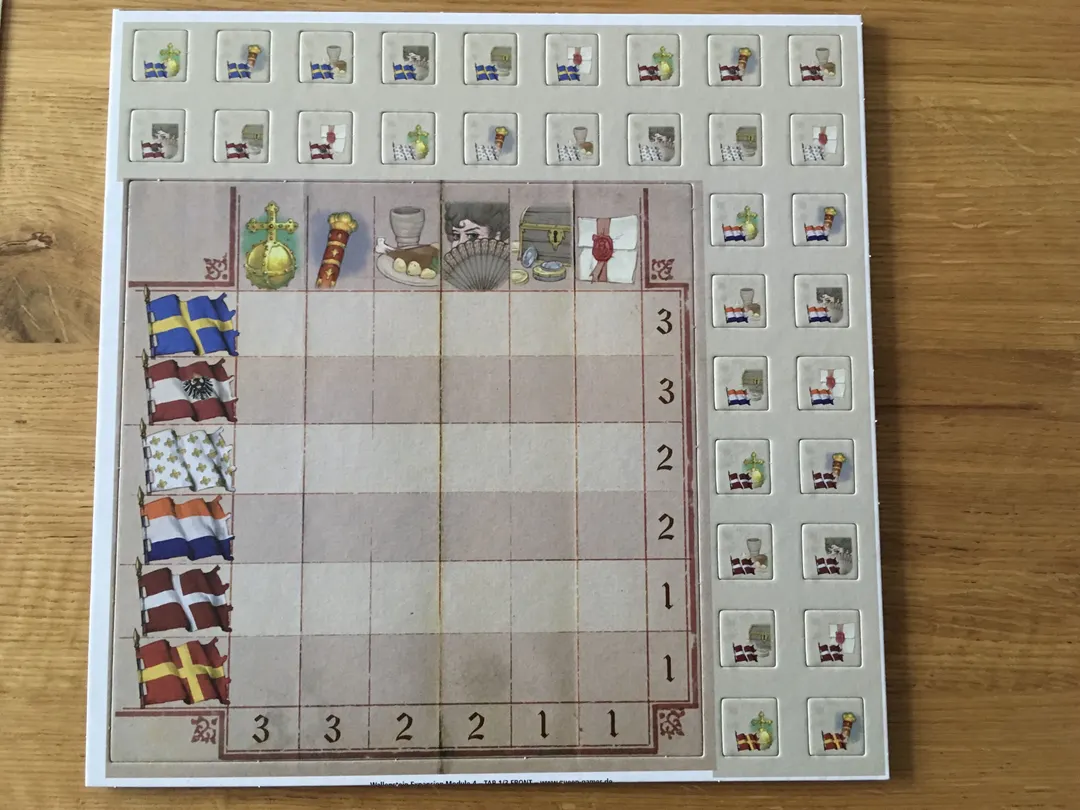
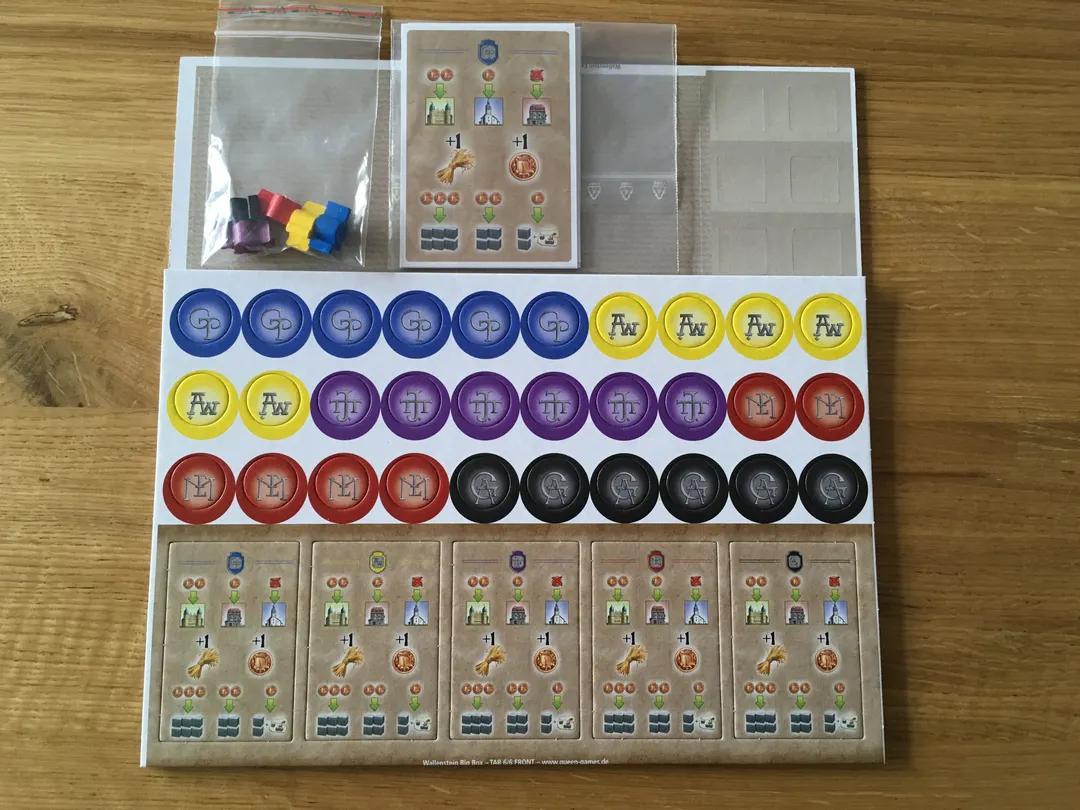
Wallenstein: Military Leaders – Expansion Module 3
- 3–5 jugadores
- 120 min
- 2016
2012
Ayuda con las reglas de Wallenstein (Second Edition)
Explicaciones claras de turnos, efectos de cartas y situaciones dudosas, con referencias a fuentes oficiales e historial de preguntas guardado.
Para 3 jugadores
¿Qué quieres saber?
Las respuestas salen del reglamento oficial, con la página para comprobarlo.
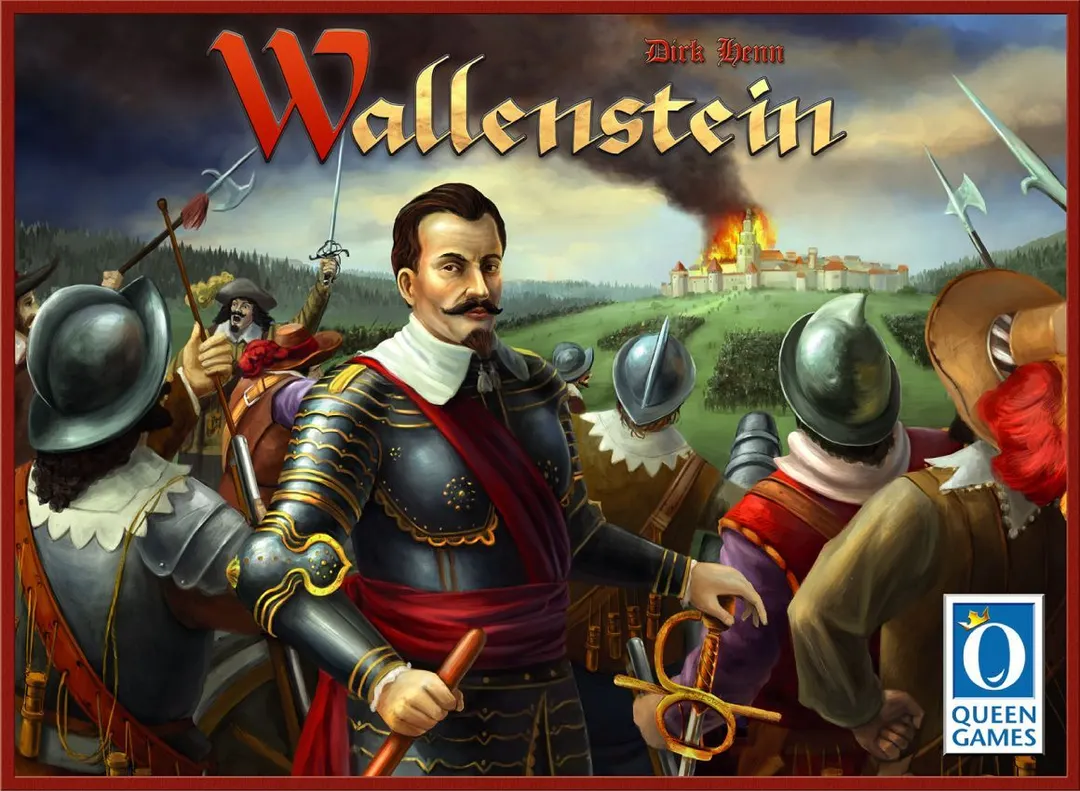
Wallenstein (Second Edition) es un juego de mesa publicado en 2012 para 3–5 jugadores, con partidas de 90 a 120 minutos y a partir de 12 años. Fue diseñado por Dirk Henn y sus mecánicas principales son Area Movement, Area Majority / Influence y Simultaneous Action Selection.
En inglés
The 2012 rerelease of Wallenstein tweaks the 2002 title from designer Dirk Henn and publisher Queen Games, while including two new expansions. The setting and game play of the two games are mostly the same. In 1625, the Thirty Years' War is underway, and military leaders like Albrecht von Wallenstein and Gottfried Heinrich Graf zu Pappenheim are roaming the country, fighting for land, and trying to establish the best of everything for themselves. The game lasts two "years," with players taking actions in the spring, summer, and fall, then possibly suffering from grain shortage and revolts in the winter before scoring points for the year. After two years, the player with the most points – with points being scored for land and buildings under one's control – wins. In each of the "action" seasons, ten action cards are shuffled, then laid out, with five face-up and the rest face-down. The five bonus tiles (which provide extra money, grain, or armies) are also laid out. Each player then secretly assigns one of his county cards (or a blank card) to each of the ten actions on his individual player board, in addition to bidding for player order and choice of bonus tile. After revealing that round's event card and determining player order, players carry out actions in the order determined earlier, revealing which county is taking the current action, then revealing the next face-down action, thus giving players some information about when actions will occur, but not all. Taxing a county or taking grain from it can increase the chance of a revolt during winter, but without money you can't deploy troops or build palaces or churches and without grain you increase the chance of revolt. Combat and revolts are handled via a dice tower in which players drop army units and peasants (colored wooden cubes) into the top of the tower and see which ones emerge in the bottom tray (representing the fighting forces for that combat) and which get stuck in the tower's baffles to possibly emerge in the future. Wallenstein includes two expansions: "Emperor's Court," in which a player's army tokens that fall from the dice tower at the start of the game become courtiers who compete for favors (special actions) from the emperor; a player can convert armies to courtiers during the game, and whoever has the most courtiers in the court's entrance hall each turn gets first shot at the favors available. "Landsknechte," which can be used with "Emperor's Court" or on its own, consists of a set of four cards for each player stacked in a particular order. If after determining turn order, a player controls counties in four different regions, he removes the top card from the stack, then takes one of the bonuses (such as money or armies in the tray) shown on the newly revealed card. This stack resets after winter ends. Note that the box of this game states is for 2-5 players, but the game actually plays only with 3-5 players.
Según el catálogo, Wallenstein (Second Edition) admite de 3 a 5 jugadores. Este intervalo corresponde al número de jugadores indicado por la editorial, así que el juego puede prepararse para cualquier grupo dentro de ese margen. La preparación, algunas reglas y la puntuación pueden variar según el número de jugadores; consulta la configuración exacta en el reglamento de tu edición.
La duración indicada para Wallenstein (Second Edition) es de 90 a 120 minutos, la estimación de la editorial para una partida completa. El tiempo real depende del grupo, del número de jugadores y del conocimiento de las reglas: las primeras partidas suelen alargarse y los grupos con experiencia terminan antes. La preparación y la explicación de las reglas no están incluidas.
El catálogo indica Wallenstein (Second Edition) a partir de 12 años. Es la recomendación de la editorial y refleja la lectura necesaria, la complejidad de las reglas y las piezas pequeñas, no solo el tema. Los más pequeños a menudo pueden jugar con ayuda de un adulto: comprueba la edad recomendada en tu edición y la experiencia de tu grupo.
Wallenstein (Second Edition) tiene una puntuación de complejidad de 3,2 sobre 5 según los jugadores de BoardGameGeek, lo que lo convierte en un juego de complejidad media. La puntuación refleja cuánto conocimiento de reglas, planificación y toma de decisiones exige una partida típica. Los juegos exigentes requieren una explicación inicial más larga, así que conviene usar una guía de preparación.
Wallenstein (Second Edition) pertenece a estas categorías: Economic, Territory Building y Renaissance. Sus mecánicas principales son Area Movement, Area Majority / Influence y Simultaneous Action Selection. Las categorías describen el tema y la ambientación de un juego, mientras que las mecánicas describen lo que los jugadores hacen realmente en su turno. Cada mecánica lleva a una página del catálogo con juegos similares.
Los autores acreditados de Wallenstein (Second Edition) son: Dirk Henn. Estos créditos proceden de los datos publicados del juego y nombran a las personas responsables de su diseño, no a ilustradores ni editoriales. Las páginas de autor de MeepleRules reúnen otros títulos de los mismos autores, algo útil cuando un juego te gusta y buscas otros parecidos.
El catálogo clasifica Wallenstein (Second Edition) como juego base. Se juega por sí solo con los componentes de la caja y no requiere ningún otro título. Las expansiones, si existen, añaden contenido o reglas nuevas y aparecen por separado en el catálogo con un enlace a este juego base.