- Puntuación BGG
- 7,9
Ayuda con las reglas de Warhammer 40,000: Kill Team – Core Manual
Explicaciones claras de turnos, efectos de cartas y situaciones dudosas, con referencias a fuentes oficiales e historial de preguntas guardado.
- 2–4 jugadores
- 30–60 min
- 12+

Asistente de reglas de Warhammer 40,000: Kill Team – Core Manual
¿Qué quieres saber?
Las respuestas salen del reglamento oficial, con la página para comprobarlo.
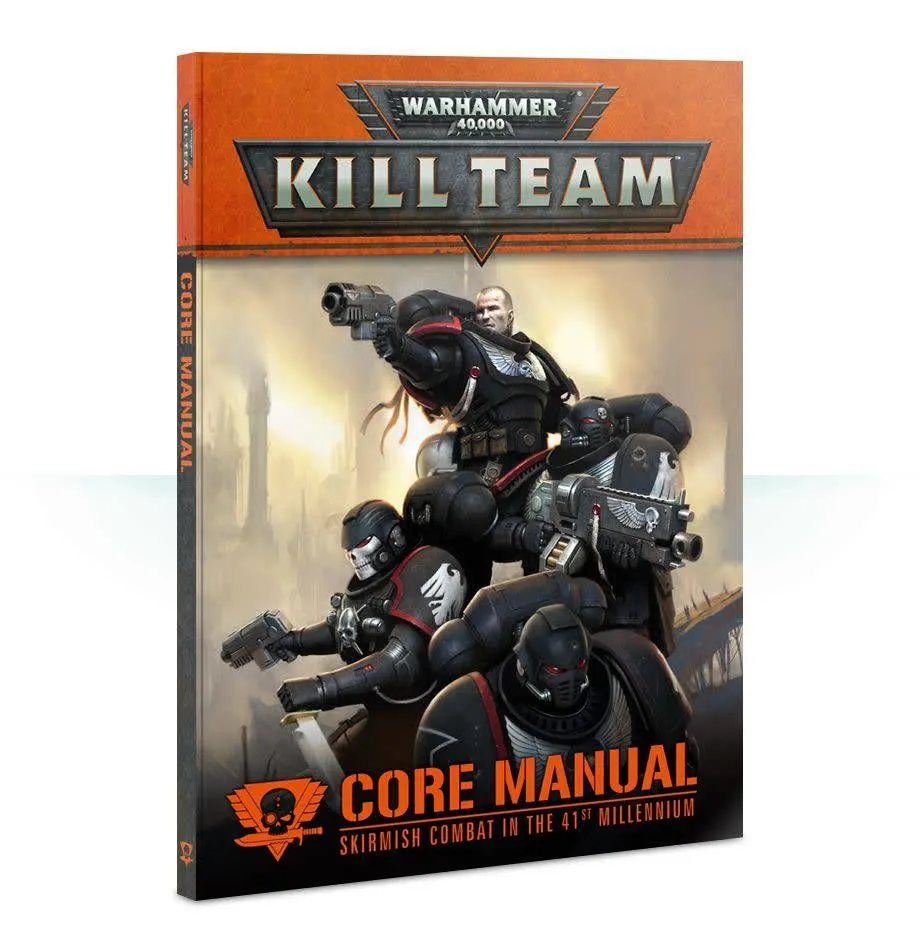
Warhammer 40,000: Kill Team – Core Manual es una expansión de Warhammer 40,000: Kill Team publicada en 2018 para 2–4 jugadores, con partidas de 30 a 60 minutos y a partir de 12 años. Sus mecánicas principales son Variable Player Powers y Dice Rolling.
Sobre el juego
En inglés
A fast paced tabletop miniatures game, Warhammer 40,000: Kill Team pits teams of elite specialists, ragtag zealots and hard-bitten veterans against each other in vicious skirmish battles to the bitter end. A single squad of well-trained and well-equipped warriors can tip the balance of a wider conflict – with Kill Team, you’ll play through countless stories of your own devising that could alter the fate of the galaxy itself. The Core Manual is a 208-page softback book which contains complete rules for choosing and constructing a kill team from 16 factions in the Warhammer 40,000 range (Adeptus Astartes, Deathwatch, Grey Knights, Astra Militarum, Adeptus Mechanicus, Heretic Astartes, Death Guard, Thousand Sons, Asuryani, Drukhari, Harlequins, Necrons, Orks, T’au Empire, Tyranids and Genestealer Cults), along with background explaining the importance of kill teams to the wider battle for supremacy: Background - Shadow War: this section of the book takes you through the roles of kill teams in the 41st Millennium – whether surgically removing an enemy commander or dangerous demagogue, desperately fighting their way through a battlefield to reinforce stranded comrades or finding themselves the last line of defence against an overwhelming force, every battle between kill teams tells a story of heroism and adventure; - Heroes All: every kill team is different, but all have certain features in common – each features a charismatic, cunning or domineering leader and specialists, skilled individuals who bring vital equipment and talents; - Theatres of War: the supreme commanders of the 41st Millennium have incredible military might at their disposal, and yet there are many scenarios in which the precise application of a small, highly trained force is appropriate. Thousands of war zones have seen drastic changes after a kill team incursion; this section describes but a few of the myriad different environments these small squads have battled in. Rules - Core Rules: covering the basics of Kill Team, this section takes you through exactly what you need in order to play, explains how to interpret and use datasheets, and how to set up your battle. It takes you through Battle Rounds, which consist of Initiative, Movement, Psychic, Shooting, Fighting and Morale phases with annotated, easy to follow guides and photographs; - Fighting a Battle: here you’ll learn how the structure of your game will be defined – deciding on a mission, setting up the battlefield, and deploying your kill teams. Included is an example Open Play mission – Covert War – which serves as an easy introduction; - Advanced Rules: this section adds a variety of optional rules for complexity and depth, recommended for use after players are familiar with the core rules. It includes different types of terrain, rules for climbing, mantling, leaping over gaps and covers damage received by falling from heights; - Killzones: these are environment-specific rules, adding danger and advantages according to the area your miniatures find themselves in. This section includes Sector Imperialis rules, which are designed for use with the scenery found in the box; - Missions: this section introduces 3 Open, 4 Matched and 4 Narrative play missions, showing you how to pick and choose elements from each to create your own games, the way you want to play them. It includes details of the Scouting Phase, in which planning, preparing and luck can dictate the direction of the battle to be fought. Each included mission features advice on selecting your teams, setup, deployment and victory conditions; - Kill Teams: this section takes you through building your kill team in a thorough and easy to follow manner, covering Open, Matched and Narrative play-specific teams; - Command Points: Matched play kill teams can be Battle-forged – this section describes the tactics specific to these teams; - Specialists: these are experienced fighters with certain abilities, split into 9 disciplines: Leader, Combat, Comms, Demolitions, Heavy, Medic, Scout, Sniper, Veteran and Zealot, each featuring 3 exclusive Tactics. These Tactics are increasingly powerful, and are unlocked by acquiring experience during a campaign; - Background information for each of the following factions: Adeptus Astartes, Deathwatch, Grey Knights, Astra Militarum, Adeptus Mechanicus, Heretic Astartes, Death Guard, Thousand Sons, Asuryani, Drukhari, Harlequins, Necrons, Orks, T’au Empire, Tyranids, and Genestealer Cults. This section can be used to add character to your kill team, with name and characteristic generators, faction-specific Tactics, and even quirks for each of your squad members. Each faction also features datasheets and comprehensive wargear tables with points lists and abilities. Campaigns Kill Team can be played and enjoyed in one-off missions, but included are a suite of comprehensive optional rules for fighting multiple battles in a connected series, forming a narrative of covert battles fought alongside a greater war. This section of the book walks you through a Kill Team campaign: the victory conditions, how to select missions, gain experience and upgrade your team, deal with injuries, manage resources and even escalate conflict. This includes blank command rosters and datasheets which you can photocopy and use to keep track of your campaign. On top of all this is a miniatures showcase, brimming with inspiration photos of kill teams and battle scenes. —description from the publisher
Mecánicas
Editoriales
- Games Workshop Ltd.
Preguntas y respuestas
Según el catálogo, Warhammer 40,000: Kill Team – Core Manual admite de 2 a 4 jugadores. Este intervalo corresponde al número de jugadores indicado por la editorial, así que el juego puede prepararse para cualquier grupo dentro de ese margen. La preparación, algunas reglas y la puntuación pueden variar según el número de jugadores; consulta la configuración exacta en el reglamento de tu edición.
La duración indicada para Warhammer 40,000: Kill Team – Core Manual es de 30 a 60 minutos, la estimación de la editorial para una partida completa. El tiempo real depende del grupo, del número de jugadores y del conocimiento de las reglas: las primeras partidas suelen alargarse y los grupos con experiencia terminan antes. La preparación y la explicación de las reglas no están incluidas.
El catálogo indica Warhammer 40,000: Kill Team – Core Manual a partir de 12 años. Es la recomendación de la editorial y refleja la lectura necesaria, la complejidad de las reglas y las piezas pequeñas, no solo el tema. Los más pequeños a menudo pueden jugar con ayuda de un adulto: comprueba la edad recomendada en tu edición y la experiencia de tu grupo.
Warhammer 40,000: Kill Team – Core Manual pertenece a estas categorías: Wargame, Miniatures y Science Fiction. Sus mecánicas principales son Variable Player Powers y Dice Rolling. Las categorías describen el tema y la ambientación de un juego, mientras que las mecánicas describen lo que los jugadores hacen realmente en su turno. Cada mecánica lleva a una página del catálogo con juegos similares.
El catálogo clasifica Warhammer 40,000: Kill Team – Core Manual como expansión de Warhammer 40,000: Kill Team. Las expansiones añaden contenido, reglas o escenarios al juego base y normalmente no se pueden jugar solas, así que necesitas Warhammer 40,000: Kill Team para usarla. Comprueba que tu edición de Warhammer 40,000: Kill Team sea compatible, porque algunas expansiones se revisaron entre ediciones.