- Puntuación BGG
- 7,3
Warhammer Quest: Silver Tower – Mighty Heroes
2016
Ayuda con las reglas de Warhammer Quest: Silver Tower – Mighty Heroes
Explicaciones claras de turnos, efectos de cartas y situaciones dudosas, con referencias a fuentes oficiales e historial de preguntas guardado.
- 2–4 jugadores
- 60–120 min
- Complejidad 3,0/5

Asistente de reglas de Warhammer Quest: Silver Tower – Mighty Heroes
¿Qué quieres saber?
Las respuestas salen del reglamento oficial, con la página para comprobarlo.
Warhammer Quest: Silver Tower – Mighty Heroes es una expansión de juego de mesa publicada en 2016 para 2–4 jugadores y con partidas de 60 a 120 minutos. Sus mecánicas principales son Variable Player Powers, Dice Rolling y Role Playing.
Sobre el juego
En inglés
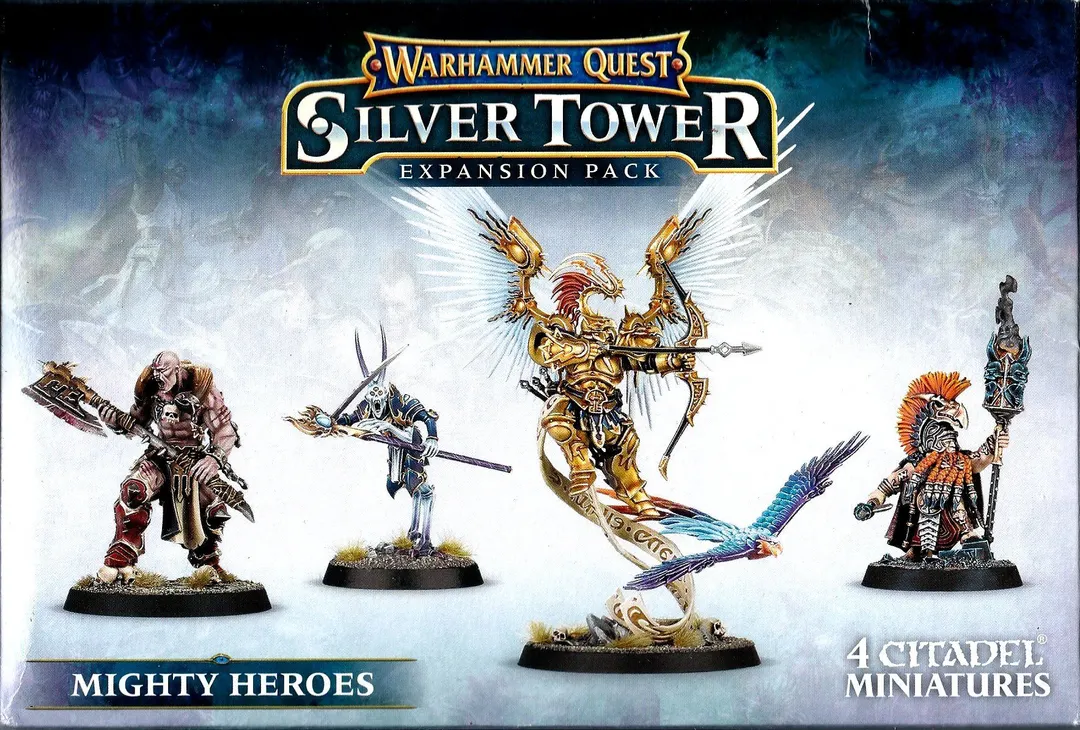
From the publisher: The tales and legends of the Silver Tower are numerous indeed; each recalling a different band of unlikely allies, champions finding themselves banding together in the lair of a Gaunt Summoner of Tzeentch. Some seek the glory of a boon from the Gaunt Summoner, others wish to learn his true name and thus strike him down – all must navigate the sheer horror of the Silver Tower. Only the greatest champions of both good and evil can hope to succeed. These four heroes have found themselves subject to the Gaunt Summoner’s ever-shifting domain: a Tzeentch Sorcerer Lord, devious and powerful spell-caster; a Khorne Bloodbound Slaughterpriest, brutal, murderous demagogue; a Stormcast Eternals Knight-Venator*, glorious sky-archer of Order; and a Fyreslayers Auric Runemaster, high priest of the forge-temple. This box set contains four plastic Citadel miniatures, with rules for use in games of Warhammer Quest: Silver Tower. Includes one Citadel 25mm Round base, one Citadel 32mm Round base, one Citadel 40mm Round base and one Citadel 50mm Round base.
Editoriales
- Games Workshop Ltd.
Preguntas y respuestas
Según el catálogo, Warhammer Quest: Silver Tower – Mighty Heroes admite de 2 a 4 jugadores. Este intervalo corresponde al número de jugadores indicado por la editorial, así que el juego puede prepararse para cualquier grupo dentro de ese margen. La preparación, algunas reglas y la puntuación pueden variar según el número de jugadores; consulta la configuración exacta en el reglamento de tu edición.
La duración indicada para Warhammer Quest: Silver Tower – Mighty Heroes es de 60 a 120 minutos, la estimación de la editorial para una partida completa. El tiempo real depende del grupo, del número de jugadores y del conocimiento de las reglas: las primeras partidas suelen alargarse y los grupos con experiencia terminan antes. La preparación y la explicación de las reglas no están incluidas.
Warhammer Quest: Silver Tower – Mighty Heroes tiene una puntuación de complejidad de 3,0 sobre 5 según los jugadores de BoardGameGeek, lo que lo convierte en un juego de complejidad media. La puntuación refleja cuánto conocimiento de reglas, planificación y toma de decisiones exige una partida típica. Los juegos exigentes requieren una explicación inicial más larga, así que conviene usar una guía de preparación.
Warhammer Quest: Silver Tower – Mighty Heroes pertenece a estas categorías: Fantasy, Fighting y Exploration. Sus mecánicas principales son Variable Player Powers, Dice Rolling y Role Playing. Las categorías describen el tema y la ambientación de un juego, mientras que las mecánicas describen lo que los jugadores hacen realmente en su turno. Cada mecánica lleva a una página del catálogo con juegos similares.
El catálogo clasifica Warhammer Quest: Silver Tower – Mighty Heroes como expansión. Las expansiones añaden contenido, reglas o escenarios a un juego base existente y normalmente no se pueden jugar solas. Comprueba en la caja o en la descripción de la editorial qué juego base se necesita y asegúrate de que tu edición de ese juego sea compatible con esta expansión.