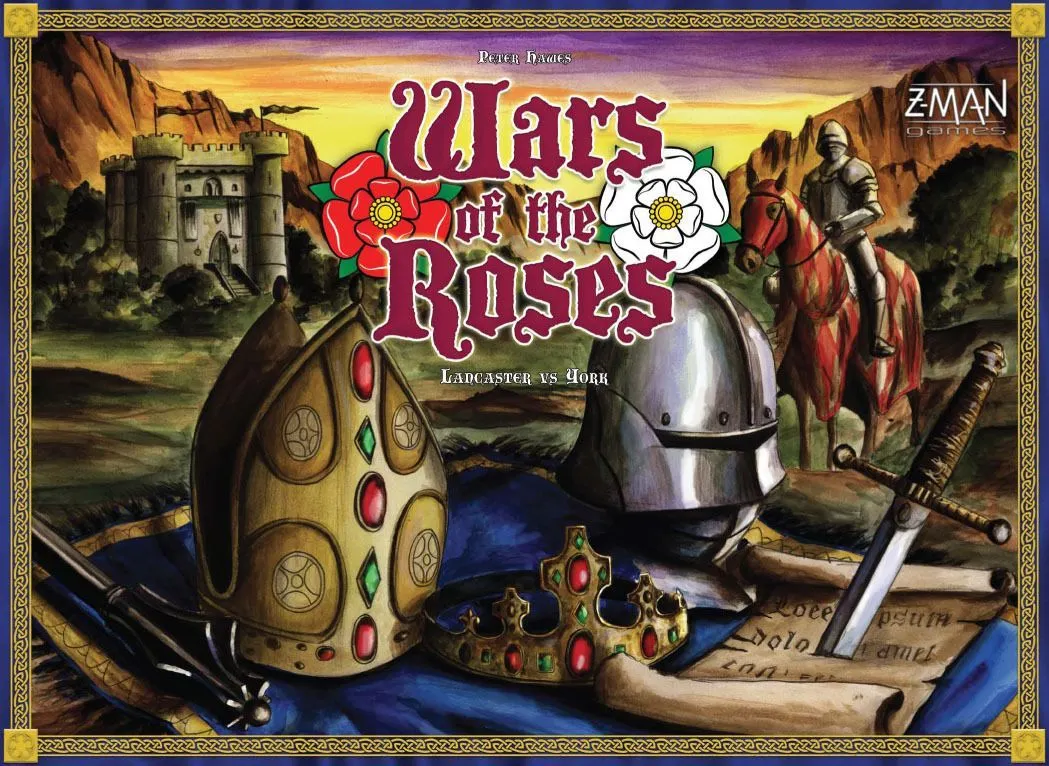
- Puesto en BGG
- BGG #2225
- Puntuación BGG
- 7,3
Wars of the Roses: Lancaster vs. York
2010
Ayuda con las reglas de Wars of the Roses: Lancaster vs. York
Explicaciones claras de turnos, efectos de cartas y situaciones dudosas, con referencias a fuentes oficiales e historial de preguntas guardado.
- 2–4 jugadores
- 180 min
- 13+
- Complejidad 3,2/5

Para 2 jugadores
Asistente de reglas de Wars of the Roses: Lancaster vs. York
¿Qué quieres saber?
Las respuestas salen del reglamento oficial, con la página para comprobarlo.
Wars of the Roses: Lancaster vs. York es un juego de mesa publicado en 2010 para 2–4 jugadores, con partidas de 180 minutos y a partir de 13 años. Fue diseñado por Peter Hawes y sus mecánicas principales son Area Movement, Area Majority / Influence y Simultaneous Action Selection.
Sobre el juego
En inglés
Two Lancastrians and two Yorkists draft cards that give them control of major towns, nobles, bishops and royal castles. Income generated by these enables them to raise armies and to bribe nobles, bishops and ship captains to change allegiance. Players then use secret planning and simultaneous deployment to gain control of the six areas in England and Wales and, hopefully, enough votes in parliament to crown their royal heir as king. From the back of the box: Journey back to England, 1450, just prior to the outbreak of the bitter civil war between the Royal Houses of Lancaster and York. Henry VI, a Lancastrian, was proving to be a weak ruler, so the wealthy and ambitious Richard, Duke of York, looked to put things right. The powerful noble families had to choose sides and over the next 40 years, kings, royal heirs, and great nobles were to die, in what was to become known as the Wars of the Roses. Players take on the role of Lancastrians and Yorkists, who must gather support from the major towns and powerful noble families and attempt to control the royal castles throughout the country. Ports, the shipping trade, and financial aid from the Church and France are also needed. As their faction grows in strength, players vie for the King’s favor and look to earn the prestigious titles of Captain of Calais, Archbishop of Canterbury, Warden of the Cinque Ports, Lord High Admiral and Constable of the Tower of London. Money means power, because loyalty can be bought, so players should be prepared for the inevitable treachery as nobles change allegiance at crucial times, affecting the balance of power. When Parliament is called, each region in England will support one or other of the two Royal Houses and the crown will go to the one with the greater power base. Nobles loyal to this House will be rewarded by a grateful King. Eventually, only one Royal House will boast the King, but the player who has gathered the most money and prestige will win, regardless of his allegiance.
Mecánicas
Diseñadores
Editoriales
- 999 Games
- Z-Man Games
Preguntas y respuestas
Según el catálogo, Wars of the Roses: Lancaster vs. York admite de 2 a 4 jugadores. Este intervalo corresponde al número de jugadores indicado por la editorial, así que el juego puede prepararse para cualquier grupo dentro de ese margen. La preparación, algunas reglas y la puntuación pueden variar según el número de jugadores; consulta la configuración exacta en el reglamento de tu edición.
La duración indicada para Wars of the Roses: Lancaster vs. York es de 180 minutos, la estimación de la editorial para una partida completa. El tiempo real depende del grupo, del número de jugadores y del conocimiento de las reglas: las primeras partidas suelen alargarse y los grupos con experiencia terminan antes. La preparación y la explicación de las reglas no están incluidas.
El catálogo indica Wars of the Roses: Lancaster vs. York a partir de 13 años. Es la recomendación de la editorial y refleja la lectura necesaria, la complejidad de las reglas y las piezas pequeñas, no solo el tema. Los más pequeños a menudo pueden jugar con ayuda de un adulto: comprueba la edad recomendada en tu edición y la experiencia de tu grupo.
Wars of the Roses: Lancaster vs. York tiene una puntuación de complejidad de 3,2 sobre 5 según los jugadores de BoardGameGeek, lo que lo convierte en un juego de complejidad media. La puntuación refleja cuánto conocimiento de reglas, planificación y toma de decisiones exige una partida típica. Los juegos exigentes requieren una explicación inicial más larga, así que conviene usar una guía de preparación.
Wars of the Roses: Lancaster vs. York pertenece a estas categorías: Wargame, Medieval y Political. Sus mecánicas principales son Area Movement, Area Majority / Influence y Simultaneous Action Selection. Las categorías describen el tema y la ambientación de un juego, mientras que las mecánicas describen lo que los jugadores hacen realmente en su turno. Cada mecánica lleva a una página del catálogo con juegos similares.
Los autores acreditados de Wars of the Roses: Lancaster vs. York son: Peter Hawes. Estos créditos proceden de los datos publicados del juego y nombran a las personas responsables de su diseño, no a ilustradores ni editoriales. Las páginas de autor de MeepleRules reúnen otros títulos de los mismos autores, algo útil cuando un juego te gusta y buscas otros parecidos.
El catálogo clasifica Wars of the Roses: Lancaster vs. York como juego base. Se juega por sí solo con los componentes de la caja y no requiere ningún otro título. Las expansiones, si existen, añaden contenido o reglas nuevas y aparecen por separado en el catálogo con un enlace a este juego base.