
- Puesto en BGG
- BGG #10.675
- Puntuación BGG
- 6,1
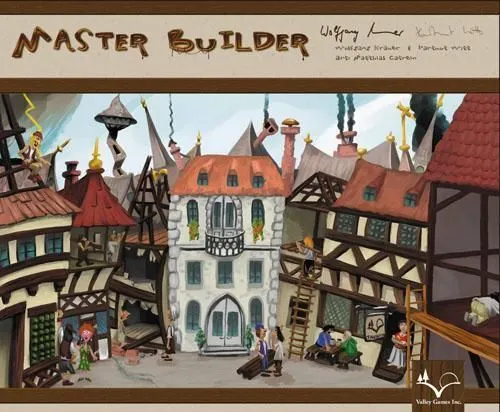
Master Builder
- 2–4 jugadores
- 60 min
- Complejidad 2,0/5
- 2008
2006
Ayuda con las reglas de Zig-Zag
Explicaciones claras de turnos, efectos de cartas y situaciones dudosas, con referencias a fuentes oficiales e historial de preguntas guardado.
¿Qué quieres saber?
Las respuestas salen del reglamento oficial, con la página para comprobarlo.
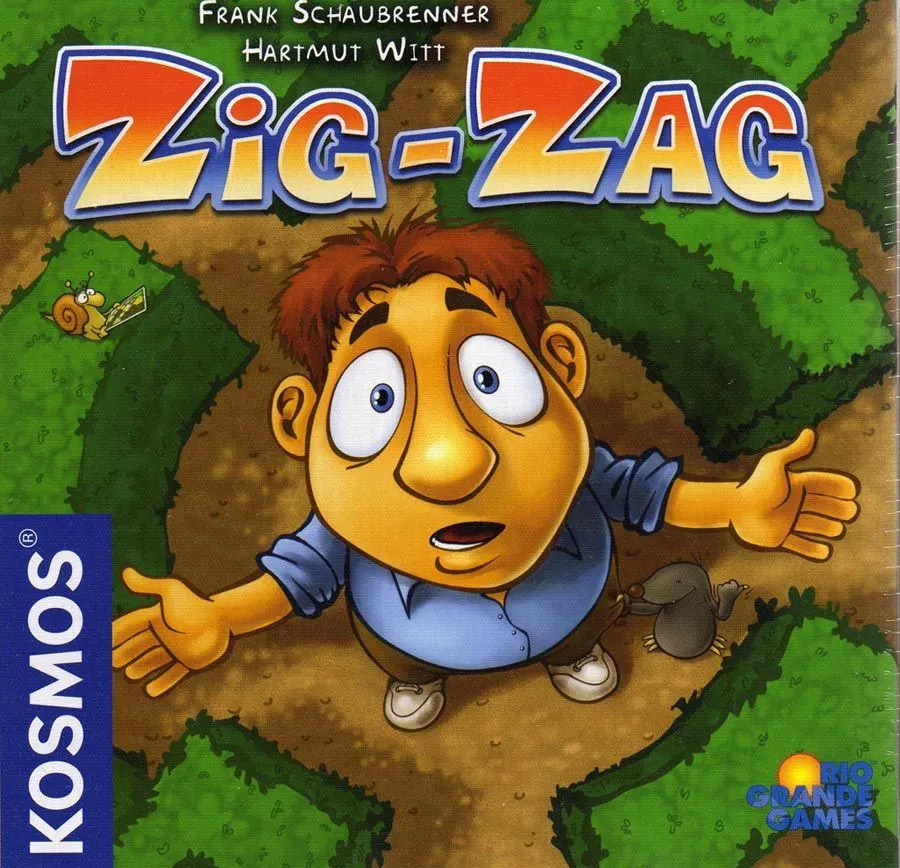
Zig-Zag es un juego de mesa publicado en 2006 para 2–4 jugadores, con partidas de 25 minutos y a partir de 8 años. Fue diseñado por Hartmut Witt y Frank Schaubrenner y sus mecánicas principales son Set Collection.

En inglés
Hartmut Witt always has original game concepts, and he, along with Frank Schaubrenner, has created a fast-paced grab- and collecting-game that will thrill even expert speed-type game players. Rather unusual landscape types need to be crossed in this game: Clay flats, fields, hot sand, green lawns, water and cobblestones, even some rare blue-white or beige tiles. These landscapes are found on 28 large landscape cards, each of which again is made up of 18 landscape spaces, arranged in random fashion. The landscape cards get mixed up and distributed among the players (7 each with 3p and 4p, 8 with 2p - the rest go back in the box). Now, each player gets to set two particularly difficult cards aside and places the rest on the table to form a race circuit (the narrow sides of the cards are joined together). Thus, a different track with different challenges is created for each player. A goal card marks the goal for each player. Before the game can begin, 48 small cards are placed in the middle of the table as a face-down, spread out pile. Each card shows one of the landscape types mentioned above. As soon as the game starts, all players wildly grab through the pile of cards on the table. Cards, once revealed, are left face-up if they're not of immediate use. Cards that a player wants to keep are taken in hand. The order of the cards being collected, though, cannot be altered in any way. The collection phase ends when there's only face-up cards left on the table and a player calls "stop" because he thinks he has enough cards. Now, the players will see how far they get along their track with the cards they collected. The player who called "stop" starts. He turns the first card he collected over. If it's sand, for example, he puts his marker on a sand space at the start of his course. Thereafter, each subsequent card must show a landscape type that is next to the one his marker is on (either sideways, forwards or diagonally forwards) for him to move forwards. As soon as a card comes up that doesn't allow him to move his marker, his turn is over. Collected cards that are left over are put back into the middle of the table (face-down), and the figure stays where it managed to get to. Each player in turn order then does the same, moving their figure and returning leftover cards. Continue in this manner, round after round, until one player reaches the goal, ending the game. That player is of course the winner. Description of the game from Kosmos.
Según el catálogo, Zig-Zag admite de 2 a 4 jugadores. Este intervalo corresponde al número de jugadores indicado por la editorial, así que el juego puede prepararse para cualquier grupo dentro de ese margen. La preparación, algunas reglas y la puntuación pueden variar según el número de jugadores; consulta la configuración exacta en el reglamento de tu edición.
La duración indicada para Zig-Zag es de 25 minutos, la estimación de la editorial para una partida completa. El tiempo real depende del grupo, del número de jugadores y del conocimiento de las reglas: las primeras partidas suelen alargarse y los grupos con experiencia terminan antes. La preparación y la explicación de las reglas no están incluidas.
El catálogo indica Zig-Zag a partir de 8 años. Es la recomendación de la editorial y refleja la lectura necesaria, la complejidad de las reglas y las piezas pequeñas, no solo el tema. Los más pequeños a menudo pueden jugar con ayuda de un adulto: comprueba la edad recomendada en tu edición y la experiencia de tu grupo.
Zig-Zag tiene una puntuación de complejidad de 1,1 sobre 5 según los jugadores de BoardGameGeek, lo que lo convierte en un juego ligero. La puntuación refleja cuánto conocimiento de reglas, planificación y toma de decisiones exige una partida típica. Los juegos exigentes requieren una explicación inicial más larga, así que conviene usar una guía de preparación.
Zig-Zag pertenece a estas categorías: Card Game, Bluffing y Action / Dexterity. Sus mecánicas principales son Set Collection. Las categorías describen el tema y la ambientación de un juego, mientras que las mecánicas describen lo que los jugadores hacen realmente en su turno. Cada mecánica lleva a una página del catálogo con juegos similares.
Los autores acreditados de Zig-Zag son: Hartmut Witt y Frank Schaubrenner. Estos créditos proceden de los datos publicados del juego y nombran a las personas responsables de su diseño, no a ilustradores ni editoriales. Las páginas de autor de MeepleRules reúnen otros títulos de los mismos autores, algo útil cuando un juego te gusta y buscas otros parecidos.
El catálogo clasifica Zig-Zag como juego base. Se juega por sí solo con los componentes de la caja y no requiere ningún otro título. Las expansiones, si existen, añaden contenido o reglas nuevas y aparecen por separado en el catálogo con un enlace a este juego base.