
- Rang BGG
- BGG #9 288
- Note BGG
- 6,8
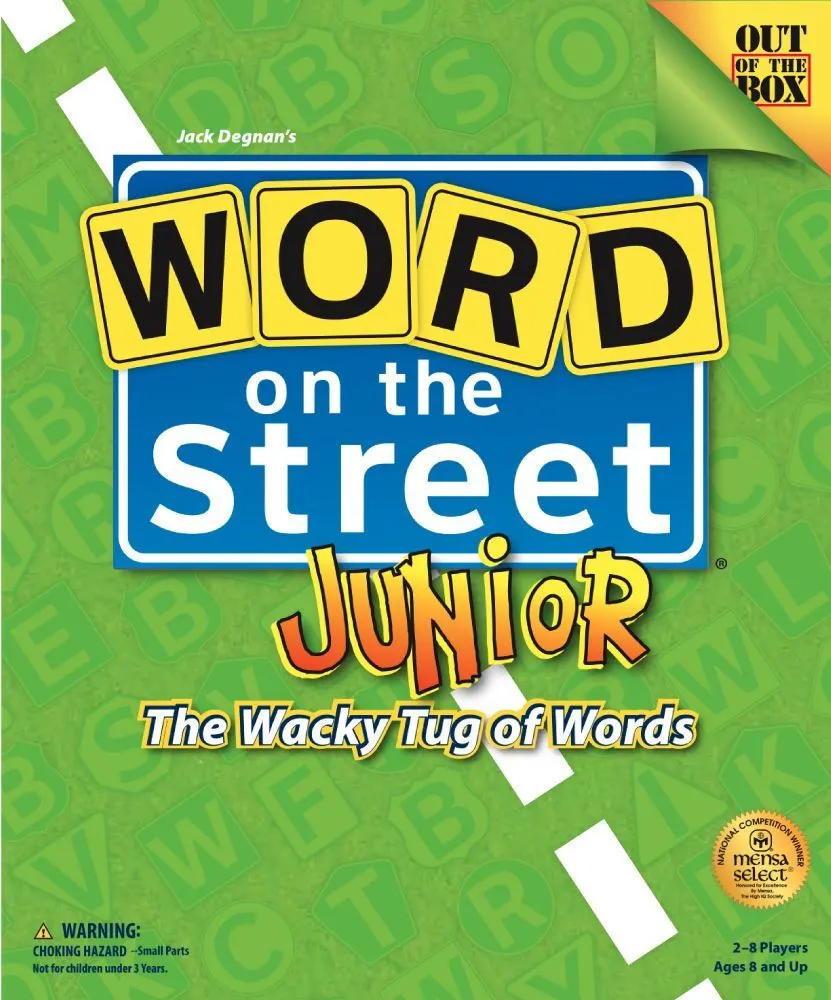
Word on the Street Junior
- 2–8 joueurs
- 30 min
- Complexité 1,1/5
- 2010
1875
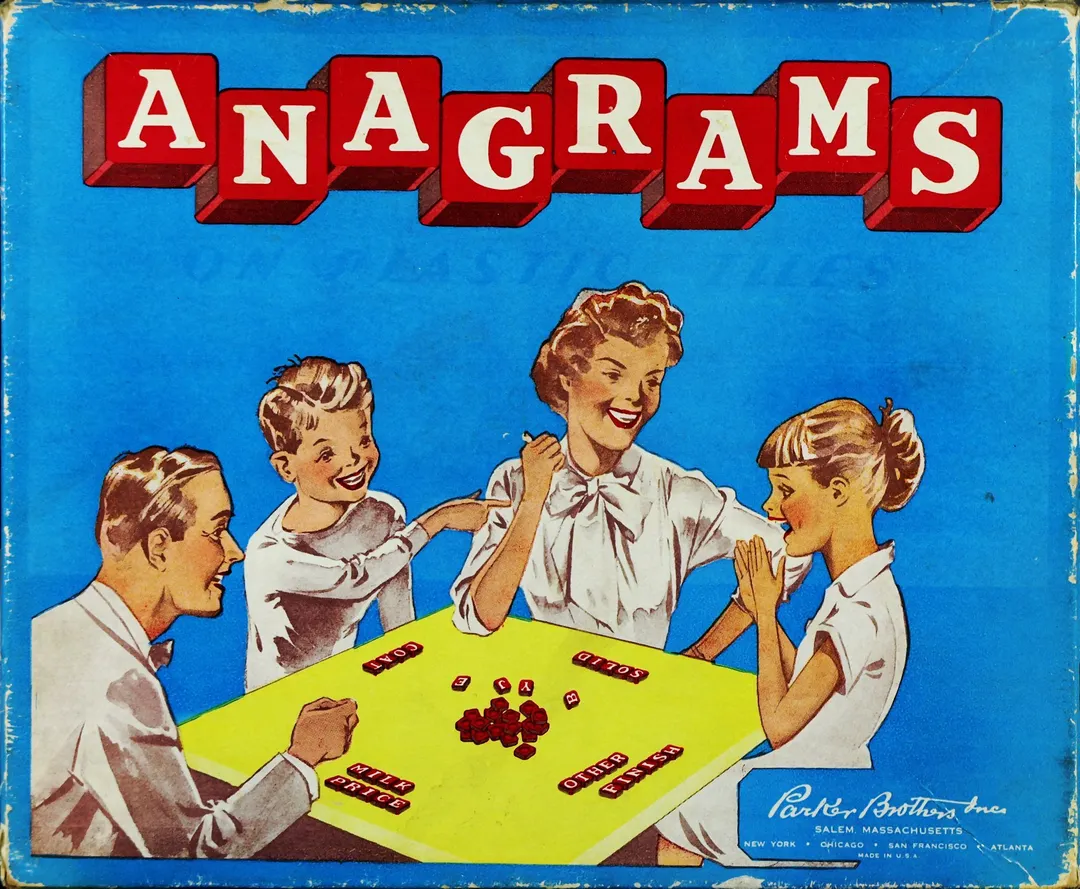
Aide aux règles de Anagrams
Des explications claires des tours, effets de cartes et situations litigieuses, avec des références aux sources officielles et un historique des questions sauvegardé.
Pour 2 joueurs
Que voulez-vous savoir ?
Les réponses viennent du livret officiel, avec la page à vérifier.
Anagrams est un jeu de société sorti en 1875 pour 2 à 6 joueurs, avec des parties de 45 minutes et à partir de 8 ans. Ses principales mécaniques sont Spelling.

En anglais
Anagrams is a game where players reveal letter tiles one at a time, claiming any word as soon as they can make it. Once a word is in front of someone, other players may steal it by making an anagram of it which introduces other letters from the pool. Reimplemented as Snatch and Scrabble Scoring Anagrams. Published during the same time frame as the 1877 Word Making and Taking. A version of this game using the word “anagram” in its title was published by Thomas Whittaker in New York on or before 1875 and was called “The Game of Anagrams”. With Parker Brothers and McLoughlin Brothers both releasing Anagrams games in 1890, this likely reflects the expiry of the 17 year patent period that existed at the time. Many editions of the game have been sold and exact rules vary, but one version runs as follows: The players shuffle the letters in the "pool" thoroughly. Each player, in turn, draws a letter tile from the pool and places it face up on the table. These letters are available to all players on their turn. Before starting play it should be decided that either 3-letter, 4-letter or 5-letter words are to be established as the basis of play. Then the first player draws a letter from the pool. Keeping it hidden, he tries to form one word of 2 or more letters with the letter in his hand and with at least one or more of those letters face up on the table. He may also form the word with only the face up letters and not use the letter in his hand. Whenever a player forms a word, his turn ends. If a player cannot form a word, or if he forms one but doesn't use the letter he has drawn from the pool, he must discard this letter at the end of his turn. The letter is discarded by putting it face up with the other turned up letters on the table. Then the next player moves. When a player forms a word, he places it in front of him facing it to the center of the table. This is done so the other players can easily see it. It gives them the chance to steal words. As the game continues and players gather words, they may steal the words from one another. This is done by taking all the letters of another player's word and adding one or more letters to it to completely change that word's meaning. The letters added to a word in "stealing" may be the one drawn by the player from the pool or one or more of those face up. Adding S to make a word plural (or ED or ING) does not change the meaning of a word and cannot be used to "steal" a word. Any letters at all, however, can be used in "stealing" a word if the new word formed is entirely changed in meaning. Players should make their own words harder to steal by adding letters to them and making them more complex. This counts as a complete turn and is as important as forming new words. When all of the tiles have been drawn from the pool, players, continue in turn to try to form words using the face up letters. The game ends when there are no more face up letters, or when no player is able to move using the remaining face up letters. Each player counts the number of tiles in all of the words he has formed in front of him. The winner is the person who has first obtained eight (8) words. The game is not over until ALL players have had an EQUAL number of turns. If at the end of an equal number of turns there is more than one player with eight (8) words, count the number of tiles in those 8 words. The player with the most tiles wins. If the number of tiles in the 8 words is equal, then the game ends in a tie.
Selon le catalogue, Anagrams se joue de 2 à 6 personnes. Cette fourchette correspond au nombre de joueurs indiqué par l’éditeur : le jeu s’installe donc pour toute taille de groupe dans cette limite. La mise en place, certaines règles et le décompte peuvent varier selon l’effectif ; vérifiez la configuration exacte dans la règle de votre édition.
La durée indiquée pour Anagrams est de 45 minutes, selon l’estimation de l’éditeur pour une partie complète. La durée réelle dépend du groupe, de l’effectif et de la connaissance des règles : les premières parties sont plus longues, les groupes expérimentés terminent plus vite. Mise en place et explication des règles ne sont pas comprises.
Le catalogue indique Anagrams à partir de 8 ans. C’est la recommandation de l’éditeur ; elle tient compte de la lecture nécessaire, de la complexité des règles et des petits composants, pas seulement du thème. Les plus jeunes peuvent souvent participer avec l’aide d’un adulte : vérifiez l’âge indiqué sur votre édition et tenez compte de l’expérience de votre groupe.
Anagrams obtient une note de complexité de 2,0 sur 5 auprès des joueurs de BoardGameGeek, ce qui en fait un jeu plutôt léger. Cette note reflète la quantité de règles, de planification et de décisions qu’exige une partie typique. Prévoyez une explication plus longue pour les jeux exigeants et utilisez un guide de préparation avant la soirée.
Anagrams appartient à ces catégories : Word Game et Children's Game. Ses principales mécaniques sont Spelling. Les catégories décrivent le thème et l’univers d’un jeu, tandis que les mécaniques décrivent ce que les joueurs font réellement pendant leur tour. Chaque mécanique mène à une page du catalogue avec des jeux similaires.
Le catalogue présente Anagrams comme un jeu de base. Il se joue seul avec le matériel contenu dans la boîte et ne nécessite aucun autre titre. Les extensions, s’il en existe, y ajoutent du contenu ou des règles et sont répertoriées séparément dans le catalogue, avec un lien vers ce jeu de base.